
Reviewed · TRIPOLI TOURS
Tripoli City Lebanon Trip
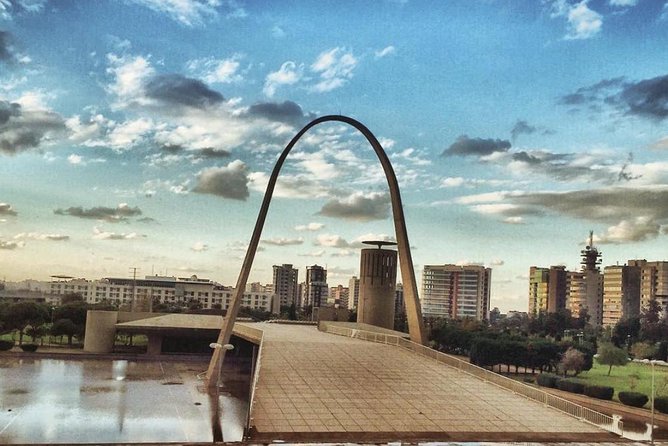
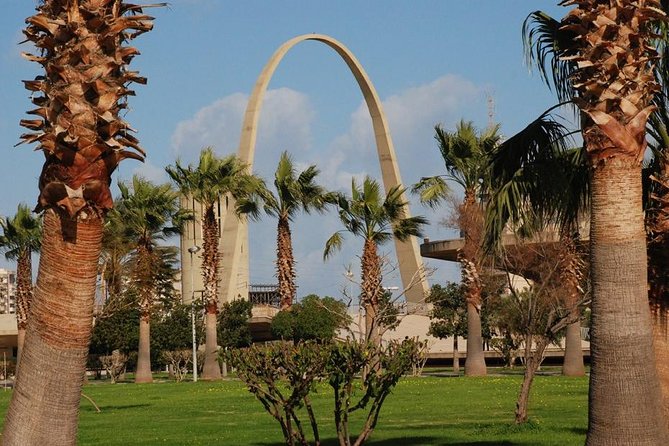
Tripoli’s best story is told through its old streets, not from a coach window. This 8-hour trip from Beirut takes you to a forgotten railway station, a Mamluk-era mosque, the old souk, and the Citadel of Raymond de Saint-Gilles, giving you a useful first look at Lebanon’s northern city.
I like the simple door-to-door transport and the chance to see Tripoli’s everyday market life rather than only its grand monuments. I also like the small-group limit of 15 people, which should make the day easier to manage. The main drawback is that lunch and entrance fees are not included, while the strict cancellation policy gives you little flexibility if plans change.
Key points to know before you go
- Tripoli is 85 kilometers north of Beirut: The drive makes this a full-day outing rather than a quick side trip.
- The abandoned railway station has a major past: It once connected Tripoli with Homs and later linked to Beirut.
- The old souk brings the city to life: You see local commerce, traditional goods, and the Great Mosque in the same historic quarter.
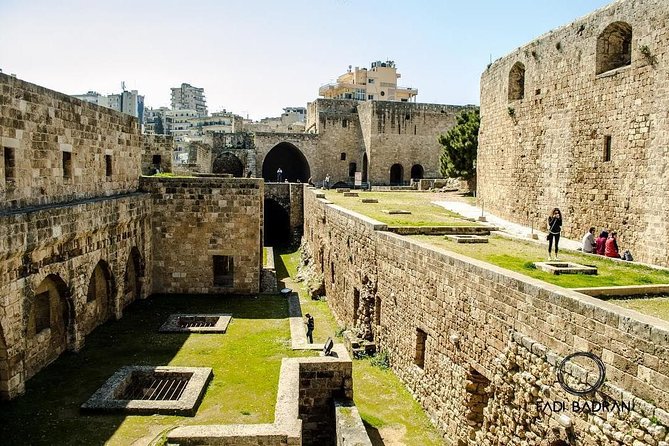
- The citadel is the day’s headline sight: Raymond de Saint-Gilles began building it in 1103.
- A soap factory adds a local craft stop: This keeps the tour from being only a monument-to-monument visit.
- The $45 price covers the main transport basics: Pickup, drop-off, parking, vehicle, and driver are included, but meals and admission are extra.
Why Tripoli makes a worthwhile day from Beirut
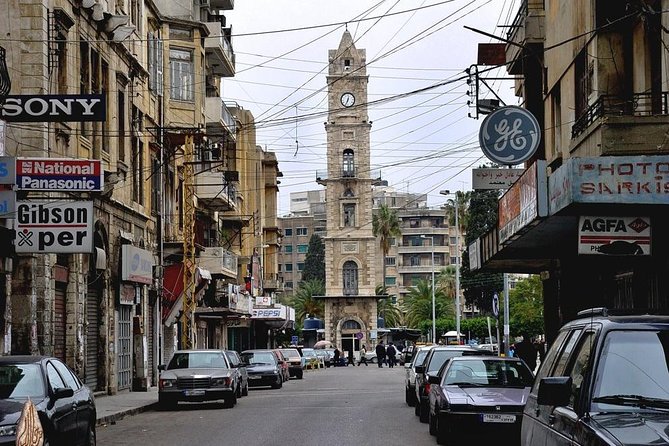
Tripoli is Lebanon’s largest city in the north and the country’s second-largest city. Its roots reach back to at least the 14th century BCE, though the parts you see on this outing focus more closely on the Ottoman, Mamluk, Crusader, and railway eras.
I like that this trip gives you several different ways to read the city. The railway station shows how Tripoli once fitted into a wider regional network. The souk shows daily trade. The mosque and citadel point to the city’s political and religious importance. The soap factory adds a working tradition that is easier to understand when seen in person.
The distance from Beirut matters. At 85 kilometers, Tripoli is not next door, and the day includes travel in both directions. You should think of this as a full northern Lebanon excursion, not a brief guided walk with a short transfer.
The advertised start is 8:30 a.m., with pickup in Beirut and return to the same meeting point at the end. Hotel pickup and drop-off are included, which is useful if you do not want to arrange a separate taxi or negotiate transport for the road back.
More Tripoli tours in Beirut:
- PRIVATE city Tour of authentic Tripoli and vibrant Batroun
★ 5.0 · 51 reviews - Guided Small-Group Tour to Tripoli and Batroun with Lunch
★ 5.0 · 16 reviews - Full day Tripoli private great guide/all-in + rustic meal
★ 5.0 · 7 reviews
The ride north in an air-conditioned vehicle
The tour uses an air-conditioned vehicle and includes an English or Arabic-speaking driver. That combination keeps the day practical, especially when you are covering several sights spread around the city.
The vehicle is not just a minor detail here. An eight-hour outing can become tiring if transport is awkward, and pickup from Beirut removes one of the day’s main planning jobs. Parking is included too, which is helpful in a city visit where finding a place for a private car can take time.
The group can reach a maximum of 15 people. That is not a private tour, but it is smaller than a large sightseeing bus. I would expect the experience to feel most comfortable when the group stays together at the market and historic sites.
The information does not provide a guide’s personal name. What is clear is that you receive an English or Arabic-speaking driver, so you should choose this outing with the understanding that the driver is your main on-the-ground contact. If you want a formal historian-led tour with a long lecture at every stop, confirm the guiding arrangement before booking.
Tripoli’s abandoned train station and the memory of the Orient Express
The first stop is Tripoli’s abandoned train station. It began operating in 1911 and was connected by a single track to Homs in Syria. In the 1920s, 1930s, and 1940s, the station served as the terminus of the Orient Express line.
That detail gives the stop real weight. You are not simply looking at an old building. You are seeing a reminder of the railway age, when Tripoli formed part of a route linking cities across the region.
The station later connected with Beirut’s central station at Mar Mikael in 1945. This makes the site especially useful for understanding Tripoli’s relationship with the capital. Today, the station is abandoned, so do not expect an active railway museum, restored platforms, or a polished visitor center.
I like this stop because it sets a thoughtful tone for the rest of the day. The building’s former purpose helps you picture Tripoli as a place connected to wider movement and trade. The drawback is that the exact condition of the station and the amount of time spent there are not specified, so the visit may be more about seeing and discussing the site than touring a fully developed attraction.
Walking through the old souk and Great Mosque

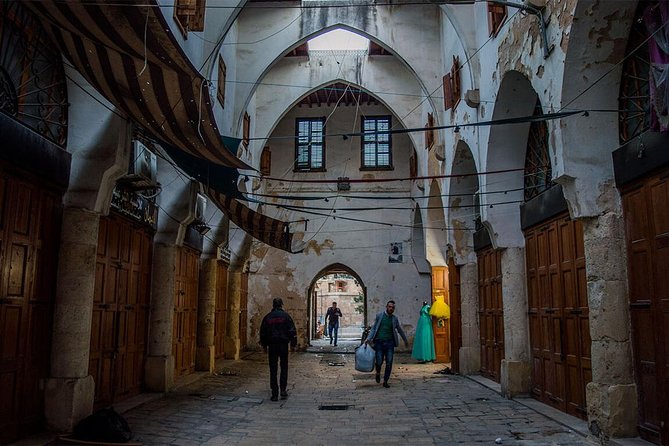
The tour then moves into Tripoli’s old souk, where you can watch local commerce and see merchandise being sold in the traditional market setting. This is the part of the day where you get closest to ordinary city life.
I prefer a market visit that gives you time to notice how a place works. Here, the value is not only in buying something. You can watch the rhythm of sales, see the kinds of goods offered, and understand how the old quarter still functions as part of the city.
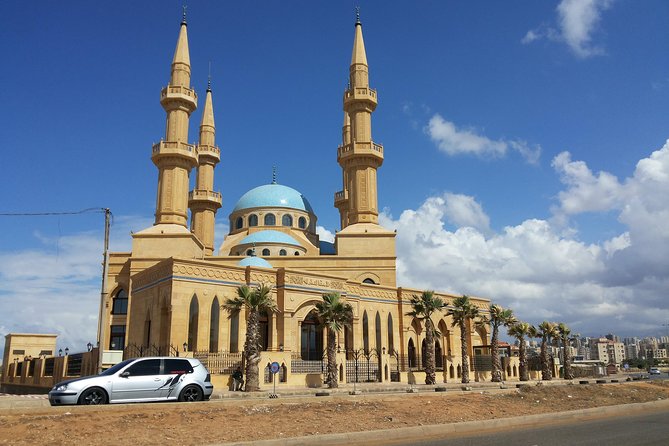
The Great Mosque is included in this section of the visit. It was built during the Mamluk period, and its location in the old market area ties religious architecture to the commercial life around it.
Tripoli has the second-largest amount of Mamluk architectural heritage in the world, behind Cairo. That makes the mosque more than a quick photo stop. It belongs to a wider group of buildings that help explain the city’s importance during the Mamluk period.
You should dress and behave respectfully around the mosque. The tour information does not specify an interior visit, so do not assume that entry is guaranteed. Entrance fees are not included in the $45 price, and any admission requirement should be confirmed with the operator.
The souk may be the most rewarding stop for anyone who wants more than polished sightseeing. It is also the least predictable. Markets change from hour to hour, and the experience depends on the pace of the group and what is happening that day.
A few more Beirut trips to weigh up
- City Sightseeing Beirut Hop-On Hop-Off Bus Tour
★ 4.5 · 87 reviews - Private Baalbek City Tour
★ 5.0 · 14 reviews - PRIVATE tour to Jeita Grottos, Harissa Shrine & Byblos City
★ 5.0 · 12 reviews - Private Beirut City Tour with Boat Ride at Raouche Rock
★ 4.5 · 10 reviews
Climbing into the Citadel of Raymond de Saint-Gilles
The Citadel of Raymond de Saint-Gilles is the main historical landmark on the route. Raymond de Saint-Gilles, governor of Tripoli, began building it in 1103.
The fortress is known as the largest Crusader fortress in Lebanon. That fact gives the visit a clear sense of scale, even before you see the structure for yourself. Its position and imposing walls help explain why Tripoli mattered to competing powers in the medieval period.
I like the way the citadel balances the market visit. The souk places you among current city life, while the fortress pulls your attention toward military power and medieval rule. Together, the two stops show different layers of Tripoli without requiring a long academic tour.
The tour summary does not specify how much of the citadel you enter, the exact walking route, or how much time is allocated inside. You should allow for some walking and uneven historic surfaces, although the information says most people can participate.
Admission is not included. The operator may collect or direct you to pay any entrance charge separately, so keep this extra cost in mind when comparing the tour price.
The soap factory and Tripoli’s working traditions
The itinerary also includes a visit to a soap factory. The available details do not explain the factory’s history, production method, shop selection, or demonstration schedule, so I would treat this as a short local-industry stop rather than promise a full workshop.
Still, the addition makes sense. Tripoli is known for traditional crafts, and a soap factory gives you a different view of the city from the mosque, citadel, and railway station. You get a chance to see how a practical product connects with local trade and handwork.
This stop may also be useful if you want a small souvenir. However, the tour information does not state that shopping is required or that products are included. You should feel free to ask about prices and production before buying anything.
Lunch, local food, and the real cost of the day
Lunch is not included, which keeps the base price low but leaves you responsible for the midday meal. A previous booking included the chance to try a traditional Tripoli dish, described as particularly good, so you may have an opportunity to eat local food during the day.
The exact restaurant, dish, and lunch price are not provided. I would not book this tour expecting a prepaid food experience. Instead, plan for lunch as an extra and ask the driver what is available when the day begins.
At $45 per person, the value is strongest if you need transport from Beirut. The price includes an air-conditioned vehicle, hotel pickup and drop-off, an English or Arabic-speaking driver, and parking. Those inclusions cover the expensive and inconvenient parts of a day trip.
The price does not include lunch or entrance fees. That means the final cost will be higher than $45, but the starting figure is reasonable for a full-day transfer and sightseeing outing, especially if you are not hiring a car.
Group discounts may be available. The details are not stated, so ask for the current terms if you are booking for several people. The maximum group size is 15, giving you a useful middle ground between private touring and a large coach trip.
Timing, comfort, and who will enjoy this outing
The tour lasts about eight hours and starts at 8:30 a.m. That schedule suits you if you want to return to Beirut the same day and keep your evening free.
I would choose this trip if I had a limited stay in Lebanon and wanted to add northern Lebanon without arranging several separate rides. It also suits first-time visitors who want a broad introduction to Tripoli, with architecture, markets, transport history, and local craft in one day.
It is less suitable if you want a slow, highly specialized visit to every Mamluk building in the city. The route covers several highlights, but the schedule must also allow for the drive between Beirut and Tripoli.
The tour is described as suitable for most people. The details do not explain wheelchair access, stroller arrangements, or the condition of every site, so anyone with specific mobility needs should ask before paying. The old souk and citadel may involve uneven surfaces or stairs, but the supplied information does not give a formal accessibility assessment.
The driver is described as extremely nice and hospitable in the available feedback, and the pickup was on time. Those details matter on a day trip because a late start can shorten your time in Tripoli, while a warm driver can make a shared vehicle feel much more pleasant.
Booking details worth checking before payment
Confirmation is provided when you book, and mobile tickets are available. Most people can participate, but the group is capped at 15.
The cancellation rule is strict. The experience is non-refundable and cannot be changed for any reason, so book only when your Beirut plans are firm. This is the biggest practical weakness of the offer, especially in a destination where schedules can change.
You should confirm three things before booking:
- Whether the driver will provide full guiding at each stop or mainly transport and basic assistance
- The expected entrance fees for the citadel and Great Mosque
- The planned lunch arrangements and approximate meal cost
These questions do not undermine the value of the tour. They simply help you avoid surprises on a day when the base price does not cover every expense.
Should you book the Tripoli day trip from Beirut?
I would book this outing if you want an affordable, straightforward way to see Tripoli in one day. The combination of the abandoned railway station, old souk, Great Mosque, Crusader citadel, and soap factory gives you more variety than a simple fortress visit.
The strongest reasons to choose it are the included Beirut pickup, air-conditioned transport, small maximum group size, and focus on both historic sites and daily local life. The most important cautions are the extra cost of lunch and admission, the unspecified depth of the guiding, and the non-refundable booking rule.
For a first visit to northern Lebanon, this is a sensible choice. Go with realistic expectations: it is a practical overview of Tripoli, not a private specialist tour. Keep some cash for food and entry charges, wear comfortable shoes, and confirm the guiding details before committing your $45.
FAQ
Where does the Tripoli tour start?
The tour starts in Beirut, Lebanon, with pickup offered.
What time does the tour begin?
The scheduled start time is 8:30 a.m.
How long does the experience last?
The trip lasts approximately eight hours, including the journey from Beirut to Tripoli and the return to Beirut.
Does the tour return to Beirut?
Yes. The activity ends back at the meeting point in Beirut.
What transportation is provided?
An air-conditioned vehicle is provided, along with hotel pickup and drop-off.
Is a guide included?
An English or Arabic-speaking driver is included. The supplied information does not provide the driver’s name or specify the full extent of formal guiding.
What is included in the $45 price?
The price includes the air-conditioned vehicle, hotel pickup and drop-off, an English or Arabic-speaking driver, and parking fees.
Are lunch and entrance fees included?
No. Lunch and entrance fees are not included.
How large can the group be?
The activity has a maximum of 15 participants. Group discounts may be available.
Just added around Beirut
- Journey Through Time: Half-Day Private Tour to Baalbek★ 5.0 · 3 reviews
- Small Group Tours to Jeita Grotto and Byblos with tickets★ 5.0 · 3 reviews
- Wine Tasting and Culture★ 5.0 · 3 reviews
- Small-Group Tour with Lunch to Jeita Grotto, Byblos and Harissa★ 4.5 · 3 reviews
- Traveling Spoon Lebanese Mezze Private Online Cooking Class★ 5.0 · 4 reviews
- Beirut to Qadisha Valley, Bcharri & Cedar: Daily Tours with Lunch★ 4.5 · 3 reviews
- Small-Group Tour to Sidon, Tyre and Maghdouche with Lunch and Tickets★ 4.5 · 3 reviews
- Small-Group Tour with Lunch to Baalbek, Anjar and Ksara★ 5.0 · 3 reviews
Tripoli Tours, compared.
PRIVATE city Tour of authentic Tripoli and vibrant Batroun
Read our review →
Guided Small-Group Tour to Tripoli and Batroun with Lunch
Read our review →
Full day Tripoli private great guide/all-in + rustic meal
Read our review →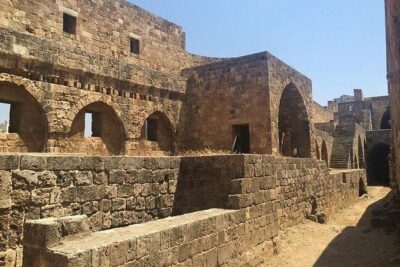
Private Full-Day Tour to Byblos and Tripoli from Beirut
Read our review →Browse the lists this tour appears in