
Reviewed · JEITA GROTTO TOURS
Small Group Tours to Jeita Grotto and Byblos with tickets
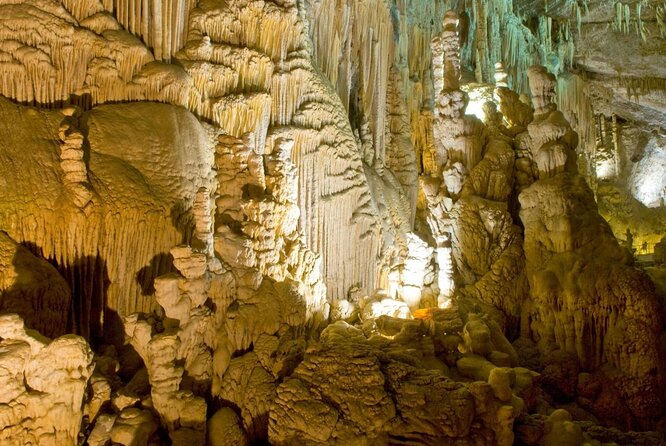
Jeita Grotto and Byblos give you two very different sides of Lebanon in one morning and afternoon. First comes a striking natural reserve only 18 kilometers from Beirut, followed by an ancient Phoenician city tied to the origins and spread of the alphabet.
I like the small maximum group of 15, which should make questions and conversation easier than on a large coach. I also like that the $60 price includes the air-conditioned vehicle, local guide, tour leader, and entrance fees. The main consideration is time: six hours covers a lot, so Byblos sightseeing is focused rather than leisurely.
Key points to know
- Jeita Grotto comes first: You spend about two hours at Lebanon’s best-known cave attraction, with admission included.
- Byblos adds several sights in one stop: The visit combines the archaeological area, castle, souk, and ancient port.
- The Crusader castle is the visual centerpiece: Its square keep gives you a view over the ruins and toward the sea.
- The group is capped at 15 people: This is a useful middle ground between private touring and a full-size bus.
- The $60 price covers the main extras: Transport, guide services, tour leadership, and entrance fees are included, but lunch is not.
- An early start helps: The tour begins at 8:00 am, giving you the best chance of using the six-hour schedule efficiently.
Two landmarks, one compact day from Beirut

This tour works because Jeita Grotto and Byblos are close enough to combine, yet different enough to keep the day from feeling repetitive. Jeita brings natural beauty. Byblos brings archaeological remains, medieval architecture, sea views, and old market streets.
You leave Beirut at 8:00 am and spend roughly six hours on the outing. The exact balance between driving and sightseeing matters. The listed visits add up to about five hours and ten minutes, leaving some time for transfers between stops. That makes this a tidy introduction to the area, not a slow-paced day with room for every shop, museum panel, and café.
I see this as a strong choice if you have only one day available for sightseeing outside Beirut. It also suits anyone who prefers having the main arrangements handled in advance. You will not need to buy the Jeita or castle tickets separately, and an air-conditioned vehicle is provided.
More Jeita Grotto tours in Beirut:
- Guided Small-Group Tour to Jeita, Harissa, Byblos with Lunch
★ 5.0 · 361 reviews - Jeita Grotto,Harissa&Byblos Full-Day PRIVATE-CAR Trip from Beirut
★ 5.0 · 222 reviews - Jeita Grotto – Harissa – Byblos Trip
★ 5.0 · 169 reviews
Jeita Grotto: Lebanon’s great natural show
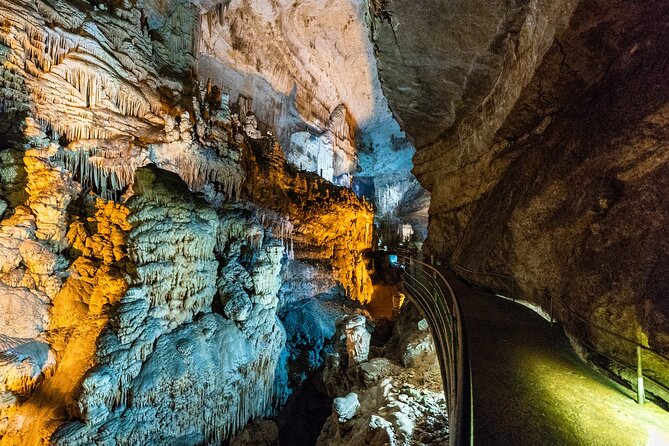
Jeita Grotto is the first major stop, with about two hours set aside for the visit. The site is a natural reserve around 18 kilometers from Beirut and was nominated for the world seven wonders. Its appeal is simple: beautiful cave scenery in a protected setting, reached without committing a full day to the excursion.
The two-hour visit is long enough to make the stop worthwhile, though you should not expect unlimited time. Your guide can help explain the site and keep the group moving so the rest of the schedule stays on track. Admission is included, which is especially useful here because the cave visit is one of the tour’s main paid components.
A practical advantage of arriving early is clear. The available account of the tour notes that Albert, the host, was punctual and reached Jeita before many other groups. An early arrival can make the visit feel calmer and gives you a better chance to enjoy the setting before the day fills in. Since the start time is 8:00 am, you are already positioned for that advantage.
The tour description does not provide a detailed list of cave facilities, internal routes, or photography rules, so I would not build your expectations around any particular cave feature beyond the stated scenery. Think of Jeita as the nature half of the day: a dramatic visual stop that breaks up the historical focus to come.
Byblos: thousands of years beside the sea
After Jeita, the tour heads to Byblos, one of the oldest Phoenician cities. The settlement was inhabited from Neolithic times and has origins tracing back to around 5000 BC. That number can feel abstract, but the site becomes easier to understand when you see how many periods sit close together in one compact area.
Byblos is tied to Mediterranean legends and history across thousands of years. It is also linked directly with the story of the Phoenician alphabet, one of the most important reasons the city matters beyond Lebanon. Your guide and tour leader are valuable here because the ruins alone do not always explain how the pieces fit together.
About two hours are assigned to Byblos itself, separate from the one hour at Byblos Castle and the short visits to the souk and port. That division gives you a useful overview, but it does not leave much spare time. I would listen closely during the guide’s introduction, then use free moments to look around on your own.
The archaeological area includes the remains of the Temple of Baalat Gebal and the Temple of the Obelisks. Bronze Age dwellings can be seen below the castle walls, particularly when looking toward the sea. This layering is the point of Byblos. You are not visiting one isolated monument, but a place where ancient religious sites, homes, defensive walls, medieval construction, and a working town occupy the same setting.
Byblos Castle and the view over the ruins
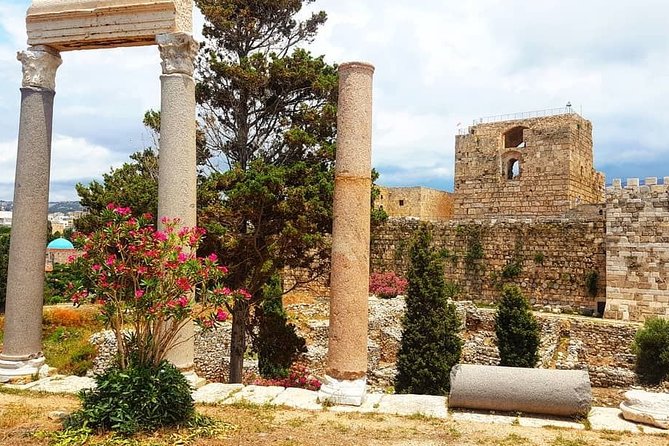
Byblos Castle receives about one hour, with admission included. The restored 12th-century Crusader castle sits inside the archaeological site and is surrounded by a dry moat about 10 meters wide. Its square keep is the main attraction, not just because of its solid medieval form, but because it gives you a useful view over the ruins.
From the top of the keep, you can look across the archaeological area toward the sea. The Bronze Age dwellings below the walls are especially important because they make the distant past more tangible. Instead of seeing only scattered stones, you get a sense of an old settlement arranged below the castle.
Inside, a small museum and information panels outline the city’s past. This is where the included local guide can add the most value. You can read the panels yourself, but a guide can help you keep track of the Phoenician, Roman, medieval, and other layers represented at the site.
An hour is a fair amount of time for the castle and its immediate area. It should let you see the keep, take in the view, and look at the museum displays. It is not enough for a slow examination of every ruin in Byblos, so decide what matters most to you before entering. If you enjoy photographs and broad views, head toward the top of the keep early. If historical context matters more, give the museum and information panels your attention.
More Byblos tours in Beirut:
- Byblos, Jeita Grotto & Harissa Day Trip -With Lunch (4G on Board)
★ 4.5 · 145 reviews - Semi-Private Tour to Jeita Grotto, Harissa & Byblos with Lunch
★ 5.0 · 52 reviews - Small Group Tour to Jeita Grotto, Harisa & Byblos with Hotel pickup
★ 5.0 · 49 reviews - Private Guided Tour to Jeita Grotto through Harissa and Byblos
★ 5.0 · 48 reviews
The old souk: a short walk with a change of pace
The old souk gets only about 10 minutes, so treat it as a brief stroll rather than a shopping session. Its cobblestone streets, old buildings, souvenir shops, and antiques offer a change from the archaeological site.
This is a useful little pause because it lets you see Byblos as a living town, not only as an ancient site. You can glance at the architecture and browse for a small souvenir, but there is no time for a serious search through the shops. If you see something you want, you may need to make a quick decision.
The short visit also tells you what kind of tour this is. The operator wants you to sample several parts of Byblos in a single outing. That is convenient for a first visit, but anyone hoping to spend an afternoon wandering the market should plan a separate return.
Byblos Port and the eastern Mediterranean trade
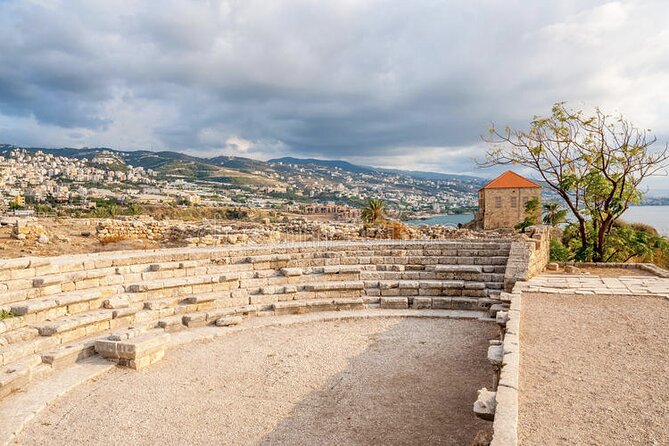
The port also receives about 10 minutes. Lebanese tradition considers it the oldest port in the world, and around 3000 BC it was an important center for shipping timber around the eastern Mediterranean.
The stop is brief, yet it gives useful context to Byblos’s position. The city was not merely an inland settlement with old walls. Its connection to the sea helped support trade and links with other Mediterranean communities.
You will not have time here for a long waterfront walk. Instead, use the stop to connect the port with the city’s past. The castle, ruins, souk, and harbor are close enough in the schedule to show how Byblos grew around both land and sea.
What the $60 price really covers
At $60 per person, this tour offers solid value if you want the main costs grouped together. The price includes an air-conditioned vehicle, all entrance fees, a local guide, and a tour leader. Jeita Grotto admission and Byblos Castle admission are specifically covered, which removes two decisions from your morning.
The value is strongest for a short stay in Lebanon. Arranging separate transport to Jeita and Byblos could take more planning, and independent visitors would still need to organize their timing between the sites. Here, the six-hour schedule gives you a practical framework.
Lunch is not included. That is not a major problem for a half-day outing, but you should budget for food separately or confirm how the day’s timing works before setting out. The tour information does not specify a lunch stop, so do not assume that a restaurant meal is part of the program.
The price is less attractive if you want a private guide, long café breaks, or extensive shopping time. A group capped at 15 is fairly intimate, but it is still a group. You will follow a shared timetable, and the short souk and port visits show that the focus is coverage rather than complete freedom.
Transport, group size, and the early start
Pickup is offered, and the stated start time is 8:00 am. Since the meeting details can vary, confirm the pickup arrangement when booking. The air-conditioned vehicle is a welcome feature, especially when the day includes an outdoor archaeological area and travel between Beirut, Jeita, and Byblos.
A maximum of 15 people keeps the tour smaller than a standard coach outing. That matters most at Jeita and Byblos, where a very large group can make it hard to hear explanations or stay together. A smaller group also gives the guide more room to answer questions, though the experience will still depend on the people sharing your vehicle.
Guide Albert is specifically named as a host who was punctual, friendly, and well informed about the visit. You may not have Albert on your departure, since the tour includes a local guide and tour leader rather than promising one named guide for every date. Still, the detail is useful: punctuality matters on a six-hour route with several stops, and an early start can make Jeita more pleasant.
The tour is listed as suitable for most people. No detailed accessibility information is provided, so anyone with mobility concerns should ask for current site and vehicle details before booking. Jeita and the castle are not presented as completely step-free, and you should not assume every part of the route will suit every mobility need.
Who will get the most from this tour?
I would recommend this outing to you if you want a first look at two major sights without spending time arranging transport. It is particularly useful for a short Beirut stay, a cruise stop, or a day when you want natural scenery and ancient history in one package.
It also suits people who value clear logistics. The ticketing is handled, the vehicle is provided, and a local guide and tour leader accompany the group. You can concentrate on the sights instead of working out how to connect each stop.
Families and mixed-interest groups may also find the combination useful. Jeita offers a visual change from ruins, while Byblos includes a castle, old streets, the sea, and archaeological remains. Not everyone needs to love every stop for the day to work.
I would hesitate if you prefer a slow archaeological visit. The schedule is full, with only 10 minutes at both the souk and port. History fans who want time for every panel, shop, and side street may prefer a longer Byblos visit or a private arrangement.
Booking details and cancellation timing
Confirmation is provided at booking, and mobile tickets are available. Since pickup is offered but the meeting point details are not fully spelled out here, check your exact starting instructions before the morning of departure.
Free cancellation is available if you cancel at least 24 hours before the experience starts. Cancellations made within 24 hours are not refunded, and changes in that same period are not accepted. The cut-off uses local time, so keep that in mind if you are arranging the tour from another country.
Should you book this Jeita Grotto and Byblos tour?
Book it if you want an efficient, ticket-included introduction to two of Lebanon’s best-known nearby sights. The strongest reasons are the manageable group size, air-conditioned transport, included admissions, and a route that combines Jeita’s cave scenery with Byblos’s ancient port, ruins, castle, and souk.
Skip it if your ideal day means lingering over lunch, shopping slowly, or studying Byblos in great detail. The $60 cost is fair for the transport and included tickets, but the schedule asks you to keep moving. For a one-day introduction from Beirut, I think that trade-off makes sense. For a relaxed return visit, I would choose more time in Byblos.
FAQ
How long does the tour last?
The tour lasts approximately six hours.
What time does the tour start?
The stated start time is 8:00 am.
Is pickup available?
Yes, pickup is offered. Confirm the exact pickup details when booking.
What is included in the price?
The price includes an air-conditioned vehicle, all entrance fees, a local guide, and a tour leader.
Is lunch included?
No. Lunch is not included in the tour price.
How many people can join the tour?
The group has a maximum of 15 participants.
What is the cancellation policy?
You can cancel at least 24 hours before the start time for a full refund. Cancellations or changes made less than 24 hours before the start time are not accepted, and the amount paid is not refunded.
Just added around Beirut
- Journey Through Time: Half-Day Private Tour to Baalbek★ 5.0 · 3 reviews
- Wine Tasting and Culture★ 5.0 · 3 reviews
- Small-Group Tour with Lunch to Jeita Grotto, Byblos and Harissa★ 4.5 · 3 reviews
- Traveling Spoon Lebanese Mezze Private Online Cooking Class★ 5.0 · 4 reviews
- Beirut to Qadisha Valley, Bcharri & Cedar: Daily Tours with Lunch★ 4.5 · 3 reviews
- Small-Group Tour to Sidon, Tyre and Maghdouche with Lunch and Tickets★ 4.5 · 3 reviews
- Small-Group Tour with Lunch to Baalbek, Anjar and Ksara★ 5.0 · 3 reviews
- Guided Semi-Private Tour to Jeita, Harissa & Byblos★ 5.0 · 4 reviews
Jeita Grotto Tours, compared.

Guided Small-Group Tour to Jeita, Harissa, Byblos with Lunch
Read our review →
Jeita Grotto,Harissa&Byblos Full-Day PRIVATE-CAR Trip from Beirut
Read our review →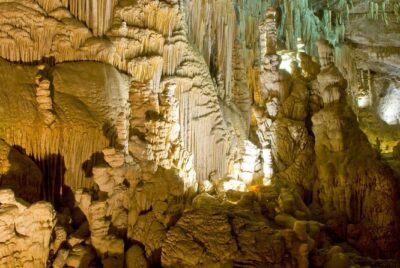
Byblos, Jeita Grotto & Harissa Day Trip -With Lunch (4G on Board)
Read our review →
Semi-Private Tour to Jeita Grotto, Harissa & Byblos with Lunch
Read our review →
Small Group Tour to Jeita Grotto, Harisa & Byblos with Hotel pickup
Read our review →
Private Guided Tour to Jeita Grotto through Harissa and Byblos
Read our review →
New Guided Semi-Private Tour to Jeita Grotto, Harissa & Byblos
Read our review →
Browse the lists this tour appears in