
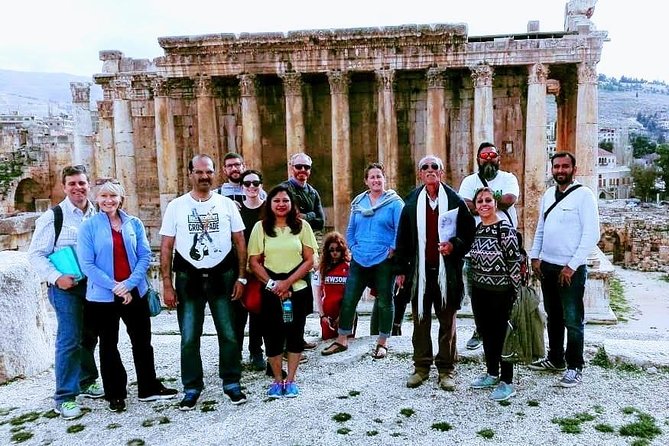
Reviewed · BAALBEK AND ANJAR TOURS
Small-Group Tour with Lunch to Baalbek, Anjar and Ksara
Baalbek is the star here: huge Roman temples, finely cut stone, and the sheer oddity of building such a grand sanctuary in the Bekaa Valley. I like that this day also adds Anjar’s Umayyad ruins and a stop at Château Ksara, so you get three very different views of Lebanon in one outing. I also like the small-group limit of 15, which gives the guide room to answer questions.
The catch is time. You spend about eight hours on the road and at the sites, with Baalbek receiving the most attention. Some entrance costs are not included, and the day may feel brisk if you want to study every column or take your time over lunch and wine.
Key points at a glance
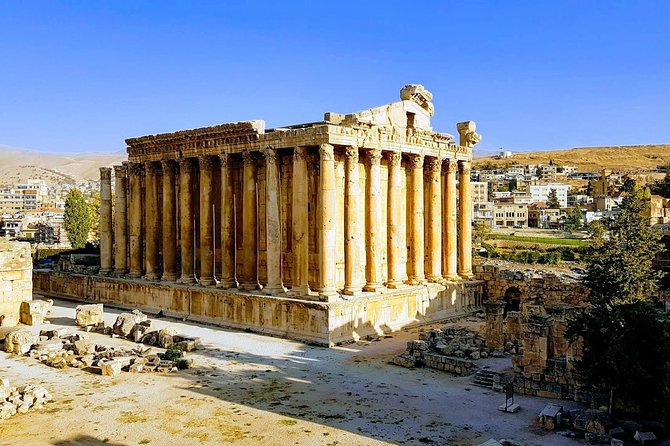
- Baalbek’s colossal Roman sanctuary is the main reason to book, with the Temple of Jupiter and Temple of Bacchus at the center of the visit.
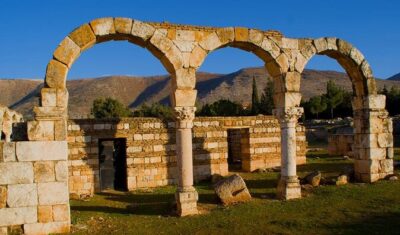
- Anjar adds a different era, showing an Umayyad city with palaces, a mosque, baths, and Roman-style columns.
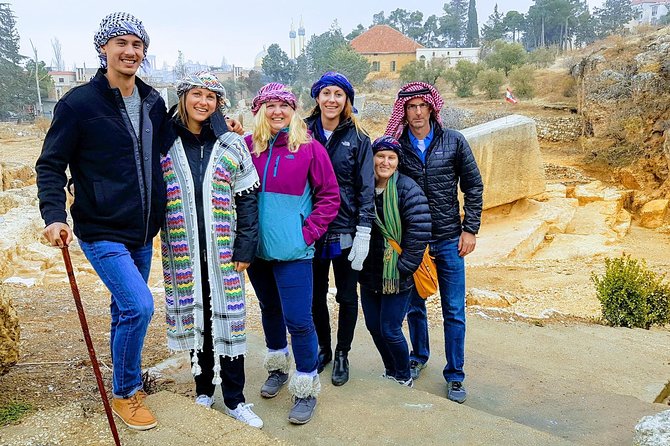
- The Stone of the Pregnant Woman offers a quick look at the giant blocks prepared for Baalbek’s building works.
- Château Ksara includes local wine tasting, linking the Bekaa Valley’s ancient past with its modern wine trade.
- Lebanese lunch is included, along with air-conditioned transport and hotel pickup and drop-off in Beirut’s city center.
- The group is capped at 15 people, and guides named in the experience include Albert, Ghofran, and Ziad.
Why Baalbek makes this day worthwhile
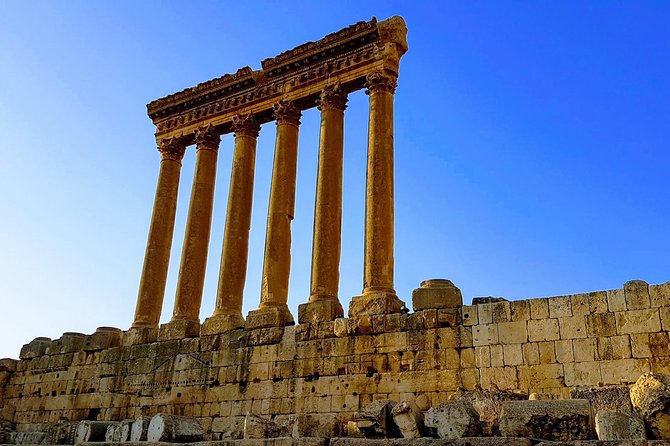
Baalbek is not a minor archaeological stop that you squeeze in between larger attractions. It is the core of the excursion, and its scale explains why. The sanctuary grew from a Phoenician religious center into Heliopolis during the Hellenistic period, then reached its greatest size under Roman rule.
The Roman complex honored a local version of the Heliopolitan triad: Jupiter, Venus, and Bacchus. That blend matters. You are not looking at a site that was simply copied from Rome. The sanctuary reflects older Phoenician worship, later Greek influence, and Roman imperial ambition all in one place.
The Temple of Jupiter is famous for its enormous surviving stones and broad platform. The Temple of Bacchus is smaller, but its carved details and impressive preservation often make it the more satisfying building to inspect closely. Your guide can help you read the site as more than a field of columns: this was a major pilgrimage center that drew worshippers from across the Roman world.
Baalbek sits at about 1,150 meters at the foot of the Anti-Lebanon range. The setting gives the ruins a strong sense of scale, although the attraction is the architecture itself. Bring your attention to the masonry, stairways, columns, reliefs, and the way the sanctuary was arranged for ceremony.
The scheduled time gives Baalbek roughly three hours across the main site visits. That is useful because the complex is too large for a quick photo stop. Still, this is not a private archaeological study tour. If you want to examine every carved surface or sit quietly among the ruins, you may need to accept that the group follows a set pace.
The site became a UNESCO World Heritage site in 1984. That label is less important than what you see in front of you, but it helps explain why Baalbek is treated as one of the finest surviving examples of Imperial Roman architecture.
More Baalbek and Anjar tours in Beirut:
- Guided Small-Group Tour to Baalbek, Anjar and Ksara with Lunch
★ 5.0 · 511 reviews - Anjar, Baalbek & Ksara Day Trip – With Lunch (4G on Board)
★ 4.5 · 181 reviews - Baalbek – Anjar – Ksara Trip From Beirut
★ 4.5 · 80 reviews
The Stone of the Pregnant Woman in 15 minutes
The Stone of the Pregnant Woman is a short stop, but it gives you a useful clue about how Baalbek was built. This worked Roman monolith, along with another large block nearby, is among the biggest stones ever quarried.
The blocks were likely intended for the nearby temple complex. Their size is difficult to grasp from photographs, so the stop works best as a scale exercise. After seeing the finished sanctuary, you can look at this unfinished or displaced building material and consider the labor, planning, and transport needed to move it.
You get about 15 minutes here. That is enough for a look and photographs, but not a long interpretation. Treat it as a sharp, unusual pause rather than a major attraction in its own right.
Anjar, an Umayyad city with Roman echoes
Anjar changes the mood of the day. Baalbek is a monumental Roman sanctuary, while Anjar is the remains of an inland commercial city from the Umayyad period. The site sat at the meeting point of routes linking Beirut with Damascus and the Bekaa Valley with Homs and Tiberias.
The ruins were found by archaeologists only in the late 1940s. That relatively recent discovery gives the visit a different feel from Baalbek, where the ruins have been famous for centuries.
With about 45 minutes at Anjar, you can see the city walls, palace remains, harems, mosque, thermal baths, and rows of pillars. Some architectural elements recall Roman design, which makes the site a good reminder that styles and building methods continued across political and religious change.
I like Anjar because it prevents the day from becoming a single-period tour. You move from Phoenician and Hellenistic roots, through Roman imperial architecture, to an Umayyad urban center. The contrast is the point.
The short visit also calls for realistic expectations. You will see the main remains, but you will not have unlimited time to map the city or study every structure. A strong guide makes a real difference here. Albert is named as one of the guides associated with the experience, while Ghofran is specifically noted for presenting Baalbek in detail. Ziad has also handled both driving and guiding, explaining the sites and answering questions.
Lunch brings the day back to the present
A Lebanese lunch is included, described as an authentic meal in the local style. That is a meaningful part of the value, since a full day in the Bekaa Valley needs a proper pause rather than only snacks between ruins.
The available information does not specify the restaurant, menu, or whether drinks are included. Keep that in mind if you have dietary needs or strong preferences. The important practical point is that lunch is built into the tour price, so you do not have to organize another meal while moving between the sites.
One detailed account specifically praised the lunch, and the overall timing was described as well planned. That fits the structure of the day: the route has several fixed stops, and the guide needs to keep the group moving so Baalbek, Anjar, and Ksara all fit into one outing.
More Chateau Ksara wine tours in Beirut:
- Guided Private Full Day Tour to Baalbek, Anjar and Chateau Ksara
★ 5.0 · 60 reviews - Lebanon tour Baalbek ruins & Ksara w/pick-up, lunch,guide+entries
★ 5.0 · 35 reviews - Baalbek Temples & Ksara Caves w/pick-up,guide, entries+lunch
★ 4.9 · 34 reviews - Small Group Tours to Baalbek, Anjar & Chateau Ksara with lunch and Tickets
★ 5.0 · 29 reviews
Château Ksara and the Bekaa Valley wine tradition
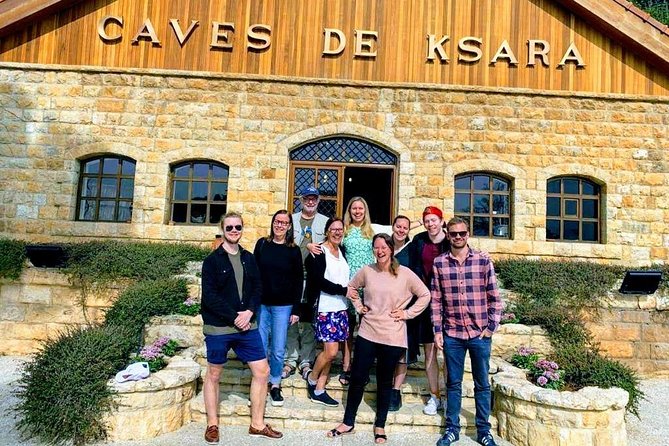
Château Ksara gives the itinerary a welcome modern finish. The winery was founded in 1857 by Jesuit priests and developed Lebanon’s first dry wine. Today it produces about three million bottles a year and exports to more than 40 countries.
The visit lasts about an hour and includes a local wine tasting as part of the tour experience. The stop is not only about sampling wine. It connects the agricultural identity of the Bekaa Valley with a working Lebanese company that has been making wine for more than a century and a half.
If you do not drink wine, this stop may be less important to you than the ruins. If you enjoy regional food and drink, it gives the day a useful change of pace. The listing does not explain the exact tasting format, the number of wines, or the arrangements for non-drinkers, so you should not assume a long winery tour or a full cellar program.
The winery also helps break up the archaeology. After several hours of stonework, columns, and palace walls, an hour devoted to a present-day Lebanese product can make the itinerary feel more rounded.
What the $65 price really covers
At $65 per person, the tour is priced as a practical one-day package rather than a bare transport service. You receive an air-conditioned vehicle, hotel pickup and drop-off, a tour leader, professional guides, lunch, and small-group transport.
That is a good value if you are staying in Beirut and want to see the Bekaa Valley without arranging a private car, route, driver, and meals. The day combines three major stops that would be difficult to coordinate efficiently on your own.
The price needs a closer look because some admissions are not included. Baalbek is described with a free admission at one stop, while the main temple visit says admission is not included. Anjar and Château Ksara also show admission as not included. The safest approach is to confirm exactly which site fees you will pay locally before setting out.
Even with extra entrance costs, the package can make financial sense for many people. You are paying for the vehicle, fuel, driver, guide services, lunch, pickup, and route planning. The small group also gives you more attention than a large coach tour, without the cost of a private excursion.
Transport, pickup, and the eight-hour schedule
The tour starts at 8:30 am and lasts about eight hours. Pickup and drop-off are offered from locations within Beirut’s city center, which removes one of the most annoying parts of a day trip: finding a separate meeting point before breakfast.
The vehicle is air-conditioned, an important comfort feature for a full day that includes outdoor archaeological sites. You spend much of the day moving between stops, so vehicle quality and timing matter almost as much as the attractions.
The group maximum is 15 people. That is small enough for a guide to handle questions and keep track of the group, though it is not the same as a private tour. If the vehicle fills to its limit, expect the normal compromises of a shared day trip, including a fixed pace and less control over how long you remain at each site.
The schedule is efficient rather than leisurely. Baalbek receives the largest block of time, Anjar gets a shorter visit, the monolith stop is brief, and Ksara takes about an hour. You should book this with the mindset of seeing the highlights, not conducting a slow archaeological survey.
The guides can shape the experience
The named guides connected with the tour include Albert, Ghofran, and Ziad. Their roles can vary by departure, but the available details show that the guide service is a major part of what makes the outing work.
Albert is associated with careful planning and well-managed timing. Ghofran is noted for giving detailed explanations at Baalbek, where a guide can help distinguish the Temple of Jupiter from the Temple of Bacchus and explain the Phoenician, Hellenistic, and Roman layers.
Ziad is described as both driver and guide, with a clear approach to explaining the sites and answering questions. That combination is useful on a route where the quality of the commentary can change a pile of ancient stones into an understandable sequence of places and cultures.
Since guide assignments can change, you should not book on the assumption that one particular person will lead every departure. The important point is to expect an escorted tour rather than a simple transfer to Baalbek.
Who should book this Bekaa Valley tour?
I would recommend it to you if you have a limited stay in Beirut and want a strong introduction to Lebanon’s central plain. It suits first-time visitors who want major ancient sites, a taste of Lebanese food, and a wine stop without planning the logistics themselves.
It is also a good match for anyone who prefers a small shared group to a large coach. The maximum of 15 keeps the outing more personal, while the $65 price remains far below the usual cost of hiring a private vehicle and guide for a full day.
History fans will get the most from the itinerary, especially if Baalbek is high on your list. Food and wine enthusiasts will appreciate the lunch and Château Ksara, though the archaeological sites still dominate the day.
You may want something else if you dislike fixed schedules, need long periods of quiet at ruins, or want a private guide tailored to your exact interests. The tour also may not suit you if unlisted entrance fees would make the total cost uncomfortable. Most people can participate, but the provided information does not give detailed accessibility notes for every archaeological area.
Free cancellation is available if you cancel at least 24 hours before the 8:30 am start time. Cancellations or changes within 24 hours are not refundable, so check your plans before the cutoff.
Should you book it?
Book this tour if Baalbek is a priority and you want Anjar, Lebanese lunch, and Château Ksara added without arranging several separate trips. The combination is unusually useful: Roman grandeur, Umayyad urban ruins, a giant quarry stone, local food, and Lebanese wine all fit into one day.
Before paying, confirm the entrance fees and the exact pickup point within Beirut’s city center. If you accept the brisk pace and shared transport, this is a well-priced way to reach the Bekaa Valley and see far more than Baalbek alone.
FAQ
How long does the tour last?
The tour lasts approximately eight hours, beginning at 8:30 am.
Is hotel pickup included?
Yes. Pickup and drop-off are included for locations within Beirut’s city center.
What is the maximum group size?
The tour accepts a maximum of 15 travelers.
Is lunch included?
Yes. The tour includes a Lebanese lunch.
Is wine tasting included at Château Ksara?
Yes. The experience includes a complimentary tasting of local wines at Château Ksara.
Are entrance fees included?
Not all listed admissions are included. Baalbek’s main temple visit, Anjar, and Château Ksara are shown with admission not included, so confirm the current fees before departure.
More Lunch Experiences in Beirut
- Guided Small-Group Tour to Jeita, Harissa, Byblos with Lunch
★ 5.0 · 361 reviews - Byblos, Jeita Grotto & Harissa Day Trip -With Lunch (4G on Board)
★ 4.5 · 145 reviews - Semi-Private Tour to Jeita Grotto, Harissa & Byblos with Lunch
★ 5.0 · 52 reviews - Sidon, Tyre & Maghdouche Day Trip – With Lunch (4G on Board)
★ 4.5 · 44 reviews
Just added around Beirut
- Journey Through Time: Half-Day Private Tour to Baalbek★ 5.0 · 3 reviews
- Small Group Tours to Jeita Grotto and Byblos with tickets★ 5.0 · 3 reviews
- Wine Tasting and Culture★ 5.0 · 3 reviews
- Small-Group Tour with Lunch to Jeita Grotto, Byblos and Harissa★ 4.5 · 3 reviews
- Traveling Spoon Lebanese Mezze Private Online Cooking Class★ 5.0 · 4 reviews
- Beirut to Qadisha Valley, Bcharri & Cedar: Daily Tours with Lunch★ 4.5 · 3 reviews
- Small-Group Tour to Sidon, Tyre and Maghdouche with Lunch and Tickets★ 4.5 · 3 reviews
- Guided Semi-Private Tour to Jeita, Harissa & Byblos★ 5.0 · 4 reviews
Baalbek and Anjar Tours, compared.
Guided Small-Group Tour to Baalbek, Anjar and Ksara with Lunch
Read our review →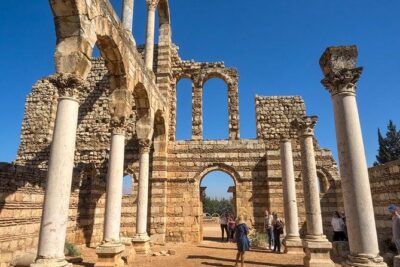
Anjar, Baalbek & Ksara Day Trip – With Lunch (4G on Board)
Read our review →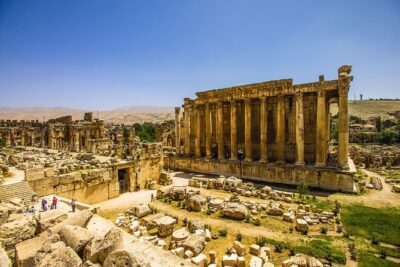
Private Anjar and Baalbek Tour from Beirut with Departure Ticket
Read our review →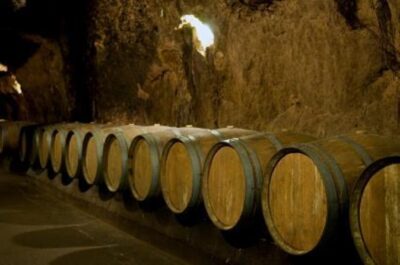
Guided Private Full Day Tour to Baalbek, Anjar and Chateau Ksara
Read our review →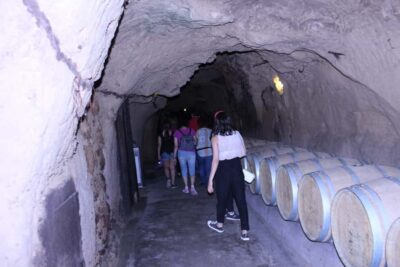
Baalbek Temples & Ksara Caves w/pick-up,guide, entries+lunch
Read our review →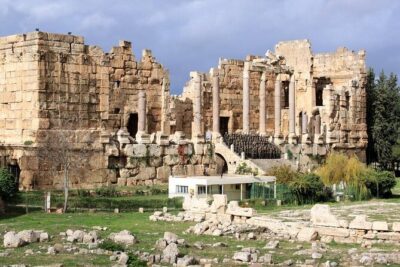
Small Group Tours to Baalbek, Anjar & Chateau Ksara with lunch and Tickets
Read our review →
Private Tour: Anjar, Baalbek and Ksara Day Trip from Beirut
Read our review →Browse the lists this tour appears in