
Reviewed · BAALBEK AND ANJAR TOURS
Small Group Tours to Baalbek, Anjar & Chateau Ksara with lunch and Tickets
Baalbek gives this day its real punch. You walk among immense Roman temples built for Jupiter, Venus, and Bacchus, then add an Umayyad city and Lebanon’s oldest winery for a well-packed trip through the Bekaa Valley. The Roman ruins are the main event, but the mix keeps the day from feeling like a single-site expedition.
I like the small group limit of 15, since it gives you a better chance to hear the guide and ask questions. I also like the practical package: hotel pickup, air-conditioned transport, site tickets, and a Lebanese lunch are included in the $75 price. The main consideration is time. Nine hours on the road and at four stops makes this a full day, and Château Ksara’s admission is not included.
Key points to know before booking
- Baalbek takes center stage: Allow about 90 minutes for the Roman temple complex, with admission included.
- The Stone of the Pregnant Woman adds a startling engineering detail: This huge worked Roman block is one of the largest ancient monoliths ever quarried.
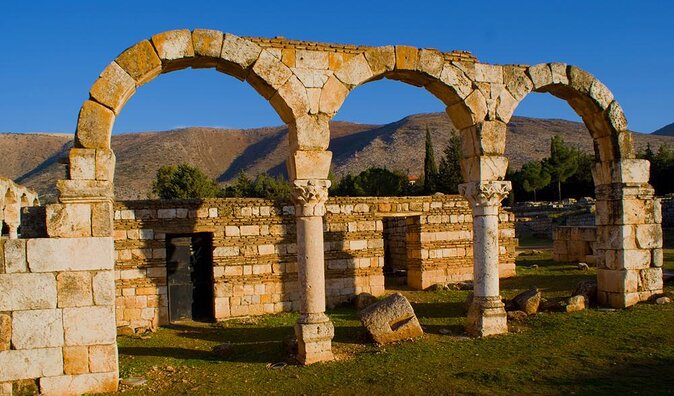
- Anjar offers a different chapter of Lebanon’s past: Its Umayyad palace, mosque, baths, and arcades show an inland city built along major trade routes.
- Château Ksara brings wine into the day: You learn about Lebanese wine production, enter the on-site cave, and taste several wines, though the winery admission is extra.
- Lunch is part of the price: The meal is at a local Lebanese restaurant, a useful break after the morning ruins.
- The transport setup is easy: Hotel pickup and drop-off come in a private, climate-controlled minivan, with the group capped at 15 people.
Why this three-stop day works from Beirut
This tour is designed for you if you want to see beyond Beirut without arranging several separate trips. Baalbek, Anjar, and Château Ksara sit in the Bekaa Valley area, so the route groups major sights into one long outing instead of asking you to return to the capital after each stop.
I find the combination especially effective because each site feels different. Baalbek is monumental and Roman. Anjar is more compact and tied to the Umayyad period. Ksara shifts the mood from archaeology to food, wine, and the practical story of how a Lebanese winery operates.
The price is $75 per person. That includes hotel transfers, a guide, transport, lunch, and admission to Baalbek and Anjar. You still need to account for Château Ksara’s admission, which is specifically excluded, but the overall package remains strong if you would otherwise pay separately for a driver, guide, lunch, and two major historical sites.
The day begins at 8:00 a.m. and lasts about nine hours. That early start matters. You have a better chance of reaching the first site with enough time for a proper explanation, rather than rushing through Baalbek late in the afternoon. Still, this is not a leisurely day. You are covering several sites in one outing, so wear comfortable shoes and expect a steady pace.
More Baalbek and Anjar tours in Beirut:
- Guided Small-Group Tour to Baalbek, Anjar and Ksara with Lunch
★ 5.0 · 511 reviews - Anjar, Baalbek & Ksara Day Trip – With Lunch (4G on Board)
★ 4.5 · 181 reviews - Baalbek – Anjar – Ksara Trip From Beirut
★ 4.5 · 80 reviews
Baalbek and the temples of Heliopolis
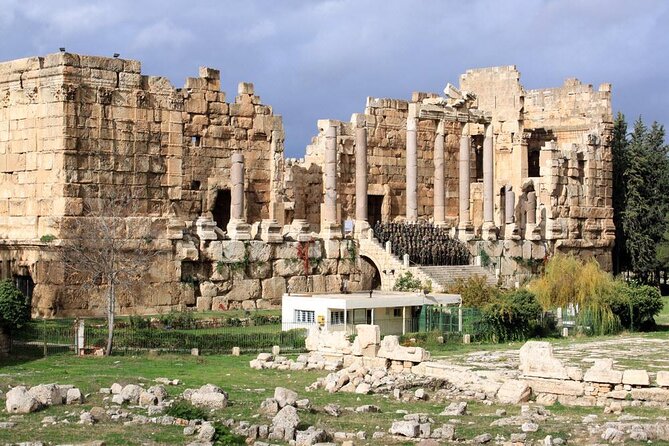
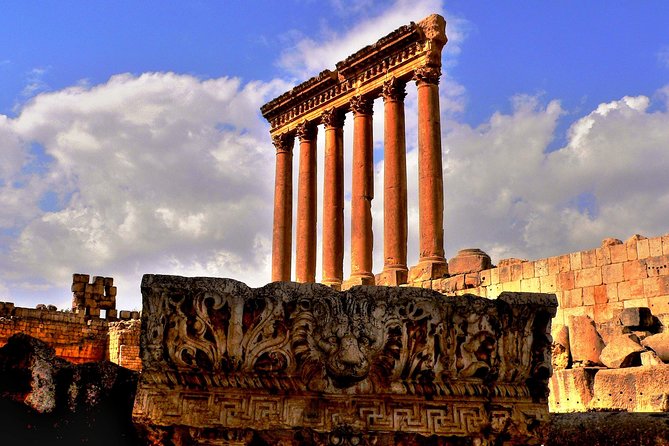
Baalbek is the reason most people choose this tour. The ancient complex sits at about 1,150 meters near the southwest slope of the Anti-Lebanon range, beside the fertile Bekaa plain. In Roman times, the city reached its height as a major sanctuary known as Heliopolis.
You spend about 90 minutes at the temple complex, and admission is included. That is enough time to see the main structures and understand the layout, but not enough for a slow, scholarly examination of every stone. If you want to study Roman architecture at length, a private visit would give you more freedom. For a day that also includes Anjar and Ksara, the allotted time is sensible.
The scale is what you notice first. Roman builders worked on the complex for more than two centuries, creating a sanctuary that required vast quantities of stone and a level of organization that is hard to imagine from a modern street. The great temples were dedicated to the Romanized Heliopolitan Triad: Jupiter, Venus, and Bacchus. Their names are Roman, but the worship grew from an older Phoenician religious tradition.
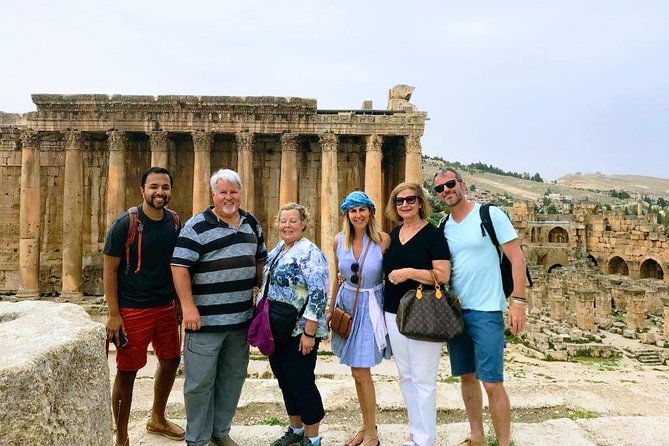
A guide makes a real difference here. Natasha, identified with the group as an archaeologist, is a particularly useful name to know if she is leading your departure. Her archaeological background can help connect the stones to the older Phoenician cult and later Roman use, rather than leaving you with only a list of dates and building names.
The site works best when you look upward and outward. Colossal columns, high platforms, and broken architectural pieces make Baalbek feel less like a tidy ruin and more like a building site interrupted by time. Ask questions as you go. The group size is capped at 15, so you should have a better chance of getting an answer than on a large coach tour.
Do not expect the whole complex to be explained in equal detail. The schedule is tight, and the tour must leave room for two more major stops. I would treat Baalbek as the centerpiece, listen closely to the guide’s explanation, and save time for the most striking structures rather than trying to inspect everything.
The Mosque of Sayeda Khawla
The visit also includes a stop at the Mosque of Sayeda Khawla in Baalbek. The mosque is built at the site where Sayyida Khawla, the daughter of Imam al-Hussein, is believed to have been buried.
Local belief connects the site with the caravan of captives from Karbala. According to that tradition, Khawla died while the caravan passed through Baalbek and was buried here. This adds a later religious layer to a city already known for Phoenician and Roman worship.
The stop is useful because it reminds you that Baalbek is not only an archaeological site. It remains a place of religious meaning, and the mosque belongs to the living cultural setting around the ancient ruins. The supplied schedule does not give a separate duration for this stop, so expect it to fit within the Baalbek portion of the day rather than function as a long independent visit.
The Stone of the Pregnant Woman
The Stone of the Pregnant Woman takes about 15 minutes and does not require an admission fee. It is a short stop, but it gives you a clear sense of the raw material behind Baalbek’s monumental architecture.
This worked Roman monolith, along with another huge block nearby, ranks among the largest stones ever quarried in antiquity. The blocks were probably intended for the nearby temple complex. Their size reflects the same taste for monumental scale that you see in the temples, but here the focus is on the construction process rather than worship.
I like this stop because it turns an abstract idea into something you can see at close range. At the temples, you may think about columns and platforms. At the stone quarry, you confront the sheer weight of the building blocks themselves.
Fifteen minutes is enough to understand the point, take photographs, and hear the explanation. It is not a place for a long walk or a separate archaeological tour. Consider it a sharp, useful pause between the main Baalbek complex and the next part of the route.
More Chateau Ksara wine tours in Beirut:
- Guided Private Full Day Tour to Baalbek, Anjar and Chateau Ksara
★ 5.0 · 60 reviews - Lebanon tour Baalbek ruins & Ksara w/pick-up, lunch,guide+entries
★ 5.0 · 35 reviews - Baalbek Temples & Ksara Caves w/pick-up,guide, entries+lunch
★ 4.9 · 34 reviews - Private Tour: Anjar, Baalbek and Ksara Day Trip from Beirut
★ 5.0 · 20 reviews
Lunch at a local Lebanese restaurant
Lunch is included, and that is more important than it may sound. After a morning spent walking around stone platforms and temple remains, a sit-down Lebanese meal gives you a proper break before the afternoon stops.
The exact restaurant and menu are not specified, so you should not book this expecting a particular dish. What is clear is that the meal is at a local Lebanese restaurant, and the tour price covers it. The food was singled out as sumptuous and excellent in the supplied feedback, with the meal described as one of the day’s strongest features.
For me, lunch also adds value that a packed sightseeing schedule can miss. You are not simply being moved from monument to monument. A local meal gives the group time to slow down and experience part of Lebanon’s food culture.
The driver may also help keep the meal running smoothly. Ziad was specifically praised for looking after the group and making sure lunch was served well. Driver quality matters on a nine-hour day, especially when the route includes several stops and a long return to Beirut.
Anjar’s Umayyad city and trade routes
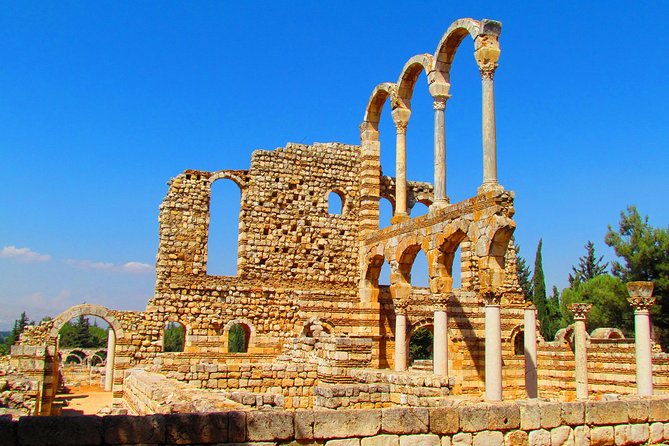
Anjar offers a useful contrast to Baalbek. You spend about 45 minutes among the Umayyad ruins, with admission included. The site was discovered by archaeologists only in the late 1940s, which gives it a different feeling from a monument that has remained famous for centuries.
The ancient city occupied a strategic crossroads. One route ran from Beirut toward Damascus, while another crossed the Bekaa Valley toward Homs and Tiberiade. That location helps explain why Anjar was built as an inland commercial center rather than as another religious sanctuary.
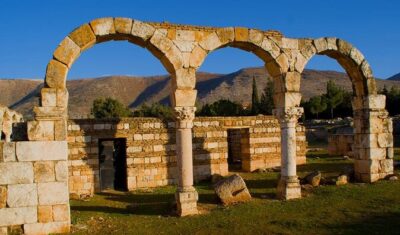
The ruins include the walls of the Umayyad palace, harems, a mosque, the caliph’s great palace, thermal baths, and rows of pillars. You can also see Roman architectural elements worked into the site. The result is a place where the planning of an early Islamic city meets older building traditions.
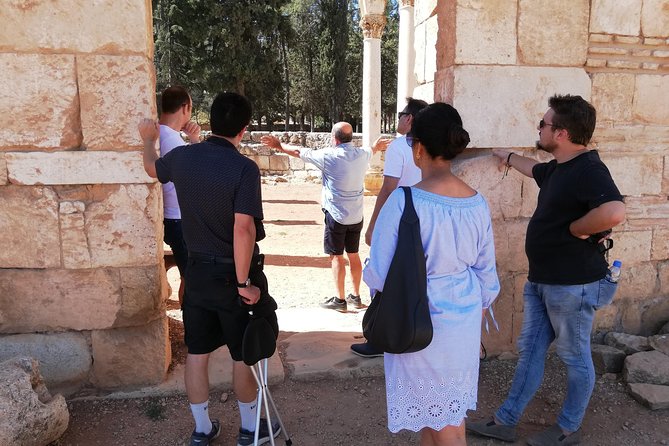
The 45-minute visit is short, so listen for the city plan and the main buildings rather than expecting time to wander every corner. Anjar rewards an explanation of how the parts fit together. Without a guide, you might see columns and walls. With context, you can picture a palace complex, bathing facilities, religious buildings, and a commercial city placed along important routes.
Khalil is named as one of the on-site guides associated with the experience and was praised for making the visit memorable. Guide assignments can vary, but the detail is useful: the quality of the local explanation is an important part of Anjar, since the ruins are less immediately famous than Baalbek.
Château Ksara and the wine caves
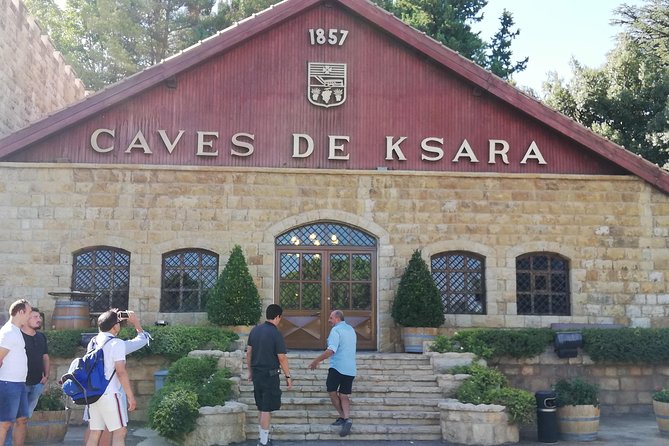
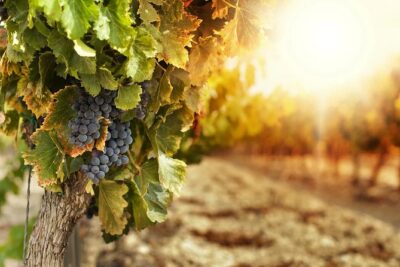
The final major stop is Château Ksara, in the Bekaa Valley. The winery was founded in 1857 by Jesuit priests and developed Lebanon’s first dry wine. It now produces about three million bottles a year, with bottles sold in several countries.
You spend about an hour here. The visit goes beyond simply sitting down with a glass. You learn how Lebanese wine is made, see the on-site cave, and taste multiple wines. That change of pace works well after the ancient sites, especially if you enjoy food and drink as part of travel.
The winery admission is not included, so check the current cost when booking. The tour still includes the transport and organized visit, but this extra charge means the advertised price is not the final cost of every activity.
Wine tasting also means you should plan sensibly for the ride back. The tour uses a climate-controlled private minivan, so you are not responsible for driving, but the tasting is still one part of a long day. Take the opportunity to sample and listen rather than treating the stop as a rushed drink break.
Ksara is a good finish because it connects Lebanon’s past with a working local industry. Baalbek shows imperial construction. Anjar shows urban and commercial life under the Umayyads. Ksara shows how the Bekaa Valley remains productive today.
Transport, group size, and the nine-hour schedule
The tour provides hotel pickup and drop-off from Beirut, with travel in an air-conditioned vehicle. The transport is described as a comfortable private minivan, and the group maximum is 15 people. That is a meaningful advantage over a large bus, especially on a route where you will spend many hours together.
A small group also supports better questions. You can ask about the Roman temples, the religious importance of Sayeda Khawla, the unusual monolith, or the winery without having to shout across a coach. The tradeoff is that pickup times can vary by hotel, and the day may feel full from the moment you leave at 8:00 a.m. until you return.
The experience is recommended for most participants, but the information provided does not give a detailed accessibility statement. If you have mobility concerns, ask the provider about the walking surfaces and exact access arrangements before booking. Baalbek and Anjar are archaeological sites, so conditions may not be as even as a city pavement.
The tour requires good weather. If poor weather forces cancellation, you are offered another date or a full refund. You can cancel for a full refund up to 24 hours before the start time, but changes or cancellations inside that 24-hour window are not refunded.
Who gets the best value from this tour
I would choose this tour if you have limited time in Beirut and want the major Bekaa Valley highlights handled in one day. The combination of transport, guide, lunch, and two included site admissions removes much of the planning work.
It also suits you if you want historical context rather than only a photo stop. The guide’s role matters at all three places, and an archaeologist such as Natasha can bring extra depth to Baalbek. At Anjar, an on-site guide such as Khalil can help you understand the city’s layout. A careful driver such as Ziad can make the long route feel more manageable.
You may prefer a private tour if you want to linger at Baalbek, set your own lunch time, or spend longer at the winery. You may also find the itinerary too packed if your ideal day includes long café breaks and unhurried wandering.
The strongest praise goes to three things: the organization, the Lebanese lunch, and the historical explanation. Those are exactly the areas that matter on a day with four distinct stops. The weakest point is not a serious flaw, but the schedule leaves little spare time and Ksara costs extra.
Should you book it?
Book this tour if you want Baalbek, Anjar, and Château Ksara in one well-organized day from Beirut. At $75, the included lunch, hotel transfers, air-conditioned minivan, guide, and two site admissions make it good value, even after allowing for the winery admission.
Skip it if you want a slow archaeological study or a private itinerary. For most people with only a short stay in Beirut, though, this is an efficient and rewarding way to reach Baalbek, add an important Umayyad site, and finish with Lebanese wine.
FAQ
What does the $75 tour price include?
The price includes hotel pickup and drop-off, a local guide, an air-conditioned vehicle, a tour leader, lunch at a local Lebanese restaurant, and admission tickets for Baalbek and Anjar.
Is Château Ksara admission included?
No. Château Ksara admission is not included in the tour price. The visit includes learning about Lebanese wine production, seeing the cave, and tasting multiple wines, but you should budget separately for the winery admission.
How long does the tour last?
The tour lasts approximately nine hours and begins at 8:00 a.m.
What is the maximum group size?
The group is capped at 15 travelers.
Is hotel pickup available?
Yes. Hotel pickup and drop-off are included, with transportation provided in a private, climate-controlled minivan.
What happens if bad weather cancels the tour?
The experience requires good weather. If it is canceled because of poor weather, you can choose another date or receive a full refund.
More Lunch Experiences in Beirut
- Guided Small-Group Tour to Jeita, Harissa, Byblos with Lunch
★ 5.0 · 361 reviews - Byblos, Jeita Grotto & Harissa Day Trip -With Lunch (4G on Board)
★ 4.5 · 145 reviews - Semi-Private Tour to Jeita Grotto, Harissa & Byblos with Lunch
★ 5.0 · 52 reviews - Sidon, Tyre & Maghdouche Day Trip – With Lunch (4G on Board)
★ 4.5 · 44 reviews
Just added around Beirut
- Journey Through Time: Half-Day Private Tour to Baalbek★ 5.0 · 3 reviews
- Small Group Tours to Jeita Grotto and Byblos with tickets★ 5.0 · 3 reviews
- Wine Tasting and Culture★ 5.0 · 3 reviews
- Small-Group Tour with Lunch to Jeita Grotto, Byblos and Harissa★ 4.5 · 3 reviews
- Traveling Spoon Lebanese Mezze Private Online Cooking Class★ 5.0 · 4 reviews
- Beirut to Qadisha Valley, Bcharri & Cedar: Daily Tours with Lunch★ 4.5 · 3 reviews
- Small-Group Tour to Sidon, Tyre and Maghdouche with Lunch and Tickets★ 4.5 · 3 reviews
- Small-Group Tour with Lunch to Baalbek, Anjar and Ksara★ 5.0 · 3 reviews
Baalbek and Anjar Tours, compared.
Guided Small-Group Tour to Baalbek, Anjar and Ksara with Lunch
Read our review →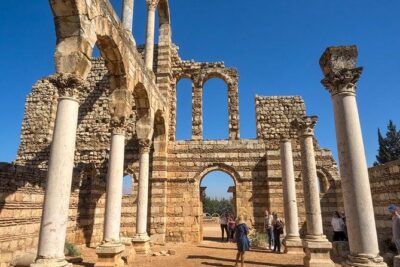
Anjar, Baalbek & Ksara Day Trip – With Lunch (4G on Board)
Read our review →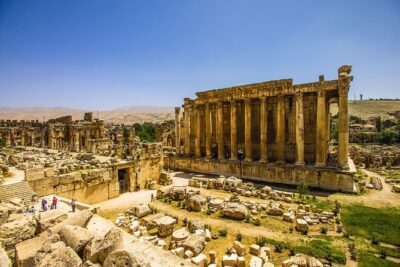
Private Anjar and Baalbek Tour from Beirut with Departure Ticket
Read our review →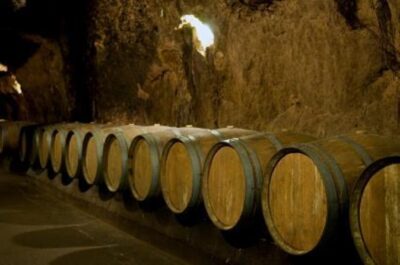
Guided Private Full Day Tour to Baalbek, Anjar and Chateau Ksara
Read our review →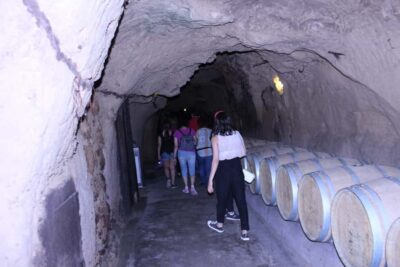
Baalbek Temples & Ksara Caves w/pick-up,guide, entries+lunch
Read our review →
Private Tour: Anjar, Baalbek and Ksara Day Trip from Beirut
Read our review →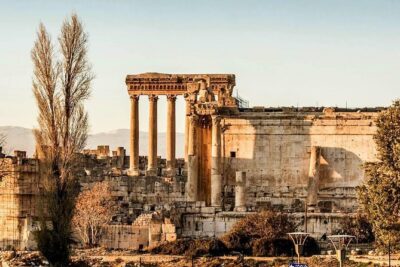
Browse the lists this tour appears in