
Reviewed · BEIRUT TOURS
BEYOND BEIRUT
Beirut reveals its best stories in the gaps between famous sights: a Roman mosaic beside a modern building, a small church tucked into an ordinary street, or a war-scarred façade carrying the city’s difficult memory. Beyond Beirut takes you into those overlooked corners with Joanna, a guide who connects ancient remains, political history, street art, and daily life.
I like two things right away. First, the tour is private for up to four people, so the day can bend around your interests and the weather. Second, it brings together major sights such as the Mohammad Al-Amin Mosque, Roman Baths, Downtown, and Pigeon Rocks with less obvious places that are easy to miss alone. The main consideration is that this is a six-hour walking experience, and wheelchair users cannot take part. Bring good shoes, water, snacks, and cash.
Key points at a glance
- Roman remains beside modern Beirut: Look for ancient mosaics, Roman Baths, and ruins set among newer buildings.
- A personal look at Lebanon’s recent past: Joanna explains the country’s political and wartime history while pointing out physical traces in the city.
- Famous sights and local corners together: The route can include the Mohammad Al-Amin Mosque, Downtown, Pigeon Rocks, small churches, cafés, street art, and old Lebanese houses.
- A private, adaptable day: The group price covers up to four people, and the route can be adjusted to match your requests.
- Walking with entrances included: Admission costs within the tour are covered, but food and drinks are not.
- Useful for first-time orientation: You receive ideas for sights, restaurants, and places to visit elsewhere in Beirut and Lebanon.
A six-hour walk through Beirut’s contradictions
This is not a tidy march from one postcard stop to the next. You move through streets where several eras share the same view: ancient stone, Ottoman or Lebanese homes, postwar construction, modern towers, painted walls, and shops that keep ordinary Beirut moving.
That mixture is the point. Beirut can be hard to read at first. A polished square may sit close to a damaged building. An ancient remnant may appear in a place that looks thoroughly modern. Joanna’s role is to help you notice these layers and explain how they fit together.
The tour is listed as six hours, with walking, sightseeing, photo stops, a break, and guided visits. One itinerary detail also refers to 12 hours, so I would confirm the exact schedule when booking. The clear activity description gives six hours, and that is the timing I would use for planning your day.
Other Beirut days people book alongside this one:
- Guided Small-Group Tour to Baalbek, Anjar and Ksara with Lunch
★ 5.0 · 511 reviews - Guided Small-Group Tour to Jeita, Harissa, Byblos with Lunch
★ 5.0 · 361 reviews - Paragliding Trip Over Lebanon – Jounieh Bay
★ 5.0 · 257 reviews
Starting near Beirut Souks
Pickup is available from two locations, including Beirut Souks, and hotel or accommodation pickup is included. If you are being collected, wait in the lobby at the arranged time. Beirut Souks is a practical meeting point because it places you close to the rebuilt Downtown area and the central part of the walk.
The day begins with orientation rather than a rushed checklist. You can expect to walk through central streets, pause for photographs, and hear how the city changed over time. Since the group is private, tell Joanna early if you are especially interested in architecture, politics, religion, food, photography, or street art.
That flexibility matters. One visitor had poor weather, yet the route was reshaped around personal requests. This is a better fit for you if you prefer conversation and adjustment over a fixed group schedule.
Mohammad Al-Amin Mosque and Downtown
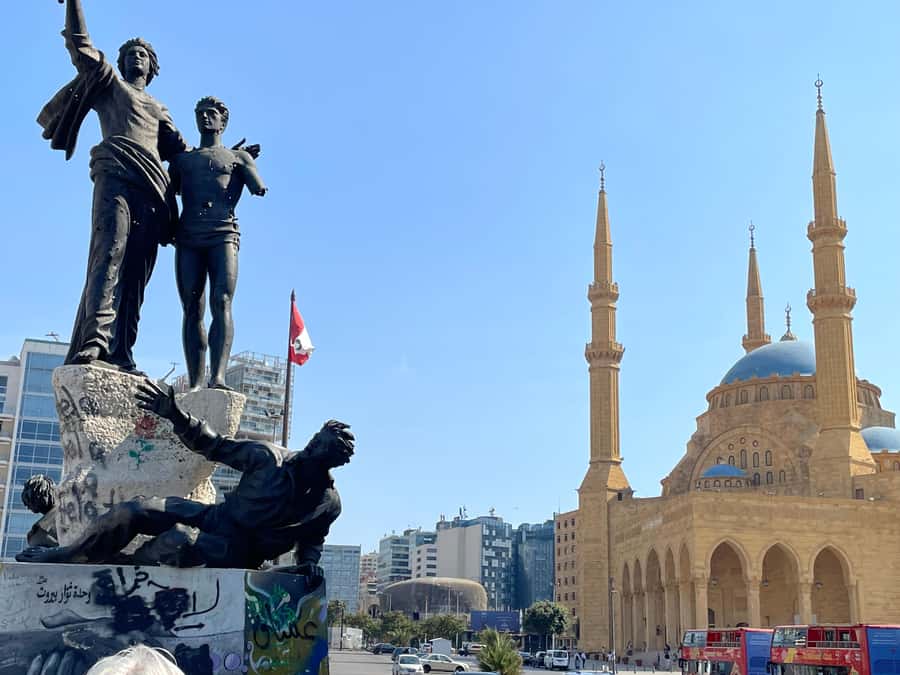
The Mohammad Al-Amin Mosque is one of the tour’s major visual stops. Its scale and prominent position make it a useful starting point for understanding Beirut’s central district, especially when set against nearby historic buildings and newer construction.
Downtown also gives the tour its strongest contrast. The area includes reconstructed sections, old structures, commercial streets, and reminders of conflict. Joanna explains the modern political story of Lebanon as you walk, rather than treating the city as a collection of attractive façades.
I value this kind of context because Beirut’s recent past is not confined to a museum. It appears in walls, empty spaces, repairs, and changes in the built environment. You may find the subject heavy at times, but avoiding it would leave out a major part of the city’s character.
The route is not presented as a sanitized sightseeing circuit. That means you should expect frank discussion and visible reminders of damage, rebuilding, and political tension. If you want only monuments and easy photographs, this may feel more serious than expected.
Roman Baths, mosaics, and ancient traces
Beirut’s ancient remains are especially rewarding because they do not always occupy a separate archaeological park. Roman features can appear among civic buildings and modern streets, forcing you to look closely.
The Roman Baths are among the better-known stops. You may also see a Roman mosaic in a less obvious setting, one of the details that can be difficult to locate without local guidance. The appeal is not simply the age of the stone. It is the way these remains share space with a working city.
That setting also calls for realistic expectations. This is not a full archaeological tour with a long lecture at every site. Instead, Joanna uses the remains as part of a broader story about Beirut, linking ancient settlement to later buildings, religious sites, war damage, and current city life.
Same mountains and coast, a completely different kind of day:
- Jeita Grotto,Harissa&Byblos Full-Day PRIVATE-CAR Trip from Beirut
★ 5.0 · 222 reviews - First Paragliding Club in Lebanon – Since 1992
★ 5.0 · 193 reviews - Anjar, Baalbek & Ksara Day Trip – With Lunch (4G on Board)
★ 4.5 · 181 reviews - Jeita Grotto – Harissa – Byblos Trip
★ 5.0 · 169 reviews
Small churches, Lebanese houses, and street art
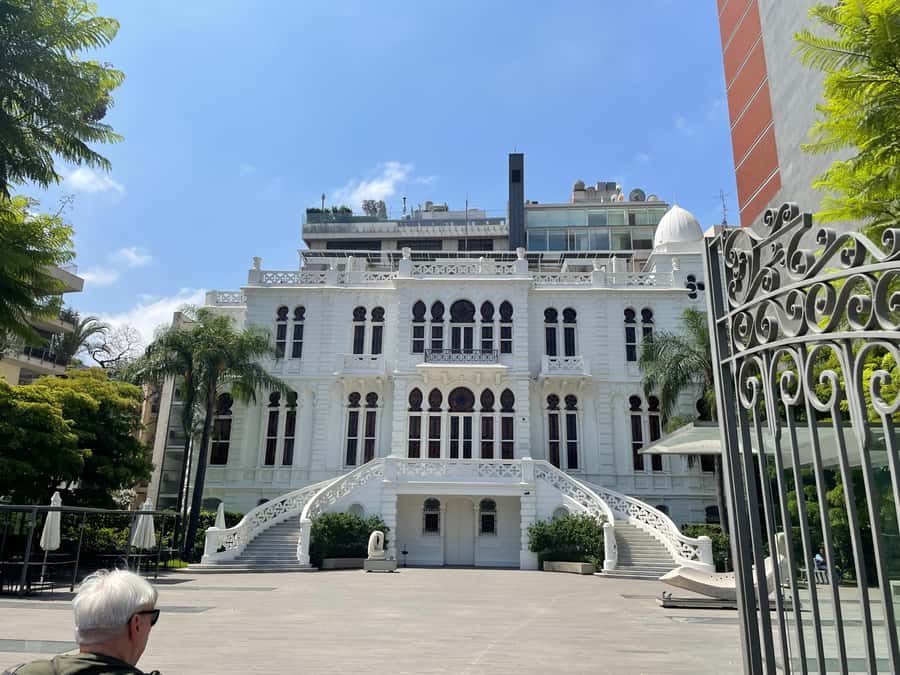
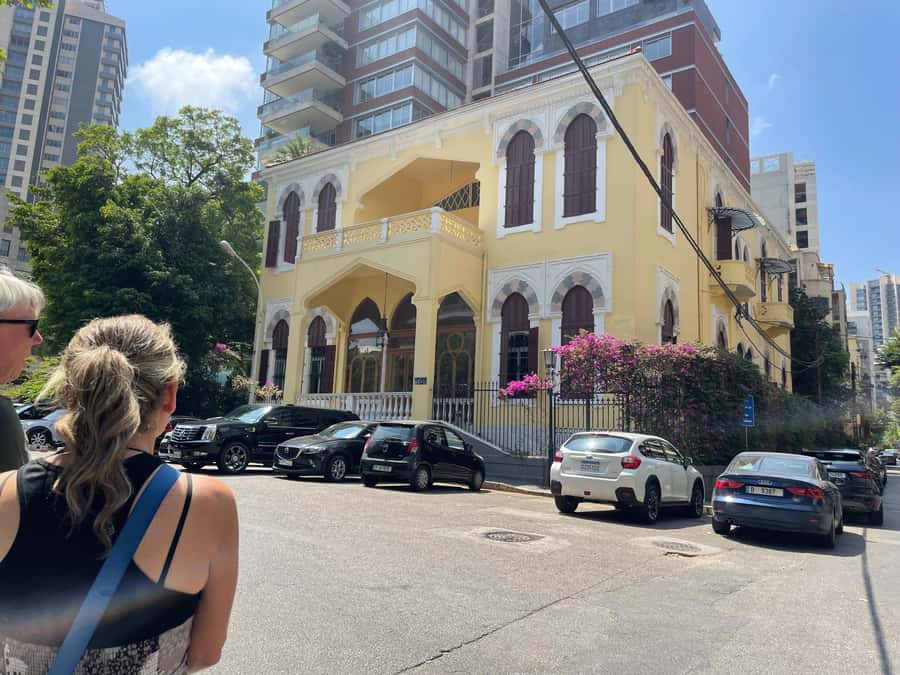
Some of the most memorable stops may be modest. Small churches, traditional Lebanese homes, painted walls, and colorful storefronts show parts of Beirut that a standard route can pass by.
The architecture is not always polished. Old homes may sit beside altered or damaged structures, while street art adds a newer layer. That rough mix is exactly what makes the walk feel different from a standard highlights tour.
Street art is another reason to keep your camera ready. The route can include wall paintings that are not usually listed in guidebooks, along with forgotten spaces and unusual corners. Since the city changes, the value is in learning how to notice these details, not in expecting a permanent exhibit.
I would give Joanna room to guide your attention here. The best moments may come from a quick stop that is not obvious from the street. This is also where comfortable footwear matters, since the experience is entirely on foot.
Gemmayzeh, cafés, and the taste of daily life
The Gemmayzeh district adds a more social side to the day. Traditional homes, cafés, restaurants, and local meeting places help you see Beirut as a lived-in city, not just an architectural record.
A lunch stop at a restaurant in Gemmayzeh and a visit to a traditional ice cream shop have been part of the experience. Food is not included, so you should carry cash and budget separately for anything you eat or drink. The exact choice of restaurant may vary, especially because the tour can be adapted.
This flexibility is useful if you want recommendations for the rest of your stay. Joanna can point you toward sights and restaurants in Beirut and elsewhere in Lebanon, giving the walk value beyond the six-hour schedule.
Do not think of the food stop as a formal tasting tour. It is a chance to pause, eat, and see where people spend time. If local food is your main priority, ask in advance how much time can be set aside for lunch.
Pigeon Rocks and the Mediterranean outlook
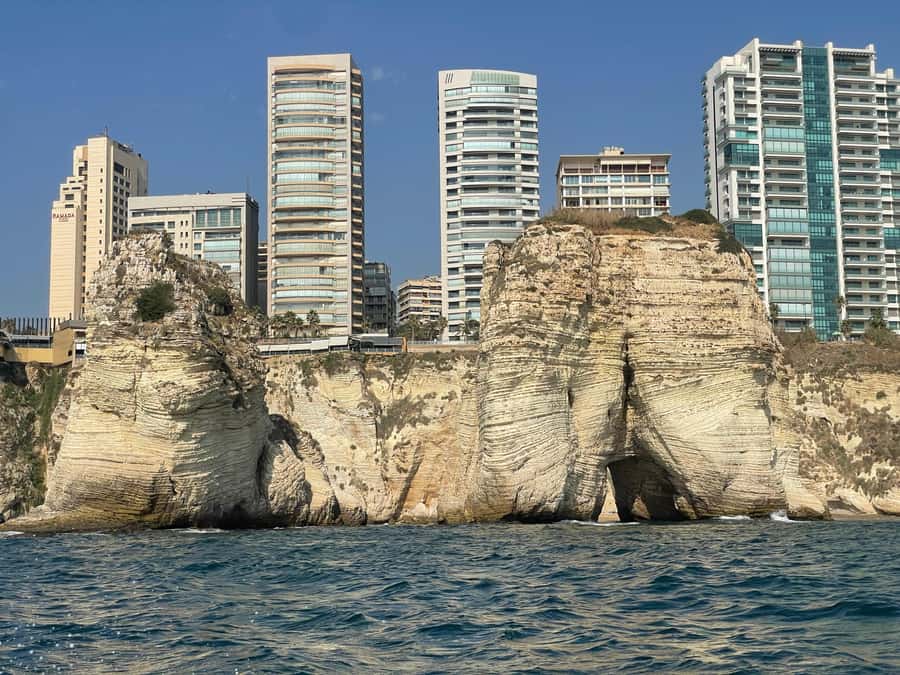
The route can include Raouche and Pigeon Rocks, where the city opens toward the Mediterranean. After the close streets and built-up central districts, this is a welcome change of pace and a strong place for photographs.
Pigeon Rocks gives the tour a broad final image of Beirut. You have seen ruins, mosques, churches, damaged buildings, rebuilt areas, shops, and street art. Here, the focus shifts to the sea and the city’s coastal setting.
The view is weather dependent. On a gray day, it may not have the same impact, but the stop still helps you understand Beirut’s position as a coastal capital. If photography matters to you, keep your camera or charged phone ready throughout the day rather than saving it for the final viewpoint.
Joanna’s guiding style and language choices
Joanna is the named guide associated with the experience, and her strengths are clear from the way the tour is designed. She brings together city history, current politics, architecture, local customs, and practical recommendations without limiting the walk to famous monuments.
The private format should make the experience feel more like a guided conversation than a large-group lecture. You can ask why a building looks a certain way, how a district was rebuilt, or where to eat later. The route can also respond to your requests and the weather.
Guiding is offered in English, French, Portuguese, and Arabic. Check that your preferred language is available for your selected departure, especially if you are booking for a mixed-language group.
The tour has earned a perfect 5 out of 5 from seven verified bookings, with repeated praise for Joanna’s warmth, preparation, and ability to show places that are easy to overlook. The strongest pattern is not one single landmark. It is the combination of personal attention and wider context.
What the $110 group price really buys
The price is $110 per group of up to four people. That works out to $27.50 each for four people, $55 each for two, or the full $110 if you book alone.
For a private six-hour walking tour with pickup included and entrances covered, that can be good value for a small group. You are paying for a personal route, a guide who can answer questions, and help finding sites you may not locate independently.
The value is weaker if you want a cheap orientation walk or plan to visit only the biggest landmarks. You could spend less on a basic city stroll, but you would lose the private format and the focus on overlooked places.
Food and drinks are extra. Bring water and some cash, especially if you want lunch, ice cream, coffee, or other purchases during the break. The price also does not remove the need for sensible planning around weather and footwear.
Walking conditions and what to bring
This is a walking tour, not a vehicle-based sightseeing trip. You should expect extended time on city streets, with stops for photographs, visits, conversation, and a break.
Wear comfortable shoes. A hat, water, food, and drinks are recommended, and a charged smartphone is useful for directions, photographs, and keeping in touch. Bring cash because food and beverages are not included.
The experience is not suitable for wheelchair users. If you have mobility concerns that are not related to wheelchair use, ask about the route before confirming, since the supplied details do not describe pavement conditions, distances, or stair access.
The guide can reshape the day for weather and personal requests, but flexibility has limits. A rainy day may change the order or reduce the appeal of outdoor viewpoints. Pack accordingly rather than assuming the itinerary will stay fixed.
Who should book Beyond Beirut
I would recommend this tour if you want Beirut explained rather than simply photographed. It suits first-time visitors who want the major sights but also want small churches, Roman mosaics, old houses, street art, rebuilt districts, cafés, and war reminders.
It is also a strong choice for repeat visitors who have already seen the central monuments and now want a more unusual route. The private setup works well for couples, families, and small groups of friends who want to control the pace.
History and politics are part of the experience. If you prefer not to discuss Lebanon’s modern conflicts, ask about the emphasis before booking. The tour’s appeal comes partly from facing those subjects honestly.
You should also enjoy walking and accept that Beirut can be rough around the edges. This is not a polished theme-park version of the city. Its reward is the chance to see how old, damaged, rebuilt, artistic, religious, and ordinary parts of Beirut sit side by side.
Should you book this Beirut walking tour?
Book it if you want a private, thoughtful introduction to Beirut and have six hours to walk, listen, and look closely. The combination of Roman remains, the Mohammad Al-Amin Mosque, Downtown, small churches, street art, Gemmayzeh, and Pigeon Rocks gives you a broad sense of the city without pretending its difficult past is absent.
The best reason to choose it is Joanna’s adaptable approach. You can ask for more architecture, more politics, more food recommendations, or more unusual places, and the route can shift with your needs.
Skip it if you want a short, low-cost highlights circuit, a fully accessible route, or a food tour with meals included. For everyone else, especially small groups who want Beirut’s less obvious stories, $110 for the group is a fair price. Confirm the six-hour timing, choose your language, wear good shoes, and arrive ready for a city that does not fit neatly into one picture.
FAQ
Where does the tour take place?
The experience takes place in Beirut, in Lebanon’s Mount Lebanon Governorate listing area. The route moves through central streets, historic sites, older neighborhoods, coastal viewpoints, and less obvious urban spaces.
How long does the tour last?
The activity is described as a six-hour tour. One itinerary detail refers to 12 hours, so confirm the exact duration and schedule when booking.
How much does the tour cost?
The price is $110 per private group of up to four people. The per-person cost is lower when four people share the booking.
Is the tour private?
Yes. It is offered as a private group experience, with space for up to four people at the stated group price.
Is hotel pickup included?
Yes. Pickup is included. You should wait in the hotel lobby or at your accommodation at the scheduled pickup time.
Which languages are available?
Guiding is available in French, English, Portuguese, and Arabic.
Is this a walking tour?
Yes. The activity is a walking tour with sightseeing, visits, photo stops, scenic views, and a break.
Are entrance fees included?
Yes. All entrances within the tour are included.
Are food and drinks included?
No. Food and beverages are not included. Bring water, food or snacks, and cash for purchases.
What should I bring?
Bring comfortable shoes, a hat, a camera, food and drinks, water, cash, and a charged smartphone.
Is the tour suitable for wheelchair users?
No. The experience is not suitable for wheelchair users.
Can I cancel the booking?
You can cancel up to 24 hours in advance for a full refund. A reserve-now, pay-later option is also available.
Just added around Beirut
- Journey Through Time: Half-Day Private Tour to Baalbek★ 5.0 · 3 reviews
- Small Group Tours to Jeita Grotto and Byblos with tickets★ 5.0 · 3 reviews
- Wine Tasting and Culture★ 5.0 · 3 reviews
- Small-Group Tour with Lunch to Jeita Grotto, Byblos and Harissa★ 4.5 · 3 reviews
- Traveling Spoon Lebanese Mezze Private Online Cooking Class★ 5.0 · 4 reviews
- Beirut to Qadisha Valley, Bcharri & Cedar: Daily Tours with Lunch★ 4.5 · 3 reviews
- Small-Group Tour to Sidon, Tyre and Maghdouche with Lunch and Tickets★ 4.5 · 3 reviews
- Small-Group Tour with Lunch to Baalbek, Anjar and Ksara★ 5.0 · 3 reviews
Beirut Tours, compared.

Guided Small-Group Tour to Baalbek, Anjar and Ksara with Lunch
Read our review →
Guided Small-Group Tour to Jeita, Harissa, Byblos with Lunch
Read our review →
Jeita Grotto,Harissa&Byblos Full-Day PRIVATE-CAR Trip from Beirut
Read our review →
Anjar, Baalbek & Ksara Day Trip – With Lunch (4G on Board)
Read our review →
Byblos, Jeita Grotto & Harissa Day Trip -With Lunch (4G on Board)
Read our review →
Private Anjar and Baalbek Tour from Beirut with Departure Ticket
Read our review →Browse the lists this tour appears in