
Reviewed · SIDON AND TYRE TOURS
Private Guided Tour to Sidon, Tyre and Maghdouche from Beirut
Sidon and Tyre give you two very different windows into Lebanon’s past. Sidon feels lived-in and close to the sea, with a Crusader fortress, old market lanes, and workshops tied to its soap-making tradition. Tyre opens out into broad Roman remains, including one of the ancient world’s largest hippodromes.
I like the private door-to-door format, since southern Lebanon is a long day from Beirut and local traffic can be tiring. I also like the balance between major ruins and ordinary city life: you get Roman arches and Phoenician stories, then a souk, a shrine, and time for lunch. The main drawback is that the $100 price does not include entrance fees or lunch, and eight hours leaves limited time for lingering at each stop.
Key points to know before booking
- Two ancient port cities in one day: Sidon and Tyre both reach back to the Phoenician era, but their sights feel quite different.
- A private car saves energy: Hotel pickup, drop-off, and an air-conditioned vehicle keep the long southern route simple.
- Sidon has the livelier walking stops: The sea castle, Khan al-Franj, old souks, and Soap Museum make this the more varied part of the day.
- Tyre delivers the biggest archaeological show: The Al-Bass site includes a Roman road, triumphal arch, aqueduct, necropolis, and hippodrome.
- Maghdouche adds a quiet religious stop: Our Lady of Mantara brings a different mood, with a shrine, cathedral, tower, and sacred cave.
- Budget for extras: Admission to the Crusaders Sea Castle and Al-Bass Archaeological Site is not included, and lunch is also at your own cost.
Why this southern Lebanon day trip works
The appeal here is range. You are not spending eight hours at one excavation site. Instead, you move from a port fortress to a market, from a religious shrine to the remains of Roman Tyre. That makes the day useful if you have limited time in Beirut but want to understand more of Lebanon beyond the capital.
The route also connects several periods. Sidon and Tyre began as Phoenician ports, later came under Egyptian, Greek, Roman, Byzantine, Arab, Crusader, Mamluk, and Ottoman rule. You do not need to memorize every dynasty to enjoy the day, but the succession helps explain why the remains look so layered.
The private setup matters. Your group travels with its own driver and guide rather than waiting for a larger coach. You can ask questions as they arise, spend a little longer at a favorite site, or move on when your attention starts to fade. That flexibility is valuable on a full day with several stops.
The tour begins at about 9:00 a.m. and lasts roughly eight hours. Pickup and return are offered from your hotel, and confirmation is provided when you book. Most people can take part, although the day includes walking over historic surfaces and through market lanes, so comfortable shoes make sense.
More Sidon and Tyre tours in Beirut:
- Small-Group Adventure Tour to Sidon Tyre & Maghdouche-Day Trip
★ 5.0 · 45 reviews - Sidon, Tyre & Maghdouche Day Trip – With Lunch (4G on Board)
★ 4.5 · 44 reviews - Guided Small-Group Tour to Sidon, Tyre & Maghdouche with Lunch
★ 5.0 · 41 reviews
Sidon begins with a castle on the water
Sidon, one of the oldest Phoenician cities, was founded in the third millennium BC and prospered in the second. Its early wealth came from trade, glassware, and the famous purple dye made from murex sea snails. Jesus is also associated with a visit to the wider Sidon area, adding a biblical layer to the city’s long story.
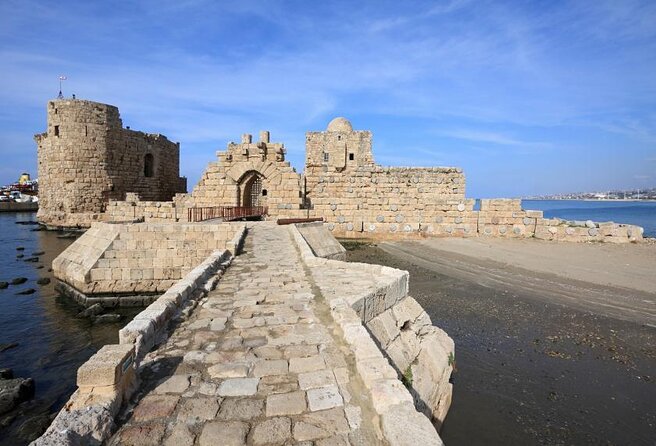
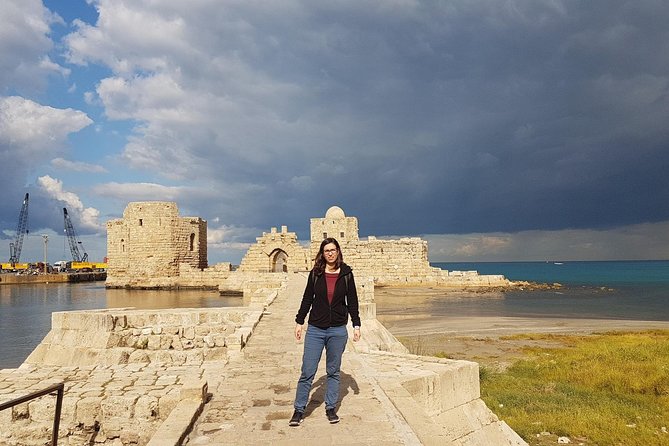
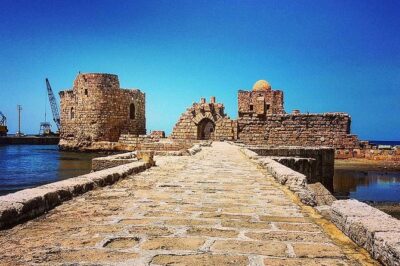
The first major stop is the Crusaders Sea Castle, built in the thirteenth century on a small island just offshore. A stone causeway links it to the mainland, giving you a clear sense of why the site was chosen for defense. From the fortress, you can look back toward Sidon’s port and see the city in its proper setting, as a place shaped by the sea.
The castle suffered heavy damage when the Mamluks took Sidon in 1291. Fakhr el-Dine Maan II later restored it in the early seventeenth century. Much of the former decoration is gone, so this is not a polished palace or intact medieval stronghold. I would come for the setting, the surviving stonework, and the chance to picture the fortress as part of the medieval coast.
You have about 30 minutes here. That is enough for a guided look and photographs, but not a slow study of every wall. Admission is not included, so keep a little cash or payment method ready for the entrance fee. Since the exact fee is not provided, check at booking or with the operator before departure.
Khan al-Franj and the craft traditions of Sidon
From the waterfront, the tour moves into Sidon’s older commercial quarter. Khan al-Franj was built in the early seventeenth century by Emir Fakhreddine II as a hotel for ambassadors and a center of trade between Lebanon and France.
Its design is easy to understand even if you are not an architecture specialist. A large rectangular courtyard and central fountain are surrounded by covered galleries. This was a place for business, diplomacy, literature, religion, and industry, not simply a place to sleep.
The stop lasts about 15 minutes, so you will get the essential explanation rather than a long architectural study. I like this kind of pause because it shows how trade worked in the city. The sea castle tells you about military power, while the khan explains the practical business that kept a port alive.
The Sidon visit also includes the old souks. Here, narrow alleys lead past small kiosks, cafés, food shops, butchers, grocers, shoemakers, tailors, and jewelers. This is not a museum district frozen for sightseeing. It remains a working part of the city, and that gives the walk a more useful sense of daily life.
You may also visit the Soap Museum, a particularly good match for Sidon’s craft traditions. The city’s soap-making heritage connects ordinary household goods with the old commercial life of the port. Allow yourself to notice the difference between seeing a grand ruin and seeing a local product shaped by generations of work.
The planned time in the souks is short, about 15 minutes, so do not expect a long shopping session. If you want to buy something, ask your guide early about the available time. The private format may make a small adjustment possible, but the day still has to reach Tyre and Maghdouche.
Maghdouche adds a calm stop above the coast
On the route back, you stop at Maghdouche, home of the Basilica of Our Lady of Mantara. The name is also translated as Our Lady of Awaiting. The Melkite Greek Catholic shrine is tied to the belief that the Virgin Mary rested in a sacred cave while waiting for Jesus.
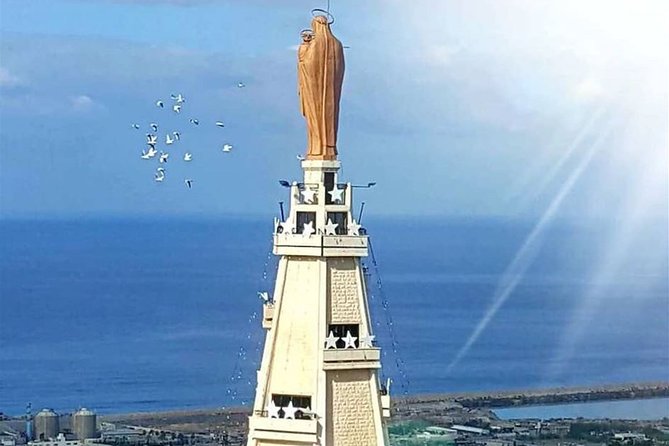
The shrine was discovered on September 8, 1721, by a young shepherd. Today, the site includes a tower topped by a statue of the Virgin and Child, a cathedral, a cemetery, and the cave. You have about 20 minutes here, enough to see the main elements and understand why the place matters.
This stop changes the pace. Sidon and Tyre are tied to ports, trade, fortification, and empire. Maghdouche is quieter and more personal, with a living religious purpose. Even if you are not visiting Lebanon for religious reasons, the shrine helps show how old sacred traditions remain part of the country’s present-day life.
The tour order places Maghdouche between the southern sites and the return toward Beirut. Since the exact driving sequence can vary, confirm the day’s order with your guide, especially if you have a particular interest in the shrine or the archaeological sites.
More Our Lady of Maghdouche tours in Beirut:
- Sidon – Tyre – Maghdouche Trip, From Beirut
★ 5.0 · 25 reviews - Small Group Tour to Sidon, Tyre & Maghdouche with lunch
★ 5.0 · 11 reviews - Sidon, Tyre, Maghdouche
★ 5.0 · 7 reviews - Southern Lebanon Day Trip: Exploring Sidon, Maghdouche and Tyre
★ 5.0 · 4 reviews
Tyre puts Phoenician power into a Roman frame
Tyre is the longer and more dramatic archaeological stop. The ancient port was famous for its murex purple dye, a costly color that became a mark of status across the ancient world. Tyre is also linked with Elissar, the Phoenician princess traditionally associated with the founding of Carthage.
The city’s foundations date to about 2750 BC. Egyptian rule came first, followed by the era of King Hiram, under whom Tyre prospered. Later rulers and empires left their mark, including the Assyrians, Neo-Babylonians, Greeks, Seleucids, Romans, Byzantines, Arabs, Crusaders, Mamluks, and Ottomans.
That long sequence can make Tyre sound like a history lesson, but the physical setting keeps it clear. The town sits by the sea, and the archaeological areas show how a port city grew, traded, worshiped, and entertained itself over many centuries. Tyre is also known for its beaches, so the visit combines major ruins with a seaside town rather than an isolated excavation.
Two main archaeological zones are associated with ancient Tyre: Al-Bass and Al-Mina. This tour specifically includes Al-Bass, the larger and best-preserved site. You have about an hour for the archaeological area, with another period of time allocated to Tyre itself.
Al-Bass reveals Tyre’s Roman scale
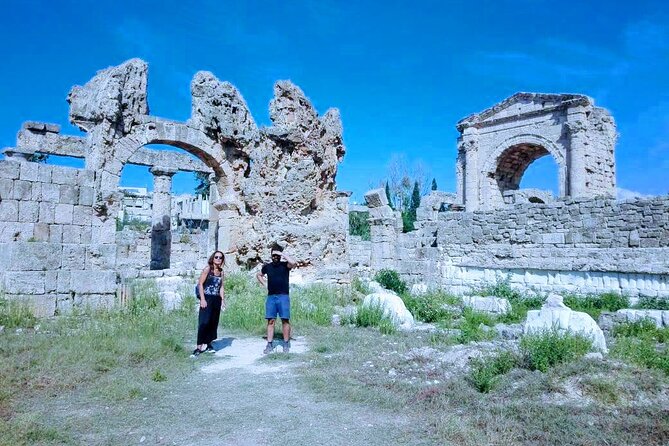
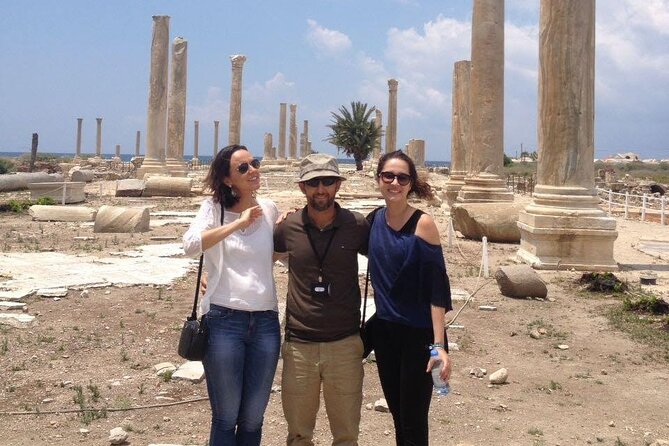
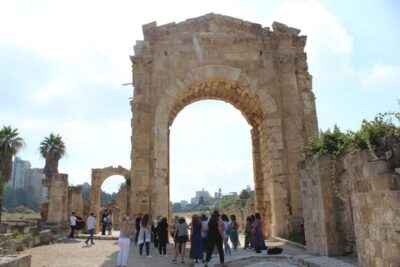
Al-Bass begins with a necropolis and a broad monumental causeway. The route is marked by a Roman triumphal arch dating from the second century AD, an imposing entrance that gives the site a sense of scale before you even reach the hippodrome.
Look for the surviving Roman road, aqueduct, and sarcophagi. The necropolis contains several hundred well-preserved stone coffins, and the remains show how the city organized itself beyond its central public spaces.
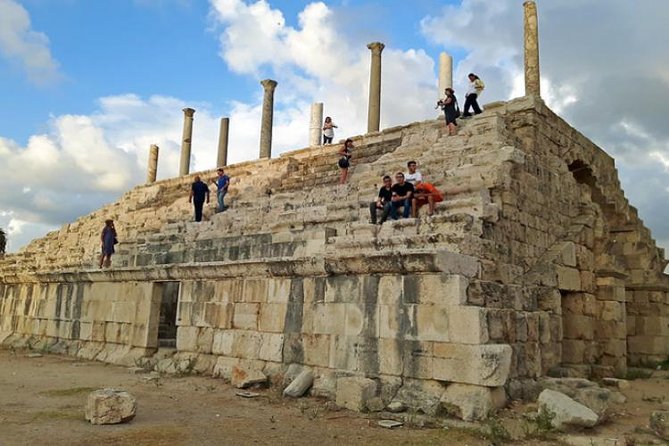
The highlight is the Roman hippodrome. It is described as one of the largest in the Roman world and the best-preserved example of its type. You can better understand the size of ancient public entertainment here than at a small fragment of a forum. The long arena helps you picture crowds, races, and the civic importance of spectacles.
Admission to Al-Bass is not included. The time provided is about one hour, which should allow a focused walk with explanations, but the site is broad enough that anyone interested in Roman archaeology may want more time. If Al-Bass is your main reason for booking, tell the guide at the start of the day so you can protect as much time as possible for it.
Some people find Tyre the strongest part of the outing because the remains are so open and substantial. I can see why. Sidon offers more variety, but Al-Bass gives you the clearest sense of an ancient city built on a grand public scale.
Food, traffic, and the value of a private vehicle
Lunch is not included, but food is part of the practical appeal of a southern Lebanon day. A reported stop for breakfast on the way to Sidon included very good food, and the full-day format allows time for lunch. The exact restaurant and meal are not specified, so treat these as flexible parts of the day rather than fixed inclusions.
The $100 per-person price includes private transportation, hotel pickup and drop-off, an air-conditioned vehicle, a tour leader, and a professional guide. It does not include site admission or lunch. That makes the value depend heavily on group size: for one person, it is a sizeable day-trip cost, while for a couple or small group, private transport and guiding become easier to justify.
You are also paying to avoid handling the southern route yourself. The tour is designed around Lebanese traffic, with the driver taking care of the road and the guide handling the historical context. That is especially useful if you are not comfortable driving or do not want to spend your only full day in the region working out routes and parking.
The private arrangement is also a good fit for different interests. One person can ask about Phoenician trade, another can focus on Christian sites, and another can simply enjoy the coast and food. The downside is that the schedule remains full. You are covering three destinations and several separate stops, so this is a broad introduction rather than a slow, specialist tour.
Guides and the human side of the day
The quality of the guide can make or break a history-heavy outing. Names associated with especially positive experiences include Hassane, Kamil, and Kassim. Hassane was praised for guiding the whole day, while Kamil and Kassim were noted for strong conversation, local context, polite service, and safe driving.
You should not assume one of those guides will be assigned to your booking, but you can ask the operator if you have a preference. The important point is that the guide role combines two jobs: explaining the ancient sites and helping you read modern Lebanon. That local context is useful in the souks, at Maghdouche, and when choosing where to eat.
The strongest descriptions of the experience focus on a comfortable vehicle, a balanced route, good food, and clear explanations. One note about a separate Baalbek booking describes a major itinerary change after pickup, which is a reminder to confirm your exact route before the day begins. For this Sidon, Tyre, and Maghdouche trip, ask the operator to restate the stops and inclusions when you book.
Who should book this tour?
I would choose this tour if you are staying in Beirut and want a practical introduction to southern Lebanon without arranging several separate rides. It suits couples, families, and small groups who value a private vehicle and the ability to ask questions along the way.
It is also a strong choice if you want more than ruins. Sidon gives you a castle, khan, souk, and Soap Museum. Maghdouche adds a religious site, while Tyre supplies the major archaeological payoff. The mix keeps the day from becoming a sequence of similar stone remains.
I would hesitate if your priority is a long, slow archaeological study. The eight-hour schedule is ambitious, and the one-hour Al-Bass visit may feel brief to a serious Roman-history enthusiast. I would also compare the final cost carefully if you are traveling alone, since admissions and meals come on top of the $100 price.
Free cancellation is available if you cancel at least 24 hours before the 9:00 a.m. start time. Changes or cancellations made later are not accepted for a refund. Most people can participate, but expect walking at the castle, souks, shrine, and archaeological site.
Should you book the Sidon, Tyre, and Maghdouche tour?
Book it if you want three distinct experiences in one private day: medieval Sidon, Roman Tyre, and the Christian shrine at Maghdouche. The private car, hotel pickup, and guide support are the real advantages, especially when traffic and long distances could make independent planning tiring.
Before paying, confirm the entrance fees, lunch plan, pickup details, and the guide assigned to your group. If you want a broad, well-paced look at Lebanon’s southern coast, the $100 base price can be fair. If your goal is only Tyre’s archaeology, you may prefer a shorter, more focused outing with extra time at Al-Bass.
FAQ
How long does the tour last?
The tour lasts approximately eight hours and begins at about 9:00 a.m.
Is hotel pickup included?
Yes. Hotel pickup and drop-off are included in the tour.
Is this a private tour?
Yes. Only your group participates, with private transportation and a driver or guide.
What transportation is provided?
The tour includes a comfortable, air-conditioned private vehicle.
Are entrance fees included?
No. Entrance fees for the Crusaders Sea Castle and Al-Bass Archaeological Site are not included.
Is lunch included?
No. Lunch is not included in the tour price.
Which places does the tour visit?
The route includes Sidon, the Crusaders Sea Castle, Khan al-Franj, Sidon’s souks, the Basilica of Our Lady of Mantara in Maghdouche, Tyre, and the Al-Bass Archaeological Site.
Can most people participate?
Yes. The tour information states that most people can participate.
What is the cancellation policy?
You can cancel at least 24 hours before the experience for a full refund. Cancellations or changes made less than 24 hours before the start time are not accepted for a refund.
Just added around Beirut
- Journey Through Time: Half-Day Private Tour to Baalbek★ 5.0 · 3 reviews
- Small Group Tours to Jeita Grotto and Byblos with tickets★ 5.0 · 3 reviews
- Wine Tasting and Culture★ 5.0 · 3 reviews
- Small-Group Tour with Lunch to Jeita Grotto, Byblos and Harissa★ 4.5 · 3 reviews
- Traveling Spoon Lebanese Mezze Private Online Cooking Class★ 5.0 · 4 reviews
- Beirut to Qadisha Valley, Bcharri & Cedar: Daily Tours with Lunch★ 4.5 · 3 reviews
- Small-Group Tour to Sidon, Tyre and Maghdouche with Lunch and Tickets★ 4.5 · 3 reviews
- Small-Group Tour with Lunch to Baalbek, Anjar and Ksara★ 5.0 · 3 reviews
Sidon and Tyre Tours, compared.
Small-Group Adventure Tour to Sidon Tyre & Maghdouche-Day Trip
Read our review →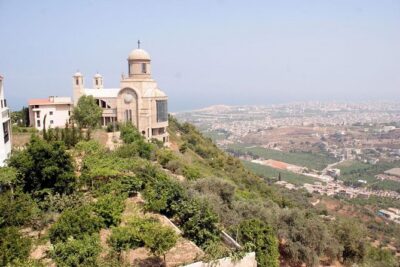
Sidon, Tyre & Maghdouche Day Trip – With Lunch (4G on Board)
Read our review →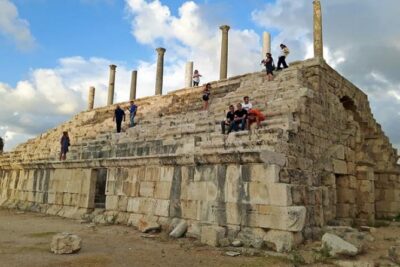
Guided Small-Group Tour to Sidon, Tyre & Maghdouche with Lunch
Read our review →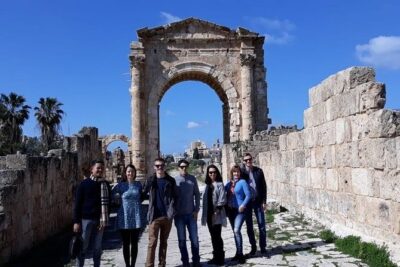
Small Group Tour to Sidon, Tyre & Maghdouche with lunch
Read our review →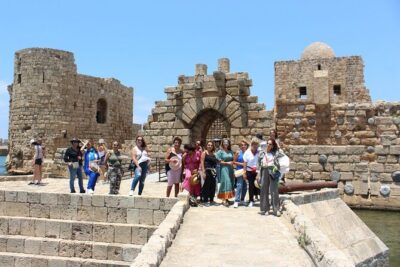
Lebanon tour Sidon & Tyre ruins with pick-up, guide,lunch+entries
Read our review →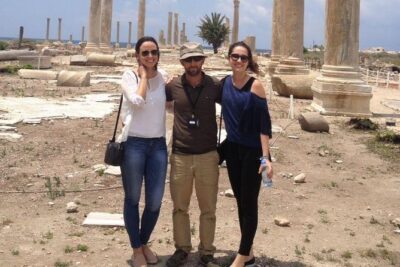
Lebanon Unveiled: Exclusive Private Tours to Sidon & Tyre
Read our review →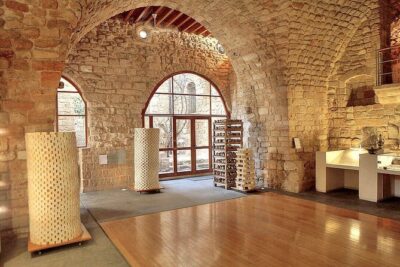
Sidon & Tyre Unesco Heritage w/pick-up, guide, entries+lunch
Read our review →Browse the lists this tour appears in