
Reviewed · HISTORICAL TOURS
Temple of Eshmun – Mleeta Landmark – Beaufort Castle
The most unusual part of this day is the sharp turn from an ancient healing temple to a modern conflict museum. At Mleeta Landmark, you learn how the Israel-Lebanon conflict is presented from the viewpoint of the Resistance, then try a shooting simulator. Later, at Beaufort Castle, Crusader walls open onto wide views across southern Lebanon.
I like the efficient mix of places, especially the contrast between the Temple of Eshmun and Mleeta. I also like that transport is included from Beirut, since these sites are spread across southern Lebanon and are awkward to connect by public transport. The main drawback is the pace: eight and a half hours gives you a useful introduction, but not endless time at Beaufort Castle, where you may want to linger.
Key points to know before you book
- Temple of Eshmun: See the remains of a Phoenician sanctuary dedicated to Eshmun, the god of healing, near the Awali River.
- Mleeta Landmark: Spend about two hours learning about the Israel-Lebanon conflict through a strongly framed Resistance presentation.
- Shooting simulator: Try the included simulator at Mleeta, an unusual activity that gives this history visit a hands-on element.
- Beaufort Castle: Explore a Crusader fortress near Arnoun with some of the finest views on the day.
- Small-group transport: Round-trip pickup from a Beirut hotel or meeting point keeps the long southern route simple.
- Lunch is extra: The stop at a local restaurant lasts about one hour, but the meal is not included in the tour price.
Why this southern Lebanon day is different
Many day trips from Beirut focus on famous ruins, coastal towns, or mountain scenery. This one takes a more specific route. It brings together Phoenician religion, the modern Israel-Lebanon conflict, and medieval military architecture in a single day.
That combination gives the tour its character. You are not simply moving from one old site to another. The Temple of Eshmun asks you to think about healing and worship in the ancient Phoenician world. Mleeta presents a far more recent and politically charged story. Beaufort Castle brings you back to a fortress shaped by medieval warfare and centuries of strategic struggle.
I like this range because each stop changes the subject. You will need to listen carefully at Mleeta, but the day does not leave you in a museum for hours. You also get an outdoor castle visit and a restaurant break, which helps keep the schedule from feeling too heavy.
The tour costs $74.99 per person. For that price, you receive transportation throughout the day, a guide, admission to Mleeta and Beaufort Castle, the shooting simulator, and hotel or meeting-point pickup in Beirut. Lunch is separate, and the Temple of Eshmun has no admission charge.
That is a fair price if you want to cover several difficult-to-reach sites without arranging a private car. The value is less certain if you mainly want an unhurried castle visit, since the total program includes a long road day and several different subjects. A small group capped at 15 people is a useful middle ground: more personal than a large coach trip, but usually less costly than a private excursion.
A few more Beirut trips to weigh up
- PRIVATE Beirut Historical Walking Half Day Tour
★ 5.0 · 27 reviews - Historical Beirut Tour (AM) Half Day – (4G on Board)
★ 4.0 · 16 reviews - Guided Half-Day Private Beirut Historical Tour
★ 5.0 · 6 reviews
Leaving Beirut for the Temple of Eshmun
Pickup begins at 8:30 a.m. in Beirut. You can be collected from your hotel or meet the group at the designated meeting point. From there, the route heads toward Sidon and the Awali River.
The first stop is in Bqosta, about two kilometres northeast of Sidon. The Temple of Eshmun was dedicated to Eshmun, the Phoenician god of healing. Its location beside the river suits the subject, since water and healing were closely linked in the ancient sanctuary setting.
You have about 45 minutes here, with no admission fee. That is enough for a guided look at the surviving remains and a short walk around the site, but you should not expect a vast, fully preserved temple complex. One useful point from the available feedback is that the temple needs repair, so set your expectations accordingly.
Still, the stop earns its place. It gives you a direct connection to Lebanon’s Phoenician past before the day turns to modern politics and military history. If you enjoy ancient sites, pay attention to the setting as much as the ruins. The Awali River and the sanctuary’s purpose help explain why this place mattered.
Because the visit is short, keep your camera and water ready before you arrive. The tour is designed to give you a clear introduction, not a long archaeological study.
Two hours at Mleeta Landmark
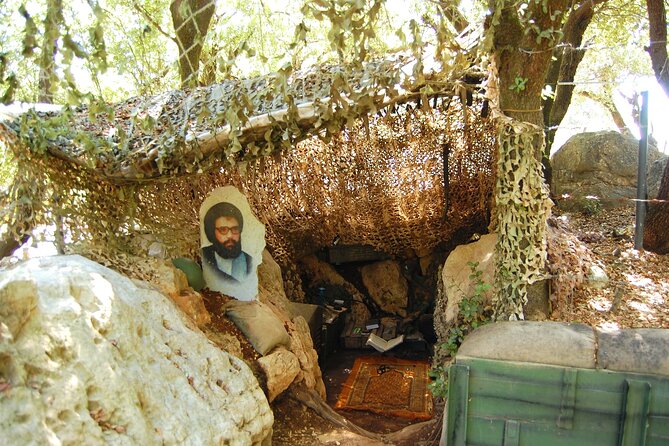
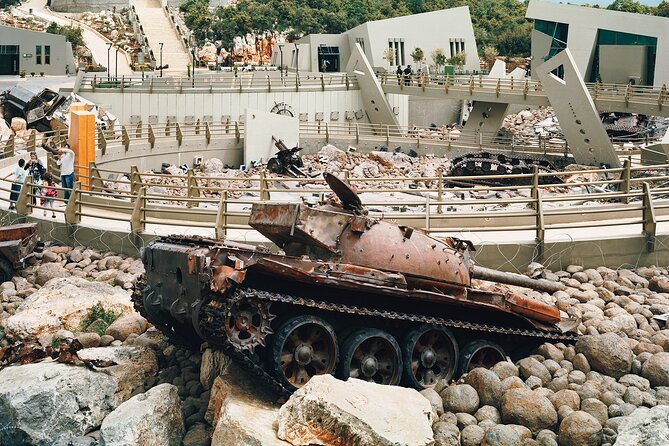
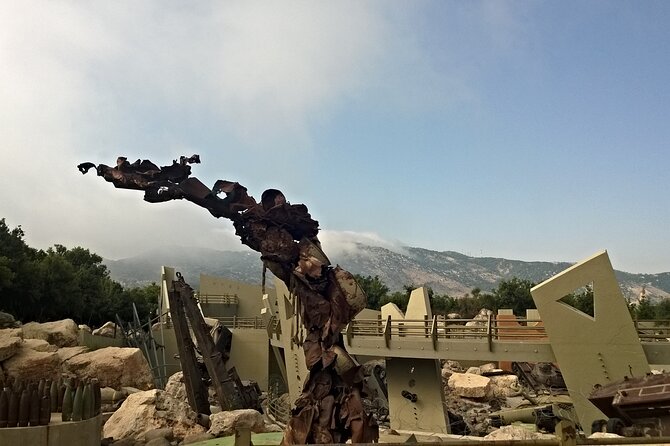
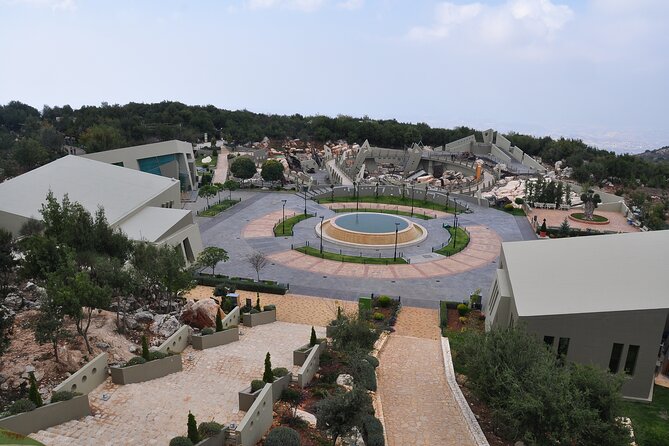
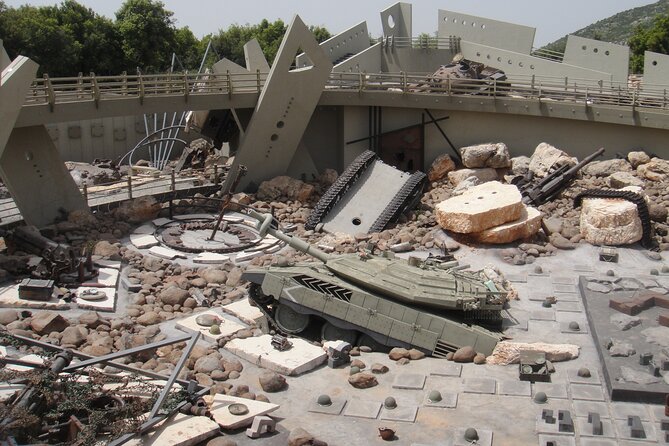
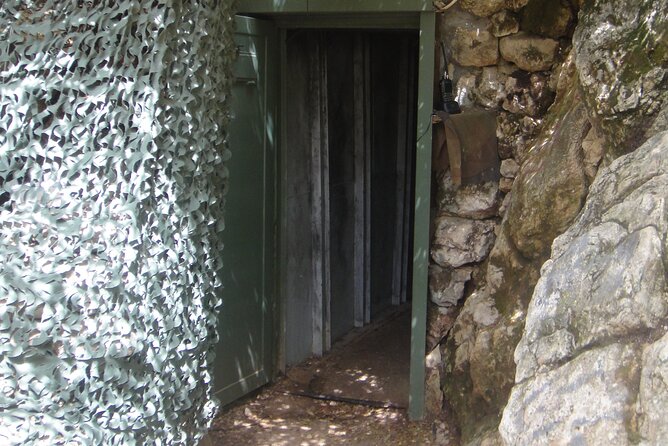
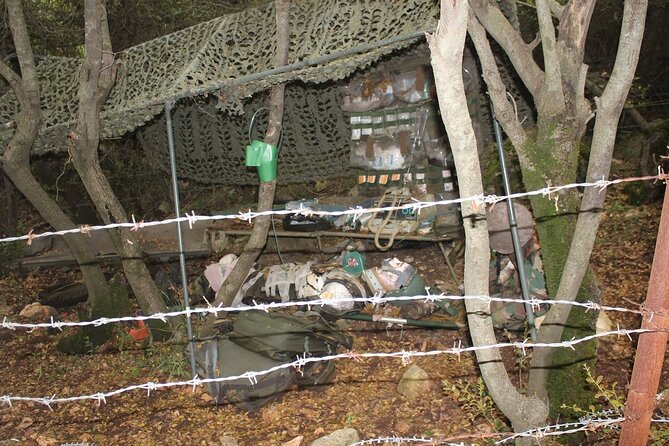
Mleeta is the emotional and political center of the day. The visit lasts about two hours, making it the longest scheduled stop. Here, your guide explains the conflict between Israel and Lebanon and the role of the Resistance.
You should understand the point of view before you arrive. Mleeta is not presented as a neutral international museum. Its displays and storytelling reflect the Resistance perspective. That does not make the visit unimportant. It means you should listen closely, note the framing, and treat the experience as one part of a larger and complicated history.
For many people, this is the most distinctive stop. You are not just looking at dates on a wall. The site is designed to help you understand how the conflict is remembered and explained by one side. If you have read little about southern Lebanon, the guide’s context will be especially useful.
The included shooting simulator adds a practical, modern element. It is not a substitute for understanding the conflict, but it breaks up the presentation and gives the visit an activity beyond viewing exhibits. The available feedback highlights Mleeta as a must-see for people interested in history, and I can see why. It is a place with a clear identity, rather than a generic military display.
This stop may not suit everyone. The subject is political, and the presentation can feel one-sided if you expect a detached account. Go with an open but questioning mind. You can take the information seriously without treating every interpretation as the complete story.
Lunch in Jarjouaa
After the main Mleeta visit, the day includes a one-hour lunch stop at a local restaurant in Jarjouaa. The meal costs extra, so bring money for food.
This break matters more than it may sound. The morning begins early, and the route covers a large part of southern Lebanon. A proper sit-down pause gives you time to rest, talk with the small group, and process the material from Mleeta before the castle visit.
The restaurant is described as local, but no specific menu or restaurant name is provided. You should therefore treat the stop as a practical meal break rather than booking the tour for a particular culinary experience.
The timing also gives you some flexibility. If you prefer a lighter meal, you can choose accordingly, but the tour schedule allows one hour rather than a quick roadside stop. Since lunch is not included in the $74.99 price, factor that extra cost into your budget.
Same mountains and coast, a completely different kind of day:
- Guided Small-Group Tour to Baalbek, Anjar and Ksara with Lunch
★ 5.0 · 511 reviews - Guided Small-Group Tour to Jeita, Harissa, Byblos with Lunch
★ 5.0 · 361 reviews - Paragliding Trip Over Lebanon – Jounieh Bay
★ 5.0 · 257 reviews - Jeita Grotto,Harissa&Byblos Full-Day PRIVATE-CAR Trip from Beirut
★ 5.0 · 222 reviews
Beaufort Castle and the best views of the day
The final major visit is Beaufort Castle, also called Belfort Castle. Locally, it is known as Qal’at al-Shaqif or Shaqif Arnun. The Crusader fortress is in Nabatieh Governorate, about one kilometre south-southeast of Arnoun.
This is the stop that gives the day its strongest sense of place. The castle occupies a high position, and the views are a major reason to come. You can look across southern Lebanon from a structure built for control and defense, then consider how the same location remained important long after the Crusader period.
You have about one hour at Beaufort. That is enough to walk through the fortress area and take in the views, but the time may feel short if you enjoy old stonework and photography. One hour passes quickly at a site like this, especially if your guide is explaining the castle’s role.
The feedback about Beaufort is clear in one practical respect: you may want to spend hours there. I agree with that as a planning warning, even though the tour cannot offer unlimited time. If the castle is your main interest, accept that this is an introduction rather than a full exploration.
Wear practical shoes for the castle visit. The supplied information does not specify the condition of every path or stair, so it is wise to be prepared for an outdoor historic site rather than a polished indoor museum. Also keep your phone or camera ready. The views are among the most memorable parts of the route.
Transport, timing, and group size
The full experience lasts about eight hours and 30 minutes and begins at 8:30 a.m. It ends back at the Beirut meeting point. Pickup is offered from hotels or the stated meeting location, and transport is included for the route.
That arrangement is the tour’s practical backbone. The Temple of Eshmun, Mleeta, Jarjouaa, and Beaufort Castle are not a simple cluster of attractions. Having one vehicle and one guide removes the work of planning connections and directions.
The group can include up to 15 people. That is small enough for questions and conversation, while still keeping the price below what you would normally pay for a private car and guide. Group discounts may also be available, which can improve the value if you are booking with family or friends.
The day is long, so pace matters. You will spend time on the road as well as at the sites. I would choose this tour when I wanted range and context, not when I wanted to linger at one ruin for half a day.
The provider is Zingy Ride. A guide accompanies the group, but no guide name is supplied, so you should not book expecting a particular named guide. Confirmation is issued at booking, and most people can participate according to the supplied tour information.
What I like most about the experience
The strongest feature is the contrast between the stops. At Eshmun, the focus is ancient worship and healing. At Mleeta, the subject is a living political memory. At Beaufort, you walk through a medieval fortress connected to the military history of the region.
I also like the fact that Mleeta is given two hours. That is enough time to do more than rush through a few displays, and the shooting simulator gives the visit a memorable physical element. People interested in modern Middle Eastern history will get more from this tour than from a standard sightseeing loop.
Beaufort is another major strength. The castle’s condition may not satisfy someone seeking a perfectly restored monument, but its position and views give it real appeal. If you enjoy ruins that feel exposed to the elements, this is likely to be your favorite stop.
The guide-led format is important too. These locations carry cultural and political meaning that is not always obvious from the stones or displays alone. A good explanation can help you understand what you are seeing and why the places matter.
Possible drawbacks to consider
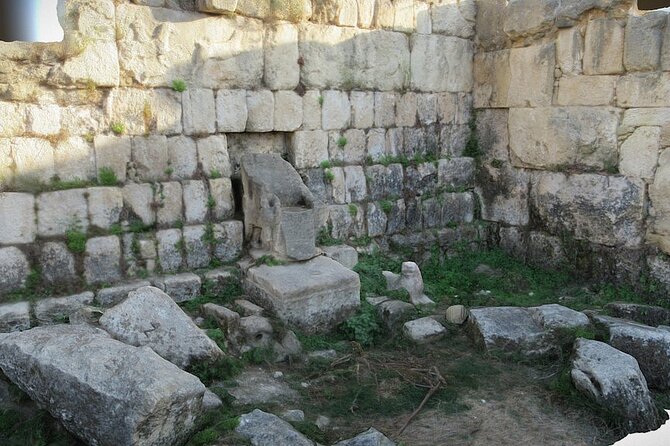
The Temple of Eshmun needs work, so it may disappoint you if you expect a pristine ancient sanctuary. The 45-minute visit is also brief, and the stop works best as part of the larger story rather than as the sole reason for booking.
Mleeta’s viewpoint is another consideration. The presentation is connected to the Resistance, so you should expect a particular interpretation of the Israel-Lebanon conflict. If you prefer politically neutral museum displays, you may find the framing uncomfortable or incomplete.
The schedule can also feel tight at Beaufort Castle. The one-hour visit provides a taste, but the site may tempt you to stay longer. The long day, road travel, and lunch break mean the tour covers a lot without offering unlimited time at any one place.
Finally, the cancellation terms are strict. The experience is non-refundable and cannot be changed for any reason. Only book once your date and plans are firm.
Who should book this day trip?
I would recommend it to you if you want to combine ancient Lebanon with modern conflict history and a major fortress in one organized day. It suits history-minded visitors, first-time explorers of southern Lebanon, and anyone who prefers having transport and a guide arranged in advance.
It is also a good match for friends or family groups, especially if a group discount applies. The maximum of 15 people keeps the outing from becoming a huge coach experience, while the included transport makes the price easier to justify.
I would think twice if you want a relaxed day with long meals, slow photography, or extended time inside one archaeological site. You should also consider the political framing at Mleeta before booking. This is a tour for listening, comparing perspectives, and asking thoughtful questions.
At $74.99, the package offers solid value for a full southern Lebanon route with transport, guided visits, two included admissions, and a simulator. Lunch is extra, and the strict cancellation policy means you should plan carefully. Book it if you want a varied, practical, and unusual day from Beirut. Skip it if Beaufort Castle alone is your priority and you want several hours to explore it at your own pace.
FAQ
Where does the tour start?
The tour starts in Beirut, Lebanon, with pickup from your hotel or from the designated meeting point.
What time does the tour begin?
The scheduled start time is 8:30 a.m.
How long does the experience last?
The tour lasts approximately eight hours and 30 minutes.
Where does the tour finish?
The activity ends back at the meeting point in Beirut.
How many people can join the group?
The maximum group size is 15 people.
Is lunch included in the price?
No. Lunch takes place at a local restaurant in Jarjouaa, but the meal costs extra.
Is admission to the Temple of Eshmun included?
The Temple of Eshmun has no admission charge.
Is the shooting simulator included?
Yes. The shooting simulator at Mleeta is included in the tour.
Can I cancel and receive a refund?
No. The experience is non-refundable and cannot be changed for any reason.
Just added around Beirut
- Journey Through Time: Half-Day Private Tour to Baalbek★ 5.0 · 3 reviews
- Small Group Tours to Jeita Grotto and Byblos with tickets★ 5.0 · 3 reviews
- Wine Tasting and Culture★ 5.0 · 3 reviews
- Small-Group Tour with Lunch to Jeita Grotto, Byblos and Harissa★ 4.5 · 3 reviews
- Traveling Spoon Lebanese Mezze Private Online Cooking Class★ 5.0 · 4 reviews
- Beirut to Qadisha Valley, Bcharri & Cedar: Daily Tours with Lunch★ 4.5 · 3 reviews
- Small-Group Tour to Sidon, Tyre and Maghdouche with Lunch and Tickets★ 4.5 · 3 reviews
- Small-Group Tour with Lunch to Baalbek, Anjar and Ksara★ 5.0 · 3 reviews
Historical Tours, compared.
Historical Beirut Tour (AM) Half Day – (4G on Board)
Read our review →
Sidon & Tyre Unesco Heritage w/pick-up, guide, entries+lunch
Read our review →
PRIVATE tour to Beirut history museum, Beiteddine & Deir elQamar
Read our review →
Baalbek, Anjar & Wine: A Journey Through Lebanon’s Heritage
Read our review →
Exploring Beirut’s Past: A Private Guided Historical Tour
Read our review →Browse the lists this tour appears in