
Reviewed · HISTORICAL TOURS
PRIVATE Beirut Historical Walking Half Day Tour
Beirut’s story is easiest to grasp when you see its layers close together: ancient Roman remains, churches and mosques, a rebuilt commercial center, war-damaged buildings, and the open sea at Raouche. I like the way this tour joins the National Museum with a downtown walk, and I like the personal approach of guides Dave and David, who explain the city through both history and lived experience.
The private format also gives you room to ask questions and adjust the pace. The main caution is timing: the advertised tour lasts about 3 to 4 hours, while the individual stop estimates add up to longer. Confirm the day’s schedule, especially if you have a flight, cruise departure, or tight afternoon plans.
Key points at a glance
- See Lebanon’s major museum first: The National Museum gives you a useful starting point for understanding the country’s past.
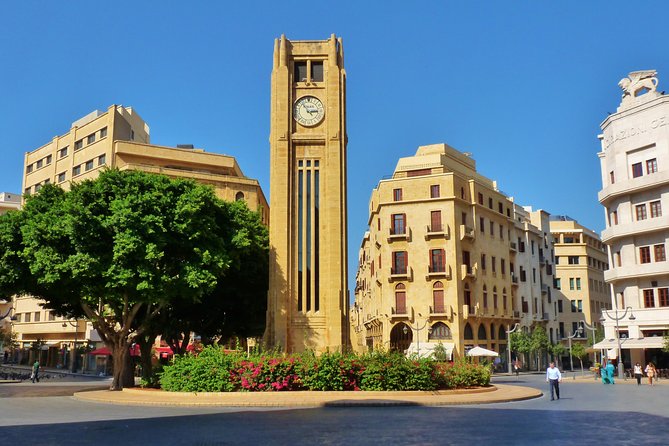
- Walk through rebuilt central Beirut: Solidere, Martyrs’ Square, Star Square, the Roman baths, and religious landmarks reveal how the city changed after the civil war.
- Hear personal history from a local guide: Dave and David are praised for clear explanations and firsthand memories of growing up in Beirut.
- Visit both mosque and cathedral: Mohammad Al-Amin Mosque and St. George Maronite Cathedral show Beirut’s religious mix within a compact area.
- Finish beside the Mediterranean: A drive to Raouche brings you to Pigeon Rocks, followed by time along the Corniche.
- Enjoy private door-to-door transport: Hotel pickup and drop-off in Beirut save time and simplify a spread-out sightseeing day.
Why this half-day tour works for a first look at Beirut
Beirut is not a city you understand by ticking off monuments alone. Its character comes from the sharp changes between old and new, damage and repair, sacred buildings and shopping streets, crowded downtown blocks and the broad sea horizon.
This tour gives you that contrast in a short outing. You begin at the National Museum, then move into central Beirut on foot before riding west to Raouche. That order makes sense. The museum supplies the long historical view, while the downtown walk shows how Lebanon’s capital has been repeatedly reshaped.
I especially like the combination of indoor history and outdoor city life. You are not spending the whole morning in a museum, but you are also not walking through streets without context. The guide’s explanations are the main value here. Several comments praise Dave’s ability to connect Lebanon’s political past with places you are standing in, and his personal experience gives the tour a human angle that a guidebook cannot provide.
The tour is private, so only your group participates. That matters in Beirut, where questions about the civil war, religion, politics, and reconstruction can lead in many directions. You can ask for clarification without worrying about holding up a large group.
A few more Beirut trips to weigh up
- Historical Beirut Tour (AM) Half Day – (4G on Board)
★ 4.0 · 16 reviews - Temple of Eshmun – Mleeta Landmark – Beaufort Castle
★ 5.0 · 9 reviews - Guided Half-Day Private Beirut Historical Tour
★ 5.0 · 6 reviews
Starting at the National Museum of Beirut
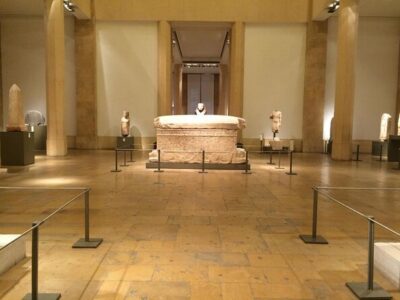
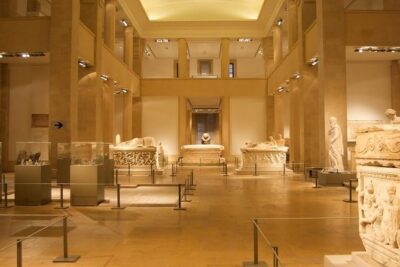
The National Museum is the tour’s historical anchor. It was built in the 1940s, badly affected during the civil war, and revived in the 1990s. That story mirrors Beirut itself: damage did not erase the city’s past, but it changed how that past had to be protected and presented.
The museum visit is included, along with all stated entrance fees and taxes. You begin with an important question: how were valuable archaeological discoveries protected during years of fighting? The tour’s introduction and museum visit are designed to address that question.
Some tours rush through a museum simply to say they went inside. Here, the museum is meant to prepare you for the rest of the day. You might find the opening briefing and audio presentation particularly useful, since the guide uses them to explain the city’s political and historical setting before the walking portion begins.
The available information does not give a precise amount of time inside the museum, so expect the guide to balance the collection with the rest of the route. If museum objects are your main interest, tell the guide at the start. If you prefer the streets and architecture, you can ask for more time downtown.
Walking through Solidere and rebuilt central Beirut
From the museum, the tour moves toward downtown, commonly referred to as Solidere in the supplied route. This central district was badly damaged during Lebanon’s civil war from 1975 to 1990, then restored and rebuilt during the 1990s.
That reconstruction is both the area’s appeal and one of its complications. You see a polished commercial center, but also a place shaped by destruction, displacement, and difficult political decisions. The guide’s role is important here. Without context, restored facades and new shopping areas can look like ordinary urban redevelopment.
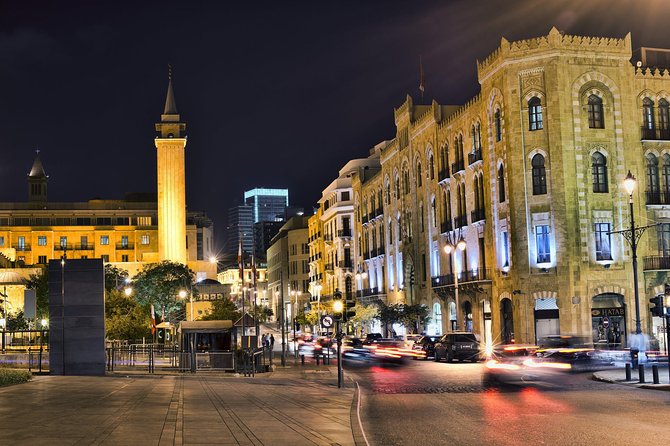
The route includes the Parliament, the Government Palace, the Roman baths, Star Square, and other central sights. The walk is not only about architecture. It shows how Beirut placed modern civic buildings, older religious sites, archaeological remains, and commercial streets within a relatively small area.
The walking section is the strongest part of the experience for anyone interested in modern Lebanon. One guide, Dave L., is specifically praised for discussing his own memories of growing up in Beirut and living through its more troubled years. That kind of explanation can help you understand why two nearby streets may feel so different in age, style, and mood.
You should wear comfortable shoes and expect normal city walking. The supplied information does not state the exact walking distance or terrain, so ask the operator if you have mobility concerns.
Martyrs’ Square, the mosque, and the cathedral
Martyrs’ Square is one of the key stops in downtown Beirut. Its name points to the political weight of the area, and it sits close to several major landmarks included in the walk.
The Mohammad Al-Amin Mosque is one of the most recognizable buildings in central Beirut. Its large blue domes and tall minarets give the square a strong visual focus. Nearby, St. George Maronite Cathedral adds another important religious and architectural layer.
Seeing a mosque and a Maronite cathedral during the same walking circuit helps you read Beirut as a city of several communities and traditions. The tour does not present these buildings as isolated photo stops. Instead, the guide explains their place in Beirut’s social and political story.
The itinerary also names the Roman bath remains and Star Square. These sites show how far back the city’s urban history reaches, even as the surrounding center continues to change. I would not expect a long archaeological visit at each stop. The benefit is the sequence: one short walk links ancient remains, religious landmarks, civic buildings, and public squares.
Admission is included where stated, but modest clothing is a sensible choice for a route that includes religious sites. The supplied details do not specify interior access rules or whether services are taking place, so do not assume every building can be entered at length.
Same mountains and coast, a completely different kind of day:
- Guided Small-Group Tour to Baalbek, Anjar and Ksara with Lunch
★ 5.0 · 511 reviews - Guided Small-Group Tour to Jeita, Harissa, Byblos with Lunch
★ 5.0 · 361 reviews - Paragliding Trip Over Lebanon – Jounieh Bay
★ 5.0 · 257 reviews - Jeita Grotto,Harissa&Byblos Full-Day PRIVATE-CAR Trip from Beirut
★ 5.0 · 222 reviews
Beirut Souks and the modern shopping district
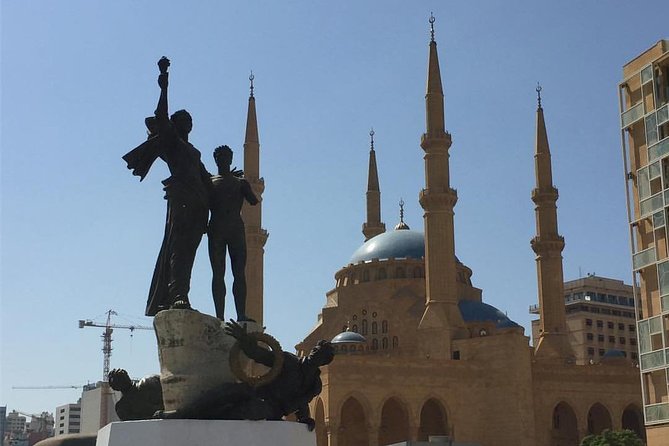
The Beirut Souks were demolished during Lebanon’s wars and rebuilt during the 1990s as an open-air shopping center in the central district. This is a useful stop because it makes reconstruction visible in a practical, everyday setting.
You may find the souks less atmospheric than an old traditional market. The area is a modern retail complex rather than a preserved maze of historic stalls. Still, its location and history make it worthwhile. The point is not only shopping. It is seeing how commercial Beirut attempted to return after years of conflict.
Admission is free, and the tour allows about an hour for the stop in the supplied schedule. Use that time for a short look, a coffee or snack if you choose, and questions about what stood here before reconstruction. Lunch is not included, so this may also be the most convenient point to arrange food, although the tour does not promise a specific restaurant or meal break.
Driving to Raouche and Pigeon Rocks
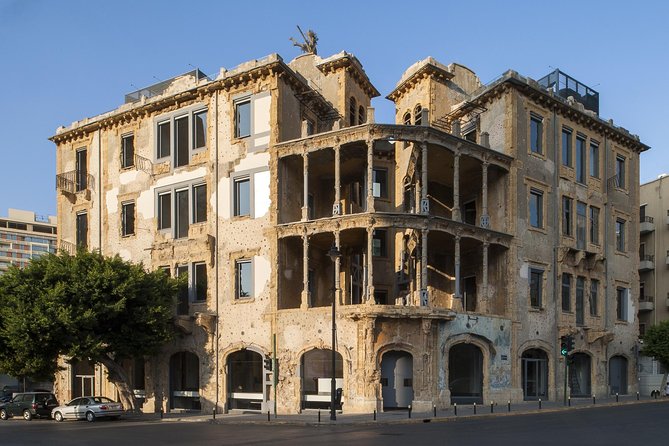
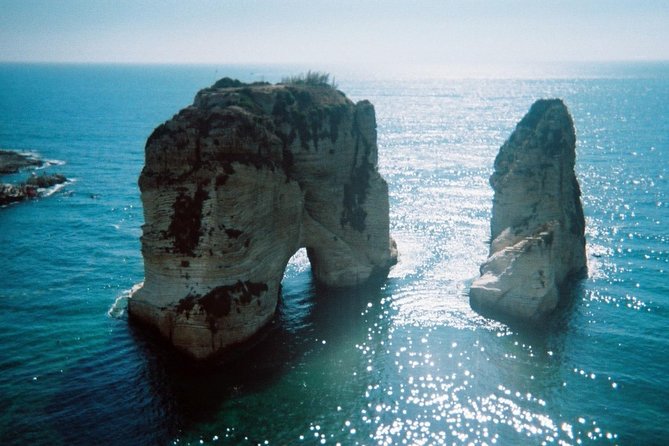
After central Beirut, the vehicle takes you toward Raouche on the western side of the city. Pigeon Rocks are described as the symbol of Beirut, and the reason is clear once you see the enormous rock formations rising from the sea.
This final scenic stop changes the mood of the tour. After several hours of political history, archaeology, and urban reconstruction, you get a wide view and a chance to pause. The listed visit lasts about 15 minutes, so think of it as a photo stop rather than a long coastal outing.
The tour does not include a boat ride, swimming, or a long walk around Raouche. You will see the rocks from the viewpoint area, then continue along the Corniche. If the sea is your priority, ask in advance how much time can be given to the waterfront.
The Corniche and the changing light
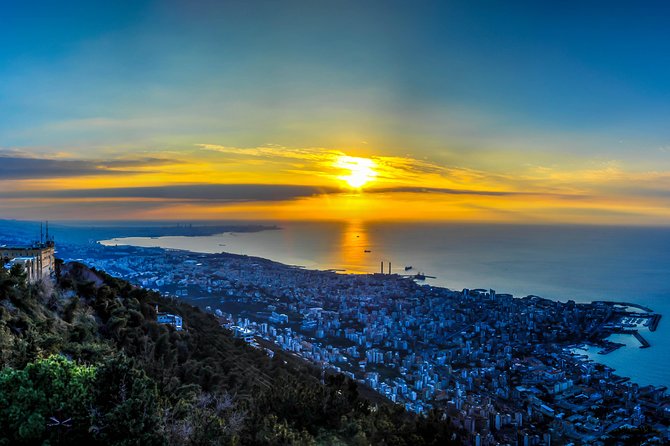
The Corniche is another short stop, also listed at about 15 minutes. It offers a simple but effective finish: Beirut’s coastline, open air, and the chance to see the city from a different angle.
The itinerary mentions sunset, though the tour starts at 9:00 a.m., so the exact lighting will depend on the day’s schedule and season. Do not book this tour solely for a sunset view unless the operator confirms the timing. The Corniche stop is still useful in daylight, but the description of sunset suggests that the guide may adjust the route or timing when possible.
The waterfront also gives you a break from the denser downtown walking. You can take photographs, look back toward the city, and let the day’s historical material settle before returning to your hotel.
What the guide adds to the experience
The guide is the heart of this tour. The supplied information names Dave and David, and the comments consistently highlight their clear explanations, preparation, flexibility, and personal connection to Beirut.
That praise is specific. The tour begins with a city-history briefing, a map, and an audio presentation on the city’s complicated past. You are not simply driven between attractions. The guide gives you a framework for understanding the places ahead.
I also like the conversational format described in the feedback. Questions and discussion appear to be welcome, which is useful in Lebanon, where a short question about a building can lead to religion, politics, war, migration, or reconstruction. A guide who can explain those links without turning the walk into a lecture makes a real difference.
The private setup should help. You can ask Dave or David to slow down, explain a term, or spend more time at a site that interests you. The tour is a better fit for curious visitors than for people who want a silent scenic drive with quick photographs.
Price, private transport, and overall value
At $93.34 per person, this is not the cheapest way to see Beirut, particularly if you are traveling alone. But the price includes private participation, an air-conditioned vehicle, Beirut city pickup and drop-off, a driver-guide, entrance fees, and taxes.
For two or more people, the value improves because the price is per person and group discounts are offered. You are paying for transport as well as guiding, which matters in a large city where arranging separate taxis between the museum, downtown, and Raouche can take time and energy.
Door-to-door service is especially useful if you are staying in Beirut and want to avoid sorting out a meeting point. The stated pickup area is Beirut city, so confirm that your hotel falls within the service zone.
Lunch is not included. Since the tour is listed as lasting 3 to 4 hours, many people can eat before or after, but the longer stop estimates suggest that the day may run beyond that window. Ask how the guide handles meal timing.
There is one practical inconsistency to resolve before booking. The overall duration is approximately 3 to 4 hours, yet the listed stop times include three hours, two hours, one hour, and two 15-minute visits. Those figures cannot all represent fixed time spent at every stop within a four-hour tour. They may be broad estimates, or the route may be adjusted. Get the expected return time in writing if your schedule is tight.
Who will get the most from this Beirut tour
I would choose this experience if you have only one morning or half a day in Beirut and want a structured introduction rather than a collection of disconnected stops. It suits first-time visitors, history fans, and anyone who wants a local explanation of the civil war and reconstruction.
It is also a good choice for couples, families, and small private groups who value flexibility. The guide can focus on archaeology, religion, architecture, politics, or daily life according to your interests.
You may want something else if you prefer a slow museum visit, a full day at the coast, or a food-focused walk. The schedule covers a lot, and some stops are brief. The tour gives you a broad first picture of Beirut, not an exhaustive visit to every site.
Book with realistic expectations. You will see major landmarks, hear a great deal of context, and finish at one of Beirut’s best-known coastal views. You will not have long, unhurried hours at every stop.
Practical details before you book
The tour starts at 9:00 a.m. and offers pickup and drop-off from hotels in Beirut city. You receive a mobile ticket, and confirmation is normally sent at booking unless you reserve within 12 hours of departure, when confirmation depends on availability.
Most people can participate, according to the supplied information, and the activity is private. A minimum number of guests is required for the activity to operate, so confirm that the booking is accepted before making firm connecting plans.
Free cancellation is available up to 24 hours before the local start time for a full refund. Cancellations or changes made inside that 24-hour window are not refunded or accepted.
Should you book the Private Beirut Historical Walking Half Day Tour?
Book it if you want Beirut explained, not merely photographed. The strongest reasons are the museum-to-downtown progression, the chance to discuss Lebanon’s difficult modern past with a local guide, and the convenience of private transport to Pigeon Rocks.
I would be most comfortable recommending it to someone with a flexible half-day schedule. Confirm the actual duration, the amount of museum time, and the return time before paying. If those details fit your plans, $93.34 per person is a reasonable price for a private history-focused introduction that covers both central Beirut and the coast.
FAQ
Where does the tour take place?
The tour takes place in Beirut, Lebanon, with stops at the National Museum, central Beirut, Beirut Souks, Raouche, and the Corniche.
What time does the tour start?
The stated start time is 9:00 a.m.
How long does the tour last?
The experience is advertised as approximately 3 to 4 hours.
Is the tour private?
Yes. Only your group participates in this private activity.
Is hotel pickup available?
Yes. Pickup and drop-off are offered from hotels in Beirut city.
Is transportation included?
Yes. An air-conditioned vehicle is included, along with a driver-guide.
Is admission to the National Museum included?
Yes. Admission fees and all stated taxes are included.
Is lunch included?
No. Lunch is not included in the tour price.
Does the tour visit Pigeon Rocks?
Yes. The route includes Pigeon Rocks in Raouche, described as a symbol of Beirut.
Can I cancel for a full refund?
Yes. You can cancel at least 24 hours before the local start time for a full refund. Cancellations made less than 24 hours before the start are not refunded.
Just added around Beirut
- Journey Through Time: Half-Day Private Tour to Baalbek★ 5.0 · 3 reviews
- Small Group Tours to Jeita Grotto and Byblos with tickets★ 5.0 · 3 reviews
- Wine Tasting and Culture★ 5.0 · 3 reviews
- Small-Group Tour with Lunch to Jeita Grotto, Byblos and Harissa★ 4.5 · 3 reviews
- Traveling Spoon Lebanese Mezze Private Online Cooking Class★ 5.0 · 4 reviews
- Beirut to Qadisha Valley, Bcharri & Cedar: Daily Tours with Lunch★ 4.5 · 3 reviews
- Small-Group Tour to Sidon, Tyre and Maghdouche with Lunch and Tickets★ 4.5 · 3 reviews
- Small-Group Tour with Lunch to Baalbek, Anjar and Ksara★ 5.0 · 3 reviews
Historical Tours, compared.
Historical Beirut Tour (AM) Half Day – (4G on Board)
Read our review →
Temple of Eshmun – Mleeta Landmark – Beaufort Castle
Read our review →
Sidon & Tyre Unesco Heritage w/pick-up, guide, entries+lunch
Read our review →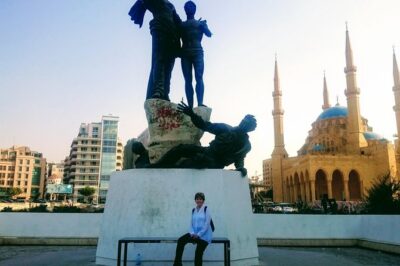
PRIVATE tour to Beirut history museum, Beiteddine & Deir elQamar
Read our review →
Baalbek, Anjar & Wine: A Journey Through Lebanon’s Heritage
Read our review →
Exploring Beirut’s Past: A Private Guided Historical Tour
Read our review →Browse the lists this tour appears in