
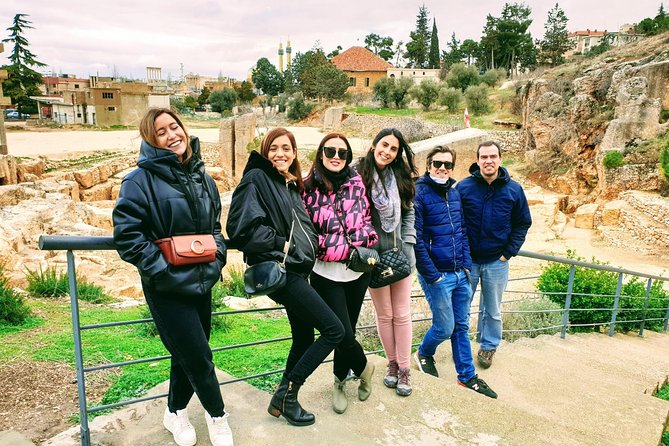
Reviewed · BAALBEK AND ANJAR TOURS
Sightseeing all-inclusive Private Tour to Baalbek and Ksara
Baalbek gives you one of Lebanon’s great history lessons in stone. Its enormous Roman temples, built at the foot of the Anti-Lebanon range, make ordinary ancient ruins feel almost toy-sized. This private tour adds Aanjar’s Umayyad ruins and a wine tasting at Chateau Ksara, so your day moves from Roman religion to early Islamic architecture and modern Lebanese winemaking.
I like the practical design: hotel pickup and private transport save you from arranging a long trip into the Bekaa Valley, while lunch, entry fees, a Baalbek guide, and wine tasting are already covered. I also like the balance between major sights and local culture. The main consideration is time. Six hours is enough for a focused visit, but it leaves little room for a slow, wandering exploration of Baalbek or Aanjar.
Key points to know before booking
- Baalbek is the main event: Spend about 90 minutes among some of the largest and best-preserved Roman temple remains in the region.
- The tour is private: Your group travels alone, giving you a more personal setting for questions and explanations.
- Lunch and wine tasting are included: Chateau Ksara adds a relaxed food and wine stop after the archaeological sites.
- Several short stops add local context: Sayyida Khawla Shrine and the Stone of the Pregnant Woman each take only a few minutes.
- The price covers the costly basics: At $75 per person, transport, guiding, admission, lunch, and tasting are bundled together.
- The timing is tight: A 9:00 am start and roughly six-hour duration suit you if you want a concentrated day rather than a leisurely outing.
Why Baalbek deserves the long ride from Beirut
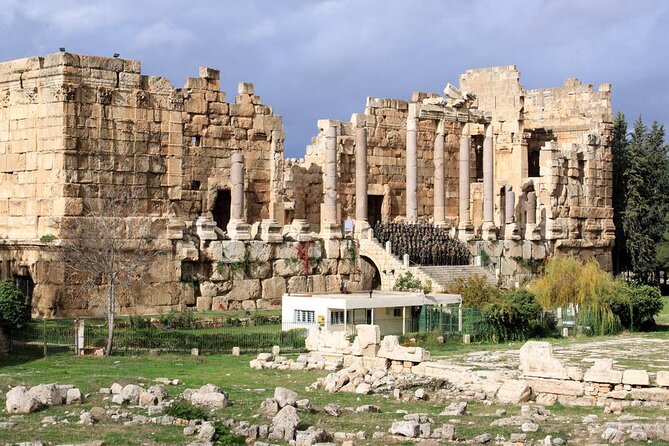
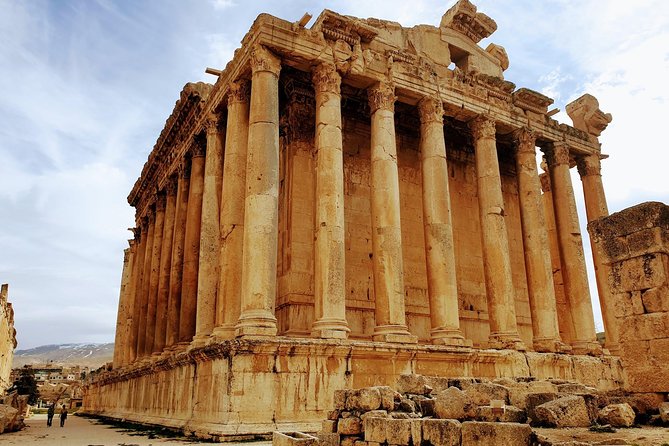
Baalbek is not a minor archaeological stop that you squeeze in between other attractions. The Roman sanctuary was one of the ancient world’s great religious centers, and its scale still makes the point without much help from a guide.
The site sits at about 1,150 meters, near the southwest slope of the Anti-Lebanon range and beside the fertile Bekaa Valley. That setting matters. You are not looking at isolated columns in a city park. You are seeing a huge sanctuary built in a high inland setting, where Roman builders created a place of worship for deities linked to the Romanized Heliopolis triad: Jupiter, Venus, and Bacchus.
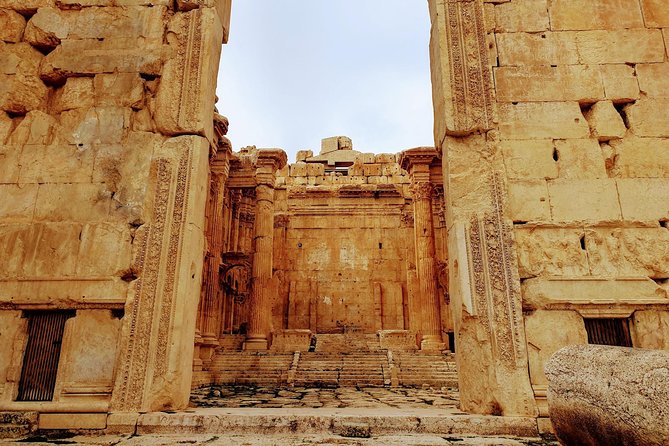
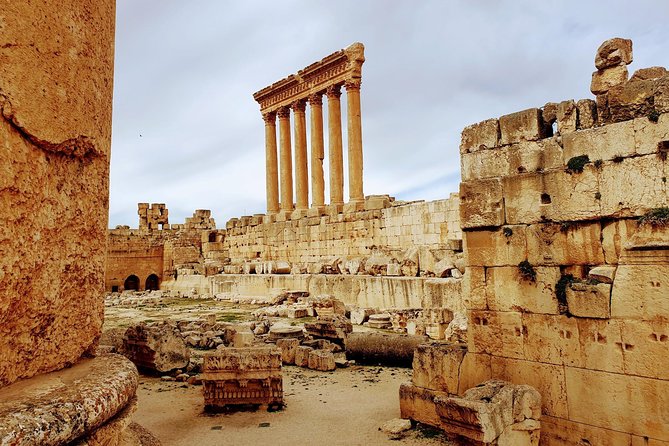
The complex took more than two centuries to build. Its construction reflects both religious devotion and imperial ambition. The stones are so large that you quickly stop thinking only about dates and names. You start wondering how ancient builders moved, raised, and fitted blocks of such size.
I like that the included local guide gives this visit structure. Without an explanation, Baalbek can become a parade of impressive walls and columns. With a guide, you can better understand how the sanctuary worked, which gods were honored, and why the architecture was designed on such a grand scale.
The guided visit lasts about 90 minutes. That is a useful amount of time for a first visit, though you should not expect to inspect every corner at a slow pace. Wear comfortable shoes and be ready for open-air walking. The information provided does not specify the exact walking conditions, so sensible footwear is the safe choice.
More Baalbek and Anjar tours in Beirut:
- Guided Small-Group Tour to Baalbek, Anjar and Ksara with Lunch
★ 5.0 · 511 reviews - Anjar, Baalbek & Ksara Day Trip – With Lunch (4G on Board)
★ 4.5 · 181 reviews - Baalbek – Anjar – Ksara Trip From Beirut
★ 4.5 · 80 reviews
Inside the Roman sanctuary at Baalbek
Baalbek’s strongest impression comes from its colossal construction. The temple complex reached its height during Roman times, and its surviving remains show an unusual level of ambition. The sanctuary was a major place of pilgrimage, drawing people to honor Jupiter, Venus, and Bacchus.
The guide is especially valuable here because the site contains more than one dramatic structure and several layers of meaning. You can ask about the Roman period, the older Phoenician roots of the cult, and the role of the sanctuary as a place visited by pilgrims.
The supplied tour information does not name the local guide, so you should not expect to request a particular person. What is clear is that a local guide is included in addition to the tour leader. That division can be useful: one person helps manage the day, while the other focuses on Baalbek itself.
A private visit also changes the rhythm. You can ask for clarification when a term or deity becomes confusing, and your guide can give your group personal attention instead of speaking to a large crowd. That is one of the better reasons to choose this tour over trying to arrange a simple transfer.
Still, keep the six-hour schedule in mind. The visit is designed to show you the essential parts of Baalbek, not to provide a full archaeological study. If you are fascinated by ancient building methods or Roman religious sites, you may wish you had more free time.
Sayyida Khawla Shrine and Baalbek’s living tradition
The stop at Sayyida Khawla Shrine lasts about five minutes, but it changes the focus from ancient Rome to living religious tradition. The mosque is built where Sayyida Khawla, the daughter of Imam al-Hussein, is believed to have been buried.
The story connects the shrine with the caravan of captives from Karbala. According to local belief, Khawla died when the caravan passed through Baalbek and was buried at the site. You will not spend long here, but the stop gives you a reminder that Baalbek is not only an archaeological monument.
I like this brief pause because it prevents the day from becoming a single-period history lesson. The Roman sanctuary may draw most of the attention, but the shrine shows how sacred places continue to shape local identity.
The tour data does not describe an interior visit or a formal explanation lasting beyond the short stop. Treat it as a quick cultural waypoint rather than a second major attraction. Dress and behave respectfully at a religious site, and follow any instructions given by your tour leader.
The Stone of the Pregnant Woman in 15 minutes
The Stone of the Pregnant Woman is another short stop, lasting about 15 minutes. It is a worked Roman monolith near Baalbek and one of two enormous ancient blocks associated with the nearby temple complex.
The stone is memorable because of its sheer size. Ancient builders apparently intended blocks of this kind for the Roman sanctuary, revealing just how far the project’s ambition extended beyond the finished walls and columns.
This is a good place to pause and think about the engineering problem behind Baalbek. The temple ruins show the finished result. The monolith shows the raw material and the scale of the work before it became architecture.
Do not expect a long guided session here. Fifteen minutes is enough to see the stone, hear its connection to the temple complex, and take in its proportions. It is also a useful break between the main site and the later wine stop.
More Chateau Ksara wine tours in Beirut:
- Guided Private Full Day Tour to Baalbek, Anjar and Chateau Ksara
★ 5.0 · 60 reviews - Lebanon tour Baalbek ruins & Ksara w/pick-up, lunch,guide+entries
★ 5.0 · 35 reviews - Baalbek Temples & Ksara Caves w/pick-up,guide, entries+lunch
★ 4.9 · 34 reviews - Small Group Tours to Baalbek, Anjar & Chateau Ksara with lunch and Tickets
★ 5.0 · 29 reviews
Aanjar adds an Umayyad chapter
The tour continues to Aanjar to see Umayyad ruins. The supplied timing does not list a separate duration for this stop, so the exact amount of time may depend on the day’s pace and the guide’s plan.
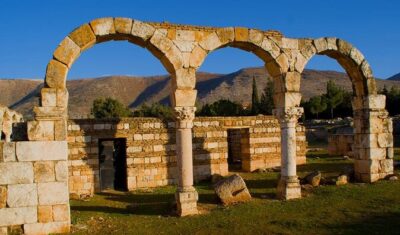
Aanjar matters because it takes you beyond the Roman world. The Umayyad period belongs to the early Islamic era, and the ruins give the day a second major historical layer. After Baalbek’s imperial Roman sanctuary, Aanjar helps you see that Lebanon’s inland routes remained important long after Roman power faded.
Since the tour lasts about six hours and includes several stops, Aanjar is likely a concise visit rather than a long independent exploration. Ask your tour leader how much time is available when you arrive. If you are choosing this tour mainly for Baalbek, Aanjar is a valuable addition. If you want extensive time at both archaeological sites, the schedule may feel compressed.
Lunch and wine at Chateau Ksara
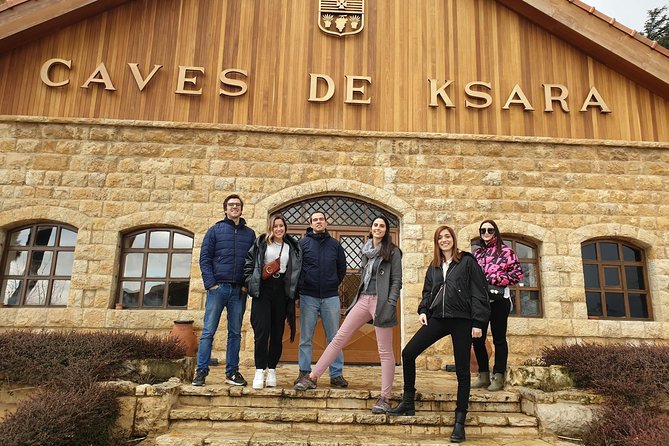
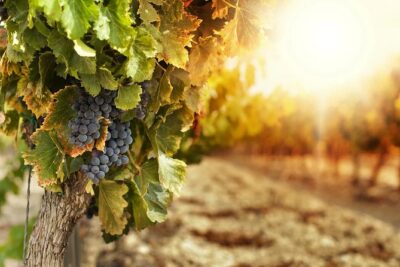
Chateau Ksara provides the day’s change of pace. The winery was founded in 1857 by Jesuit priests and later developed Lebanon’s first dry wine. It now produces about three million bottles a year and exports to more than 40 countries.
The tour includes a Lebanese lunch and wine tasting fees. That improves the value of the experience because you are not paying separately for a meal and tasting after covering the transport and archaeological admission.
The wine stop lasts about one hour. That is long enough for a proper pause, but not so long that the day becomes mainly a winery visit. You can expect the tasting to be an introduction to Chateau Ksara’s production rather than a full wine course. The supplied information does not specify the number of wines, meal menu, or whether a cellar tour is included, so do not book this expecting a detailed behind-the-scenes program.
I like the placement of the winery after the ruins. Baalbek and Aanjar require concentration and walking. A seated meal and tasting give you time to relax and talk about what you have seen. It also connects the Bekaa Valley’s ancient past with one of its current products.
If you do not drink wine, the archaeological portion still gives the tour its main value. However, the tasting is a central part of the advertised experience, so people who have no interest in wine may prefer a tour focused only on historic sites.
What the $75 price really covers
At $75 per person, the value depends on how much you would otherwise have to arrange yourself. This is not just a ticket to Baalbek. The price includes private transportation in an air-conditioned vehicle, a tour leader, a local Baalbek guide, lunch, wine tasting fees, and Baalbek admission.
That package removes several common expenses and planning tasks. You do not need to find your own transport from Beirut, buy the archaeological entry separately, organize a guide at Baalbek, or choose a restaurant for lunch.
The private format is important. You are not joining a large group, and only your party participates. That can make the ride and guiding feel more personal, particularly if you want to ask questions or adjust the pace within the limits of the six-hour schedule.
Group discounts are available, though no discount amount is provided. If you are traveling with family or friends, check the final price for your group before booking. The cost may become more attractive as the shared private transport serves more people.
The main thing not included in the stated package is extra personal spending beyond the listed services. Since the tour already includes lunch and tasting fees, your additional costs should be limited to anything not covered by the provider, but the exact details are not specified.
The 9:00 am start and private transport
The day begins at 9:00 am, with pickup offered from your Beirut hotel. The tour lasts approximately six hours, so you should plan for a focused outing that returns you to Beirut around the middle or later part of the afternoon, although the exact return time is not stated.
An air-conditioned vehicle is a practical benefit for a full inland excursion. Private transport also means you avoid the uncertainty of finding your own route between Beirut, Baalbek, Aanjar, and Chateau Ksara.
The schedule is efficient, but efficiency has a price. Baalbek receives about 90 minutes, the shrine five minutes, the Stone of the Pregnant Woman 15 minutes, and Chateau Ksara one hour. Aanjar is included, but no exact stop length is given. You will see several important places, yet you will not have unlimited time at any of them.
This format suits you if you want a well-organized introduction to the Bekaa Valley. It is less suitable if you prefer to linger, sketch, photograph every detail, or spend half a day at one archaeological site.
What the small review record tells you
The available feedback is limited, with four ratings and an overall five-star score. The strongest praise focuses on the quality of the site, the guide, and the driver, with particular emphasis on a pleasant and educational day.
That praise points to the parts that matter most on a tour like this. Baalbek is already impressive, but a good guide helps turn scale into meaning. A capable driver matters too, since the experience depends on moving between Beirut, Baalbek, Aanjar, and the winery within a short schedule.
No guide names are supplied, so you cannot use a specific guide as a booking factor. Instead, focus on the private format and included local guide. Those are the clearest safeguards against a rushed, impersonal visit.
Who should book this Baalbek and Ksara tour?
I would choose this tour if you are staying in Beirut and want to see Baalbek without arranging intercity transport. It works especially well for first-time visitors who want history, food, and wine in one compact day.
It also suits couples, families, and small groups that value privacy. The group discount may help if several of you are booking together, and the private vehicle gives you a quieter setting than a standard coach trip.
The tour is a strong match for you if you want:
- A guided introduction to Baalbek
- Roman and Umayyad sites in one outing
- Lebanese lunch included in the price
- A winery visit with tasting fees covered
- Hotel pickup and private transport
- A six-hour experience rather than a full-day commitment
You may want another option if you need extensive free time at each ruin, do not drink wine, or prefer a tour built around one archaeological site alone. The short stop at Sayyida Khawla Shrine and the 15-minute visit to the Stone of the Pregnant Woman are useful additions, but neither is meant to be a major standalone visit.
Final call: a smart first visit to the Bekaa Valley
Book this tour if you want the easiest practical route from Beirut to Baalbek, with a local guide, private transport, lunch, Aanjar, and Chateau Ksara folded into one price. The strongest value comes from the combination: a major Roman sanctuary, an Umayyad site, a religious shrine, an enormous ancient stone, and Lebanese wine in about six hours.
Skip it only if you know you need a slower archaeological day. For most visitors with limited time in Lebanon, the private format and all-in price make this a sensible, well-balanced introduction to Baalbek and the Bekaa Valley. Free cancellation is available when you cancel at least 24 hours before the 9:00 am start time. Changes or cancellations made later are not accepted for a refund.
FAQ
Where does the tour begin?
The tour begins in Beirut, with pickup offered from your hotel. The stated start time is 9:00 am.
How long does the experience last?
The tour lasts approximately six hours.
Is this a private tour?
Yes. Only your group participates in the private activity.
Is transportation included?
Yes. Private transportation in an air-conditioned vehicle is included.
Is a guide included at Baalbek?
Yes. The package includes a local guide in Baalbek and a tour leader for the experience.
Are lunch and wine tasting included?
Yes. A Lebanese lunch and wine tasting fees are included.
What is the cancellation policy?
You can cancel at least 24 hours before the experience start time for a full refund. Cancellations or changes made less than 24 hours before the start time are not accepted for a refund.
Just added around Beirut
- Journey Through Time: Half-Day Private Tour to Baalbek★ 5.0 · 3 reviews
- Small Group Tours to Jeita Grotto and Byblos with tickets★ 5.0 · 3 reviews
- Wine Tasting and Culture★ 5.0 · 3 reviews
- Small-Group Tour with Lunch to Jeita Grotto, Byblos and Harissa★ 4.5 · 3 reviews
- Traveling Spoon Lebanese Mezze Private Online Cooking Class★ 5.0 · 4 reviews
- Beirut to Qadisha Valley, Bcharri & Cedar: Daily Tours with Lunch★ 4.5 · 3 reviews
- Small-Group Tour to Sidon, Tyre and Maghdouche with Lunch and Tickets★ 4.5 · 3 reviews
- Small-Group Tour with Lunch to Baalbek, Anjar and Ksara★ 5.0 · 3 reviews
Baalbek and Anjar Tours, compared.
Guided Small-Group Tour to Baalbek, Anjar and Ksara with Lunch
Read our review →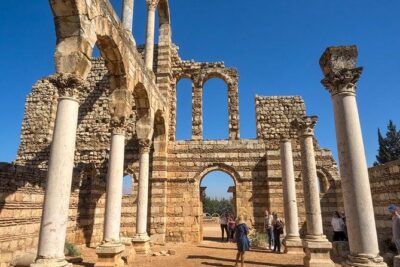
Anjar, Baalbek & Ksara Day Trip – With Lunch (4G on Board)
Read our review →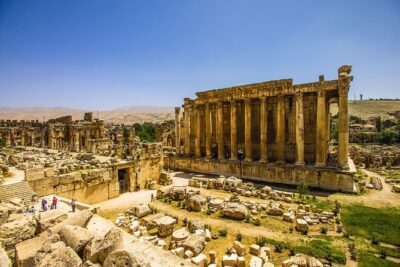
Private Anjar and Baalbek Tour from Beirut with Departure Ticket
Read our review →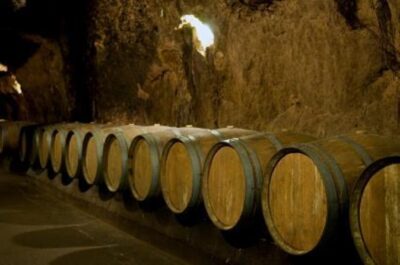
Guided Private Full Day Tour to Baalbek, Anjar and Chateau Ksara
Read our review →
Baalbek Temples & Ksara Caves w/pick-up,guide, entries+lunch
Read our review →
Small Group Tours to Baalbek, Anjar & Chateau Ksara with lunch and Tickets
Read our review →
Private Tour: Anjar, Baalbek and Ksara Day Trip from Beirut
Read our review →Browse the lists this tour appears in