
Reviewed · SIDON AND TYRE TOURS
Guided Small-Group Tour to Sidon, Tyre & Maghdouche with Lunch
Sidon’s Crusader sea fortress, Tyre’s enormous Roman hippodrome, and Maghdouche’s hilltop Marian shrine make this a busy but rewarding day south of Beirut. You get three very different sides of Lebanon in one outing: coastal archaeology, working-market streets, and a major Christian pilgrimage site.
I like that hotel pickup and lunch are included, so you do not spend the day arranging taxis or hunting for a restaurant. I also like the small-group format, capped at 20 people, and the fact that the day focuses on places rather than forced shopping stops. The main caution is time: nine hours sounds generous, but the route covers a lot of ground, and some stops receive only 15 or 30 minutes.
Key points at a glance
- Sidon combines a Crusader fortress, a 17th-century khan, soap making, and narrow souks in one compact section of the day.
- Tyre’s Al-Bass site contains a major Roman hippodrome, triumphal arch, aqueduct, necropolis, and ancient road.
- Maghdouche’s Basilica of Our Lady of Mantara connects local Christian tradition with a cave where Mary is believed to have waited for Jesus.
- Lunch, bottled water, air-conditioned transport, and Beirut hotel transfers are included in the $65 price.
- The schedule is tightly packed, with short visits at Khan al-Franj, the Sidon souks, and Maghdouche.
- The route may not cover every named Tyre stop, so ask about the exact order and included sites before departure.
Why this southern Lebanon day trip works
This is a good answer to a common Beirut problem: Lebanon’s major sights are spread out, and piecing together buses or taxis for Sidon, Maghdouche, and Tyre takes effort. A guide and driver let you use the day for seeing places instead of negotiating transport.
The route also has a useful rhythm. Sidon gives you a port city with layers from the Phoenician era through the Crusader and Ottoman periods. Maghdouche shifts the mood to a religious shrine above the coast. Tyre closes the day with the broadest archaeological remains, including some of the best-preserved Roman structures in Lebanon.
At $65 per person, the value is strongest if you are staying in Beirut and want all three destinations in one day. Hotel transfers, lunch, water, a tour leader, and an air-conditioned vehicle are already covered. You may still pay separate admission at the Sea Castle, Soap Museum, and Al-Bass Archaeological Site, since those entries are not included.
The tour receives a five-star overall rating from 41 reviews, with all reviewers recommending it. I would read that as a strong sign of reliable organization, not as proof that every departure follows the same timing. The day depends on traffic, the group’s pace, and how long each site takes.
More Sidon and Tyre tours in Beirut:
- Small-Group Adventure Tour to Sidon Tyre & Maghdouche-Day Trip
★ 5.0 · 45 reviews - Sidon, Tyre & Maghdouche Day Trip – With Lunch (4G on Board)
★ 4.5 · 44 reviews - Sidon – Tyre – Maghdouche Trip, From Beirut
★ 5.0 · 25 reviews
Sidon: Phoenician port, Crusader walls, and working souks
The morning begins in Sidon, one of the ancient Phoenician cities of the Levant. Its roots reach back to the third millennium BC, and its early prosperity came partly from purple dye and glassware. The city is also mentioned in the Christian tradition as a place visited by Jesus.
Your first hour is devoted to Sidon itself. This is less a single monument than an introduction to a living port city shaped by many rulers. Phoenicians, Egyptians, Greeks, Romans, Crusaders, Mamluks, and Ottomans all left their mark here.
The benefit of having a guide is clear in Sidon. Without context, old stone walls and crowded lanes can blur together. A good guide can connect the city’s trade in purple dye and glass to its later role as a contested Crusader port, then explain how the modern souk still functions as a center of commerce and craft.
Do not expect a long, leisurely walk through every quarter. The scheduled time for the general Sidon visit is about one hour, followed by separate short stops. Wear shoes suitable for uneven pavement, and keep your belongings close in the market lanes.
The Sea Castle and Sidon’s changing fortunes
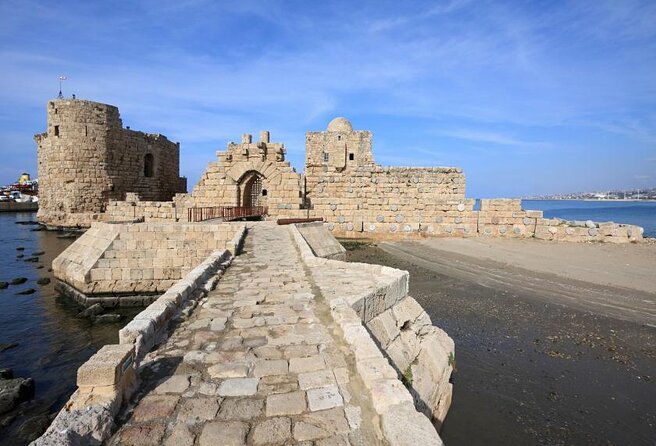
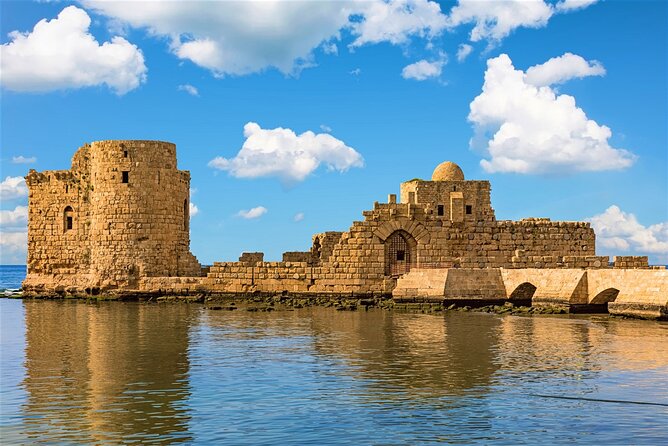
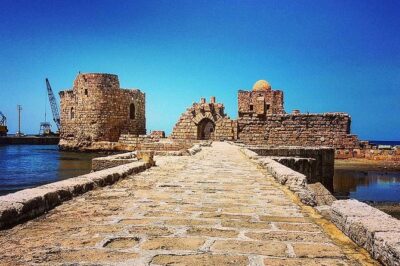
The Sidon Sea Castle sits on a small island joined to shore by a causeway. Crusaders built it in the 13th century as a fortress connected to the Holy Land. Its location gives you the clearest visual link between Sidon and the sea that made the city prosperous.
Much of the castle was destroyed by the Mamluks in 1291. Fakhr el-Dine Maan II later restored it in the early 17th century. Old prints show a more finished and ornate fortress than the remains you see today, so the site rewards imagination as much as photography.
The stop lasts about 30 minutes. That is enough to see the structure, cross the causeway, and hear the main story, but not enough for a slow architectural study. Admission is not included, so carry some extra money for the entry fee.
The castle is one of the tour’s most photogenic stops, but it is also where expectations matter. You are seeing a partly ruined fortification, not a fully restored medieval castle. I like it best as a compact introduction to Sidon’s strategic position rather than as a stand-alone archaeological visit.
Khan al-Franj and the old soap trade
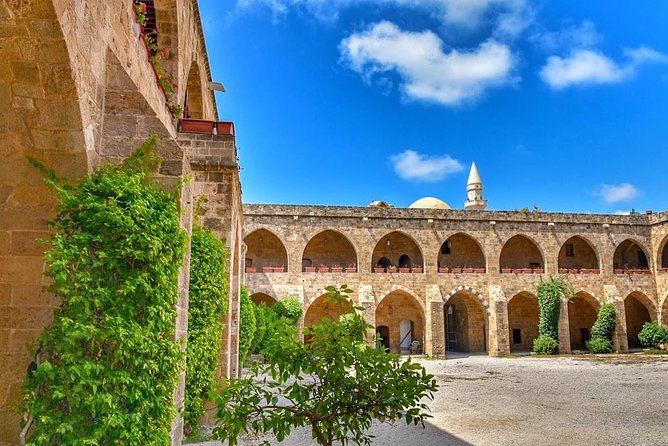
Khan al-Franj takes you from military history to commerce. Emir Fakhreddine II built this large 17th-century caravanserai as a place for French ambassadors and commercial exchange. Its rectangular courtyard, central fountain, and covered galleries follow the classic khan design.
You have only about 15 minutes here, so this is a quick orientation stop. Look up at the galleries and imagine the courtyard filled with merchants, officials, and travelers. The building later served as a center for literature, religion, history, industry, and diplomacy, giving it a role beyond lodging.
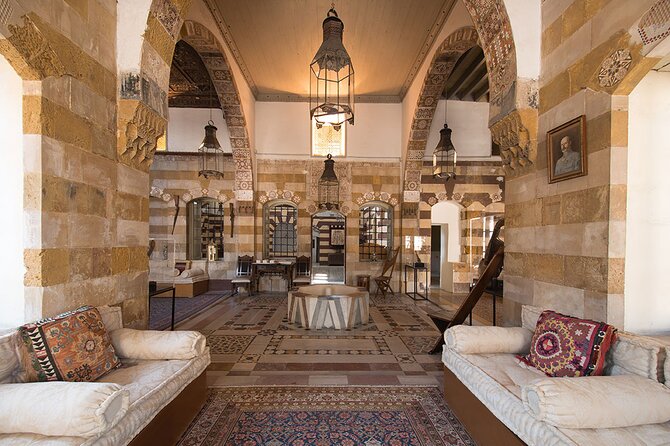
The Soap Museum provides a more hands-on look at Sidon’s traditional economy. The building began as a soap workshop operated by the Hammoud family in the 17th century, with parts thought to date to the 13th century. Inside, you can learn how olive oil soap is made and see the connection between soap production and the old hammam, or bath, tradition.
The museum also contains archaeological finds from the site, including clay pipe heads from the 17th through 19th centuries and pottery fragments. A demonstration may help you understand why soap was once a serious local industry rather than a simple souvenir.
This stop lasts around 30 minutes, and admission is not included. One practical advantage is that the visit does not have to become a sales pitch. You can look, learn, and move on without pressure to buy anything.
More Our Lady of Maghdouche tours in Beirut:
- Small Group Tour to Sidon, Tyre & Maghdouche with lunch
★ 5.0 · 11 reviews - Private Guided Tour to Sidon, Tyre and Maghdouche from Beirut
★ 4.5 · 9 reviews - Sidon, Tyre, Maghdouche
★ 5.0 · 7 reviews - Southern Lebanon Day Trip: Exploring Sidon, Maghdouche and Tyre
★ 5.0 · 4 reviews
Sidon’s souks in fifteen minutes
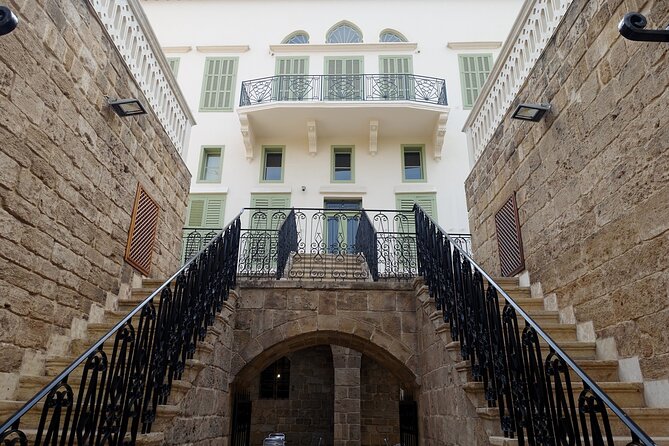
Sidon’s souk is a maze of narrow lanes lined with small shops, kiosks, cafés, and tradespeople. You might pass butchers, grocers, shoemakers, tailors, jewelers, and street merchants within a few minutes.
The scheduled stop is only 15 minutes, so treat it as a taste rather than a full market visit. You will have time to get your bearings, notice the working character of the city, and perhaps buy a small item if something catches your eye. You will not have time to browse every lane at a relaxed pace.
This is one place where the tour’s structure creates a trade-off. Guided access is convenient, but independent visitors can easily spend an hour or more wandering the souk. If the market is your main interest, ask the guide whether the order can be adjusted or whether you will have free time later.
Maghdouche and the cave of Our Lady of Mantara
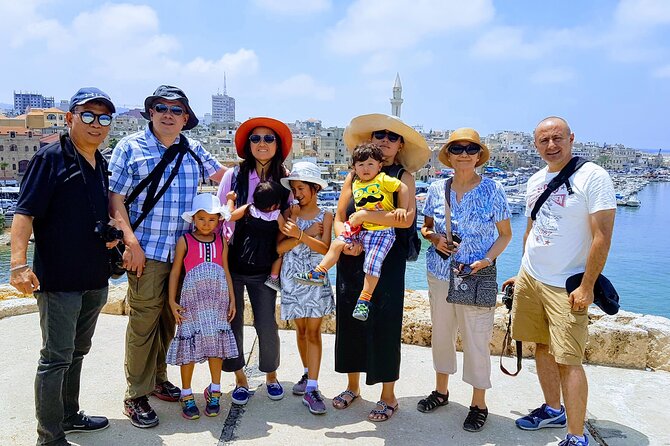
After Sidon, the tour heads to Maghdouche, also spelled Maghdouché or Maghdoucheh. The Basilica of Our Lady of Mantara is a Melkite Greek Catholic shrine built around a local Christian tradition.
The name Our Lady of Awaiting refers to the belief that Mary waited here while Jesus visited Sidon. The shrine includes a sacred cave, a cathedral, a cemetery, and a tower topped by a statue of the Virgin and Child. The cave was reportedly found by a young shepherd in 1721.
The stop lasts about 15 minutes, so you should expect a brief visit rather than a full religious tour. The site is valuable because it adds a living spiritual dimension to a day otherwise centered on ruins and fortresses.
You do not need to share the belief to appreciate the place. Religious sites often preserve local memory in a way that stones alone cannot. Keep your clothing and behavior respectful, especially if services or prayer are taking place.
Tyre: Phoenician power and a seaside setting
Tyre is the grandest historical stop on the route. The Phoenician port dates to roughly 2750 BC and later flourished under King Hiram. It became famous for purple dye made from murex sea snails, a costly color associated with power across the ancient world.
Tyre is also linked with Elissar, the Phoenician princess traditionally credited with founding Carthage. After its Phoenician period, the city came under Egyptian, Assyrian, Neo-Babylonian, Greek, Seleucid, Roman, Byzantine, Arab, Crusader, Mamluk, and Ottoman control.
That long sequence matters because Tyre is not one isolated ruin. It is a city where different eras overlap, with archaeological sites spread through a modern coastal town. You get a sense of the old port’s importance, but you also see a place with beaches and a present-day holiday life.
The general Tyre visit is scheduled for about two hours, with another hour at Al-Bass. That is a useful amount of time for the main remains, though still not enough to inspect every stone or museum display.
The route may vary. One departure did not include every place named in the planned schedule, including parts of Tyre’s old souk. If a particular Tyre location matters to you, confirm the day’s exact stops with the operator before booking.
Al-Bass: Tyre’s Roman showpiece
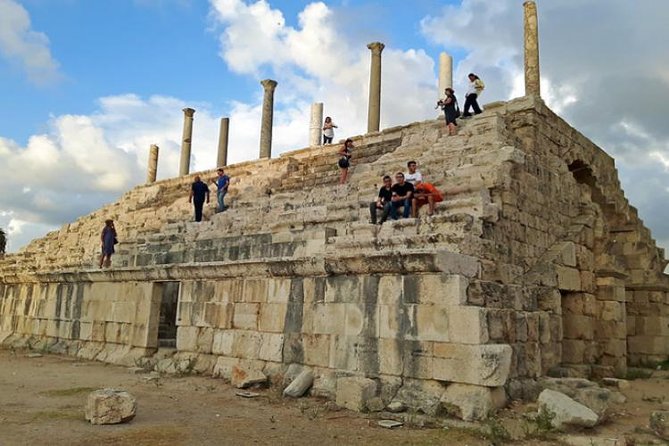
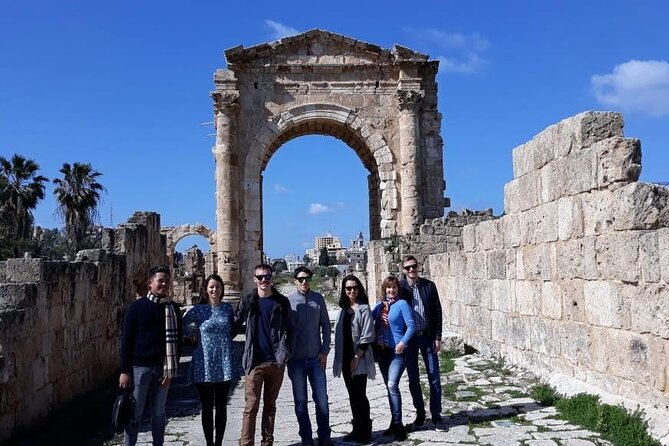
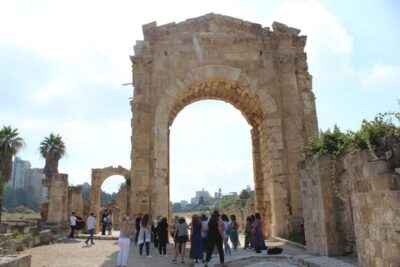
At Al-Bass Archaeological Site, the scale of Roman Tyre becomes easier to grasp. The entrance is marked by a monumental causeway and a triumphal arch dating from the second century AD. Nearby, you can see a Roman road, aqueduct, necropolis, and one of the largest known Roman hippodromes.
The hippodrome is the major reason to come. Its long, open form helps you picture chariot races and large public gatherings more effectively than a small fragment of wall would. It is described as the best-preserved example of a Roman hippodrome, and it gives the site an impressive sense of size.
The necropolis contains hundreds of sarcophagi. The aqueduct shows the practical systems that supported a major city, while the triumphal arch once announced arrival in grand fashion. Together, these remains explain Tyre as an urban center, not simply a harbor with a famous name.
Plan for sun and open ground. The tour includes bottled water, which is useful here, but sunscreen and a hat are sensible additions. Admission to Al-Bass is not included, so budget for that separately.
Lunch, transport, and the value of the package
Lunch is included, with fresh Lebanese food and bottled water provided during the day. A fish meal in Tyre has been served on some departures, though the exact menu can vary. This is a practical benefit because the schedule leaves little room for choosing a restaurant independently.
One point to note is seating. The restaurant used on one departure had outdoor tables that were not fully shaded. Bring sunscreen, especially in warmer weather, and do not assume the meal will take place indoors.
Hotel pickup and drop-off from Beirut remove the hardest part of this excursion. The vehicle is air-conditioned and the tour begins at about 8:30 a.m., running for roughly nine hours. That is a full day, but it is a sensible length for three destinations that are difficult to combine on your own.
The group can include up to 20 people. That is small enough for a guide to manage, though it is not an intimate private tour. The experience depends partly on the guide’s pacing and the group’s ability to stay together.
Several guides and drivers have been praised by name, including Alain and Naaser on one particularly well-liked departure. The operator has also been noted for clear pickup communication. Names and staff can change, so treat these as examples of the sort of personal service you might receive, not a guaranteed pairing.
Who should book this tour?
I would choose this tour if you have limited time in Lebanon, are based in Beirut, and want a broad introduction to the southern coast without renting a car. It suits first-time visitors who want a guide to explain the ancient sites and a driver to handle the long connections.
It is also a good fit if you want a mix of interests. History fans get Phoenician and Roman remains. Religious and cultural sites are represented at Maghdouche. Food lovers get a Lebanese lunch, while anyone who enjoys ordinary city life gets a brief look at Sidon’s market streets.
I would hesitate if your priority is slow exploration. Fifteen minutes at Khan al-Franj, the souks, and Maghdouche is enough for a snapshot, not extended wandering. You may also prefer an independent visit if you want to spend most of the day at Tyre or shop in Sidon.
The $65 price is fair for the amount of transport and organization included. Remember to add possible admission fees at the Sea Castle, Soap Museum, and Al-Bass. Free cancellation is available up to 24 hours before the 8:30 a.m. start time, but changes or cancellations inside that window are not refunded.
Should you book it?
Book this day trip if convenience and range matter more to you than a slow pace. You will see Sidon’s fortress and old trades, pause at a distinctive Marian shrine, and finish among Tyre’s remarkable Roman remains, all with lunch and Beirut transfers arranged.
Before paying, ask which Tyre stops will be covered on your departure and how much free time you will have in the souks. If the answer fits your priorities, this is a practical, well-priced way to reach three important southern Lebanon sites in one long day.
FAQ
Where does the tour start?
The tour starts with pickup from Beirut hotels. The stated start time is 8:30 a.m.
How long does the tour last?
The experience lasts approximately nine hours.
What destinations are included?
The route includes Sidon, Maghdouche, and Tyre. Stops include the Sidon Sea Castle, Khan al-Franj, the Soap Museum, Sidon’s souks, the Basilica of Our Lady of Mantara, and Tyre’s Al-Bass Archaeological Site.
Is lunch included?
Yes. Lunch and bottled water are included in the tour price.
Is hotel transportation included?
Yes. Hotel pickup and drop-off from Beirut are included, along with an air-conditioned vehicle and comfortable transportation.
How large is the group?
The tour has a maximum of 20 travelers.
Are entrance fees included?
Some listed stops have no admission charge, but admission is not included for the Sea Castle, Soap Museum, and Al-Bass Archaeological Site.
Is a guide included?
Yes. The experience includes a professional guide and a tour leader.
Can I cancel for a refund?
Yes. You can cancel at least 24 hours before the experience start time for a full refund. Cancellations or changes made less than 24 hours before the start are not refunded or accepted.
More Lunch Experiences in Beirut
- Guided Small-Group Tour to Baalbek, Anjar and Ksara with Lunch
★ 5.0 · 511 reviews - Guided Small-Group Tour to Jeita, Harissa, Byblos with Lunch
★ 5.0 · 361 reviews - Anjar, Baalbek & Ksara Day Trip – With Lunch (4G on Board)
★ 4.5 · 181 reviews - Byblos, Jeita Grotto & Harissa Day Trip -With Lunch (4G on Board)
★ 4.5 · 145 reviews
Just added around Beirut
- Journey Through Time: Half-Day Private Tour to Baalbek★ 5.0 · 3 reviews
- Small Group Tours to Jeita Grotto and Byblos with tickets★ 5.0 · 3 reviews
- Wine Tasting and Culture★ 5.0 · 3 reviews
- Small-Group Tour with Lunch to Jeita Grotto, Byblos and Harissa★ 4.5 · 3 reviews
- Traveling Spoon Lebanese Mezze Private Online Cooking Class★ 5.0 · 4 reviews
- Beirut to Qadisha Valley, Bcharri & Cedar: Daily Tours with Lunch★ 4.5 · 3 reviews
- Small-Group Tour to Sidon, Tyre and Maghdouche with Lunch and Tickets★ 4.5 · 3 reviews
- Small-Group Tour with Lunch to Baalbek, Anjar and Ksara★ 5.0 · 3 reviews
Sidon and Tyre Tours, compared.
Small-Group Adventure Tour to Sidon Tyre & Maghdouche-Day Trip
Read our review →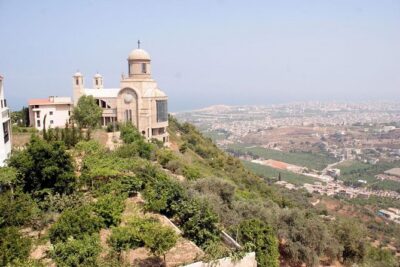
Sidon, Tyre & Maghdouche Day Trip – With Lunch (4G on Board)
Read our review →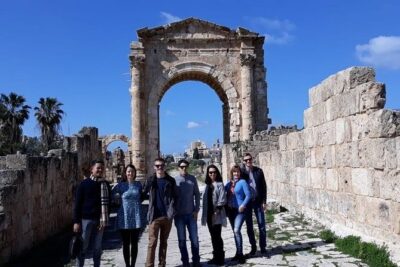
Small Group Tour to Sidon, Tyre & Maghdouche with lunch
Read our review →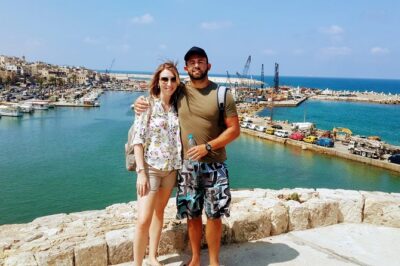
Private Guided Tour to Sidon, Tyre and Maghdouche from Beirut
Read our review →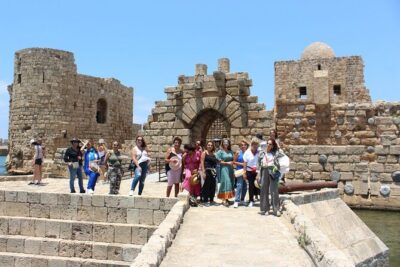
Lebanon tour Sidon & Tyre ruins with pick-up, guide,lunch+entries
Read our review →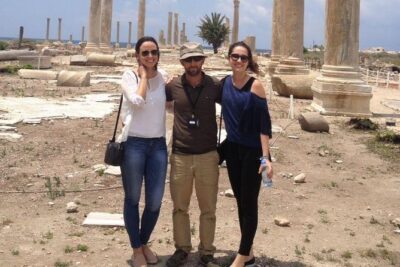
Lebanon Unveiled: Exclusive Private Tours to Sidon & Tyre
Read our review →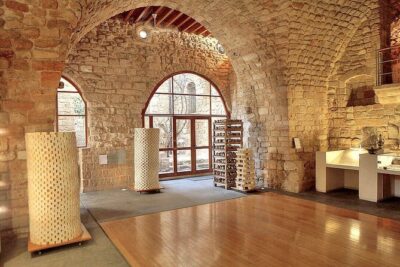
Sidon & Tyre Unesco Heritage w/pick-up, guide, entries+lunch
Read our review →Browse the lists this tour appears in