
Reviewed · JEITA GROTTO TOURS
Full-Day Private Trip to Jeita Grotto, Baalbek and Chateau Ksara
Jeita’s cool limestone chambers, Baalbek’s giant Roman stones, and Ksara’s Lebanese wines make an unusually full day out of Beirut. I like the private door-to-door transport, and I like that Baalbek comes with a local guide while Jeita is left open for you to explore at your own pace. The main trade-off is time: three major stops, a long drive, and about nine hours on the road.
I also like the price, $69.45 per person, if your group fills the vehicle. It covers transport, a tour leader, Baalbek’s local guide, and wine tasting. You still need to budget for entrance fees and lunch, and the Baalbek admission details should be confirmed before departure because the supplied information gives mixed signals about what is included.
Key points at a glance
- Jeita Grotto combines a boat ride and an underground walk, with two connected cave levels filled with stalactites, stalagmites, columns, curtains, and pools.
- Baalbek is the day’s major archaeological stop, with the Temple of Jupiter, Temple of Bacchus, Temple of Venus, and the huge Stone of the Pregnant Woman.
- Chateau Ksara adds a distinctly Lebanese finish, including a winery visit and tasting of French-style wines.
- Private transport makes the packed schedule workable, with hotel pickup and drop-off from Beirut in an air-conditioned vehicle.
- Baalbek includes a local guide, while Jeita is explored independently, giving the day a useful mix of explanation and free time.
- The price is strongest for two or more people, since private transport and the guide are shared only within your own group.
Why this private Beirut day works
This excursion links three places that feel quite different. Jeita is a natural wonder below ground. Baalbek is a vast Roman sanctuary built from enormous blocks of stone. Chateau Ksara brings you back to present-day Lebanon, with vineyards, cellar traditions, and wine in the glass.
That variety is the tour’s real appeal. You are not spending nine hours looking at one type of sight. You get nature, ancient architecture, local religious history, and Lebanese wine in one outing.
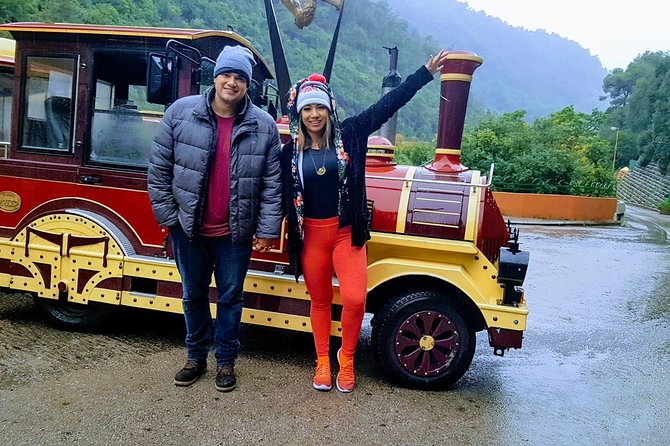
The private format matters. Your group has its own vehicle, driver, and tour leader rather than being tied to a large coach. Pickup and drop-off are offered from your hotel, and the vehicle is air-conditioned. That is especially useful for a long day reaching the Bekaa Valley and returning to Beirut.
The schedule is still ambitious. Jeita takes about 1 hour and 30 minutes, Baalbek is divided into several sightseeing sections, and Chateau Ksara allows about 45 minutes. Add the driving time and lunch, which is not included, and you have a day that needs an early start and a willing attitude toward a busy itinerary.
More Jeita Grotto tours in Beirut:
- Guided Small-Group Tour to Jeita, Harissa, Byblos with Lunch
★ 5.0 · 361 reviews - Jeita Grotto,Harissa&Byblos Full-Day PRIVATE-CAR Trip from Beirut
★ 5.0 · 222 reviews - Jeita Grotto – Harissa – Byblos Trip
★ 5.0 · 169 reviews
Jeita Grotto: Lebanon below the surface
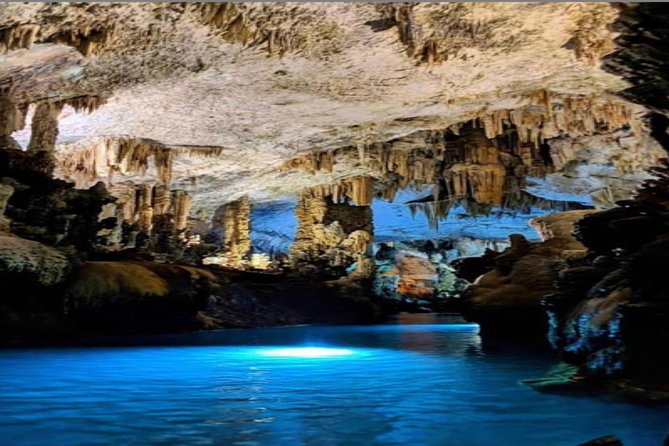
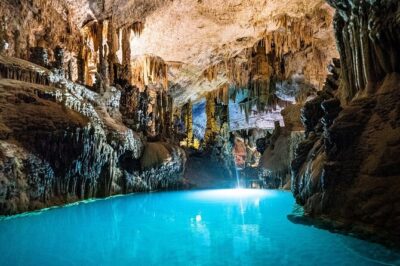
Jeita Grotto is made up of two limestone cave levels formed over millions of years. The upper cave reaches about 2,130 meters in length, while the lower gallery extends roughly 6,200 meters beneath it. You will see only a portion of the full system, but the scale is still impressive.
The upper level is known for its mineral shapes: stalactites hanging from the ceiling, stalagmites rising from the floor, stone columns, curtains, draperies, mushrooms, ponds, and other formations. The lower gallery lies about 60 meters below the upper cave and has an underground river and lake.
The visit includes exploring by boat and on foot, which gives the stop two distinct moods. The boat ride is the quieter part, with water and rock enclosing you on all sides. The walking section lets you study the formations more closely.
You explore Jeita independently rather than with the Baalbek guide. That can be a plus if you prefer to move at your own pace and pause for photographs where permitted. It also means you should pay attention to the meeting time set by your driver or tour leader. On a tightly timed day, a late return here can shorten the Baalbek visit.
Jeita is 300 meters above sea level, and the cave system has a height difference of 305 meters. Those figures help explain why the site feels more than a simple underground corridor. It is a large natural system with separate levels and changing spaces.
Entrance is not included in the tour price. Set aside money for that fee, and confirm the current cost before booking. The experience description does not provide the admission amount.
Baalbek: Roman scale in the Bekaa Valley
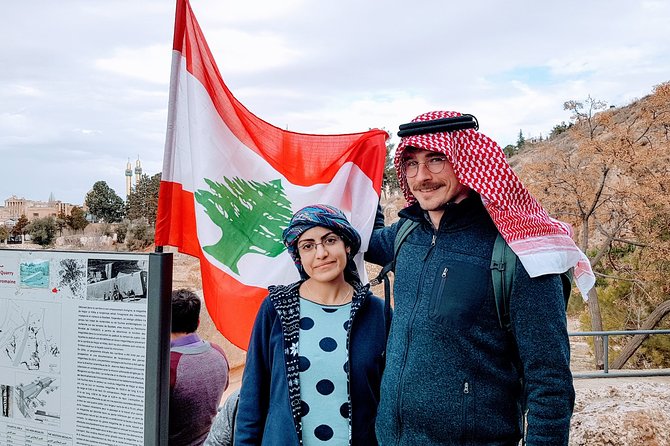
Baalbek is the strongest reason to book this trip. The ruins are in the Bekaa Valley at an altitude of about 1,150 meters, near the southwestern slopes of the Anti-Lebanon range. The site was once known as Heliopolis, or City of the Sun, and it served as a major religious center in the Hellenistic and Roman periods.
The sanctuary honored a Romanized version of a Phoenician religious triad: Jupiter, Venus, and Bacchus. Roman builders developed the complex over more than two centuries, creating a place of worship on a scale that is hard to grasp from photographs.
You visit Baalbek with a local guide, unlike Jeita. That is valuable here because the complex has many courtyards, platforms, temples, and fragments. A guide can help you understand which structures belong together and why the site mattered, instead of leaving you with a collection of impressive stones and unfamiliar names.
Allow about 1 hour and 30 minutes for the main Baalbek visit, though the supplied schedule also lists separate time blocks for the temple complex and individual temples. In practice, the exact order and length may depend on the day’s driving time, site conditions, and your guide. Ask at the start how much time you will have inside the archaeological area.
The ruins are a good match for anyone who enjoys ancient architecture. They are less suitable if you want a slow, unhurried archaeological study, since the tour also has Jeita and Ksara to fit in.
Temple of Jupiter and the Great Court
The Temple of Jupiter was the largest temple dedicated to Jupiter in the Roman world. Its construction probably began around 16 BC and was close to completion by about AD 60.
The temple stood on a broad platform, with another raised section about seven meters above the huge foundation stones. Three of those foundation blocks are among the heaviest ever used in construction. Even after centuries of damage, the scale tells you that Baalbek was not a minor provincial shrine.
The Great Court around the temple helped organize the religious complex. Look for the relationship between the broad open spaces, the raised platforms, and the surviving columns. Baalbek makes most sense when you think of it as a planned sanctuary rather than a single temple standing alone.
A local guide is particularly useful in this section. Without context, it is easy to focus only on the tallest columns. With explanation, you can read the site as a sequence of courtyards and ceremonial spaces built to impress pilgrims.
More Baalbek and Anjar tours in Beirut:
- Guided Small-Group Tour to Baalbek, Anjar and Ksara with Lunch
★ 5.0 · 511 reviews - Anjar, Baalbek & Ksara Day Trip – With Lunch (4G on Board)
★ 4.5 · 181 reviews - Baalbek – Anjar – Ksara Trip From Beirut
★ 4.5 · 80 reviews - Private Anjar and Baalbek Tour from Beirut with Departure Ticket
★ 5.0 · 79 reviews
Temple of Bacchus: the best-preserved centerpiece
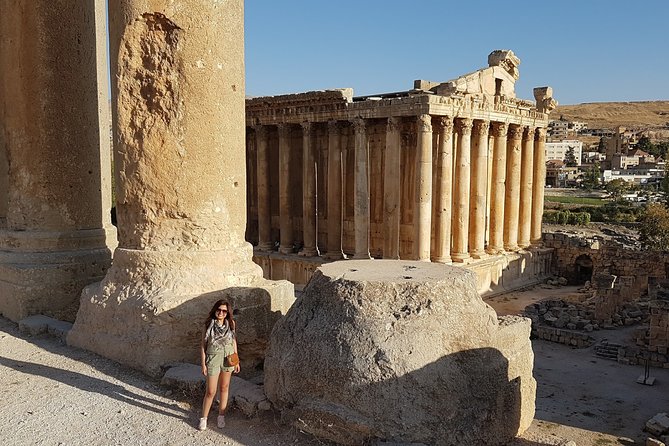
The Temple of Bacchus is often the most immediately satisfying structure at Baalbek. It is one of the best-preserved and grandest Roman temple ruins, with detailed ornament and a strong sense of its original form.
Its decoration dates to the second century AD, although the precise age of the temple is not known. The name comes from its association with Bacchus, the Roman god linked with wine, which makes this temple an amusing lead-in to the later winery stop.
Allow about 30 minutes for this temple in the planned schedule. That is enough for a close look and photographs, but not enough for a slow architectural study of every carved detail. If the site matters greatly to you, tell the guide early that you would like a little extra time here.
The Temple of Bacchus also gives you a better idea of the craftsmanship behind Baalbek. Jupiter supplies the giant scale. Bacchus supplies much of the surviving decorative detail.
Temple of Venus and the Stone of the Pregnant Woman
The Temple of Venus is smaller and more unusual. Built in the third century, it has a horseshoe-shaped platform and a circular shrine with a nearly square entrance. Its outer wall uses five niches rather than a simple square plan.
Doves and shells appear in the niches, which has been taken as evidence that the shrine was dedicated to Venus. The scheduled visit lasts about 30 minutes. It is a useful contrast to the huge Jupiter and Bacchus temples, showing that the sanctuary included buildings with different shapes and purposes.
The Stone of the Pregnant Woman is outside the main temple experience and takes about 15 minutes. This worked Roman monolith, along with another large block nearby, is among the biggest stones ever quarried. The blocks were probably intended for the temple complex.
The name is memorable, but the engineering question is the real point. You are looking at a building stone so large that its transport and placement remain central to the site’s fascination. Keep this stop short and focused, since the main temples deserve most of your time.
The itinerary also identifies the Mosque of Sayyida Khawla in Baalbek. It is associated with Sayyida Khawla, believed by local people to have been buried there. This adds a later religious layer to a city best known for its Phoenician and Roman past.
Chateau Ksara and Lebanese wine
Chateau Ksara gives the day a change of pace. The winery was founded in 1857 by Jesuit priests and developed Lebanon’s first dry wine. It now produces about three million bottles a year, with exports to more than 40 countries.
The visit lasts about 45 minutes and includes wine tasting. The tasting is included in the package, while the description separately lists the winery admission as not included, so confirm exactly what the entrance charge covers when you book.
The reference to French-style wines is important. Lebanon’s wine tradition has strong French influence, and Ksara offers a practical way to sample that side of the country rather than treating wine as an afterthought.
The timing is short. You should expect an introduction to the winery and a tasting rather than a long cellar study or leisurely meal. Lunch is not included, so do not assume the tasting replaces a proper midday break.
This is also why the private vehicle is useful. You can taste without worrying about driving afterward. The driver handles the roads while you enjoy the final stop.
What the $69.45 price really covers
At $69.45 per person, the tour can be good value, especially for a couple, family, or small group sharing a private vehicle. You receive hotel pickup and drop-off, comfortable air-conditioned transport, a tour leader, a Baalbek local guide, and wine tasting.
The price is less simple than it first appears because entrance fees and lunch are excluded. Jeita’s admission is not included. Several Baalbek entries are also marked as excluded, although another part of the supplied information says admission is free. I would ask the operator to clarify both points before committing.
The value is mainly in the transport and organization. Reaching Jeita, Baalbek, and Ksara independently would require planning several journeys and managing a long return to Beirut. Here, your driver handles navigation and the timing between places.
Group discounts are offered, but the amount is not stated. Ask for the total price for your party rather than relying only on the per-person figure. The private format usually becomes more attractive as the group grows.
Guides, service, and communication
The operator is Lebanon Tours & Travels. Named guides and drivers associated with this experience include Hassan, Makram, Kaleeb, Ahmad, and Kimal, but the guide assigned to your booking can vary.
The strongest service pattern is practical rather than flashy. Pickup is confirmed in advance, and the office has been described as accommodating when schedules change or plans need correcting. One booking was arranged at short notice, with pickup handled without delay.
That does not guarantee the same person or the same style on every departure. Still, the company’s service record points to useful habits: confirm the pickup time the evening before, save the office WhatsApp contact, and explain clearly if you need a change.
The Baalbek guide is part of the included service. Jeita is independent, so do not expect one guide to lead every minute of the day.
Timing, comfort, and what to bring
The stated start time is 8:30 am, and the full experience lasts about nine hours. Because the route includes several major stops, you should be ready to leave on time and keep an eye on the meeting times.
Wear shoes suitable for walking around an archaeological site. The supplied information does not specify the exact ground conditions, so practical footwear is safer than anything chosen only for photographs.
Bring water and money for entrance fees and lunch. An air-conditioned vehicle gives you a comfortable place to rest between stops, but this remains a long day with substantial driving.
Most people can participate, according to the activity information. No separate accessibility details are provided, so ask the operator if you have mobility needs or concerns about cave access and ancient-site surfaces.
Free cancellation is available if you cancel at least 24 hours before the start time. Cancellations or changes made within 24 hours are not accepted for a refund.
Who should book this day trip?
I would choose this tour if you have limited time in Beirut and want Lebanon’s major sights in one organized day. It suits history fans, first-time visitors, wine lovers, and anyone who prefers a private car over a large group coach.
It is also a good fit for small groups. You can share the transport cost, set the pace within reason, and avoid the stress of arranging the Bekaa Valley drive yourself.
I would think twice if your priority is slow travel. Baalbek alone can fill a day for someone who wants to study every temple, and Ksara’s 45-minute visit is brief. The tour is about range, not lingering.
Should you book the Jeita, Baalbek, and Ksara tour?
Book it if you want three very different Lebanese experiences with the practical ease of private transport. Baalbek is the anchor, Jeita adds a striking natural stop, and Chateau Ksara finishes the day with local wine and a short winery visit.
Before booking, confirm the entrance costs, ask how lunch fits into the schedule, and check the final pickup time. If those extra costs are acceptable, $69.45 per person is a sensible price for a private day with a Baalbek guide, hotel transfers, and tasting included.
FAQ
What is included in the tour price?
The price includes private transportation, hotel pickup and drop-off, a tour leader, a local guide in Baalbek, an air-conditioned vehicle, and wine tasting at Chateau Ksara.
Are entrance fees included?
No. The tour information says entrance fees are excluded. It also gives conflicting details about Baalbek admission, so confirm the current fees with Lebanon Tours & Travels before departure.
Is lunch included?
No. Lunch is not included in the tour price.
What time does the tour start?
The stated start time is 8:30 am.
Is this a private tour?
Yes. Only your own group participates in the private activity.
What is the cancellation policy?
You can cancel at least 24 hours before the experience for a full refund. Cancellations or changes made less than 24 hours before the start time are not accepted for a refund.
More Full-Day in Beirut
- Jeita Grotto, Byblos and Harissa Full-Day Tour from Beirut
★ 5.0 · 23 reviews - Full-Day Private Tour to Jeita Grotto, Harissa and Byblos
★ 5.0 · 20 reviews - Beirut Full Day Walking Tour
★ 5.0 · 14 reviews - Guided Full-Day Private Trip to Cedars, Baalbek and Chateau Ksara
★ 5.0 · 10 reviews
More Chateau Ksara Wine Tours in Beirut
- Guided Private Full Day Tour to Baalbek, Anjar and Chateau Ksara
★ 5.0 · 60 reviews - Lebanon tour Baalbek ruins & Ksara w/pick-up, lunch,guide+entries
★ 5.0 · 35 reviews - Baalbek Temples & Ksara Caves w/pick-up,guide, entries+lunch
★ 4.9 · 34 reviews - Small Group Tours to Baalbek, Anjar & Chateau Ksara with lunch and Tickets
★ 5.0 · 29 reviews
Just added around Beirut
- Journey Through Time: Half-Day Private Tour to Baalbek★ 5.0 · 3 reviews
- Small Group Tours to Jeita Grotto and Byblos with tickets★ 5.0 · 3 reviews
- Wine Tasting and Culture★ 5.0 · 3 reviews
- Small-Group Tour with Lunch to Jeita Grotto, Byblos and Harissa★ 4.5 · 3 reviews
- Traveling Spoon Lebanese Mezze Private Online Cooking Class★ 5.0 · 4 reviews
- Beirut to Qadisha Valley, Bcharri & Cedar: Daily Tours with Lunch★ 4.5 · 3 reviews
- Small-Group Tour to Sidon, Tyre and Maghdouche with Lunch and Tickets★ 4.5 · 3 reviews
- Small-Group Tour with Lunch to Baalbek, Anjar and Ksara★ 5.0 · 3 reviews
Jeita Grotto Tours, compared.
Guided Small-Group Tour to Jeita, Harissa, Byblos with Lunch
Read our review →
Jeita Grotto,Harissa&Byblos Full-Day PRIVATE-CAR Trip from Beirut
Read our review →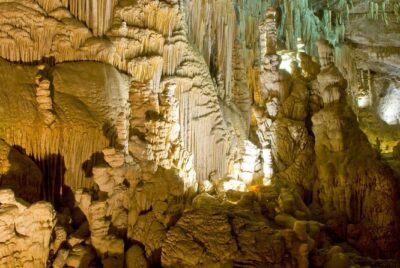
Byblos, Jeita Grotto & Harissa Day Trip -With Lunch (4G on Board)
Read our review →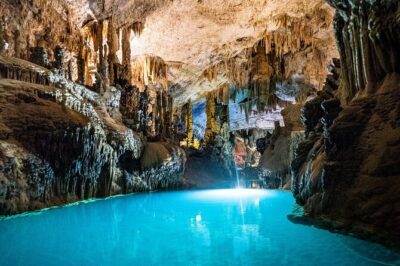
Semi-Private Tour to Jeita Grotto, Harissa & Byblos with Lunch
Read our review →
Small Group Tour to Jeita Grotto, Harisa & Byblos with Hotel pickup
Read our review →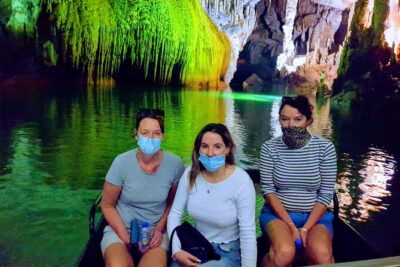
Private Guided Tour to Jeita Grotto through Harissa and Byblos
Read our review →
New Guided Semi-Private Tour to Jeita Grotto, Harissa & Byblos
Read our review →
Browse the lists this tour appears in